Galapagos Tourist Class boat, Eden
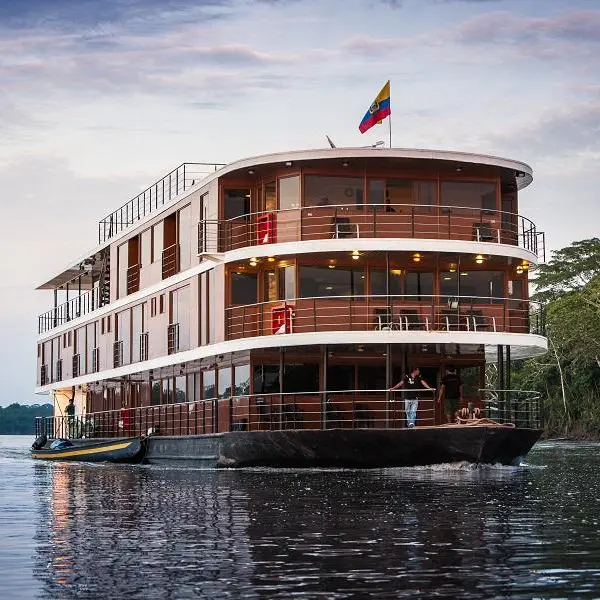
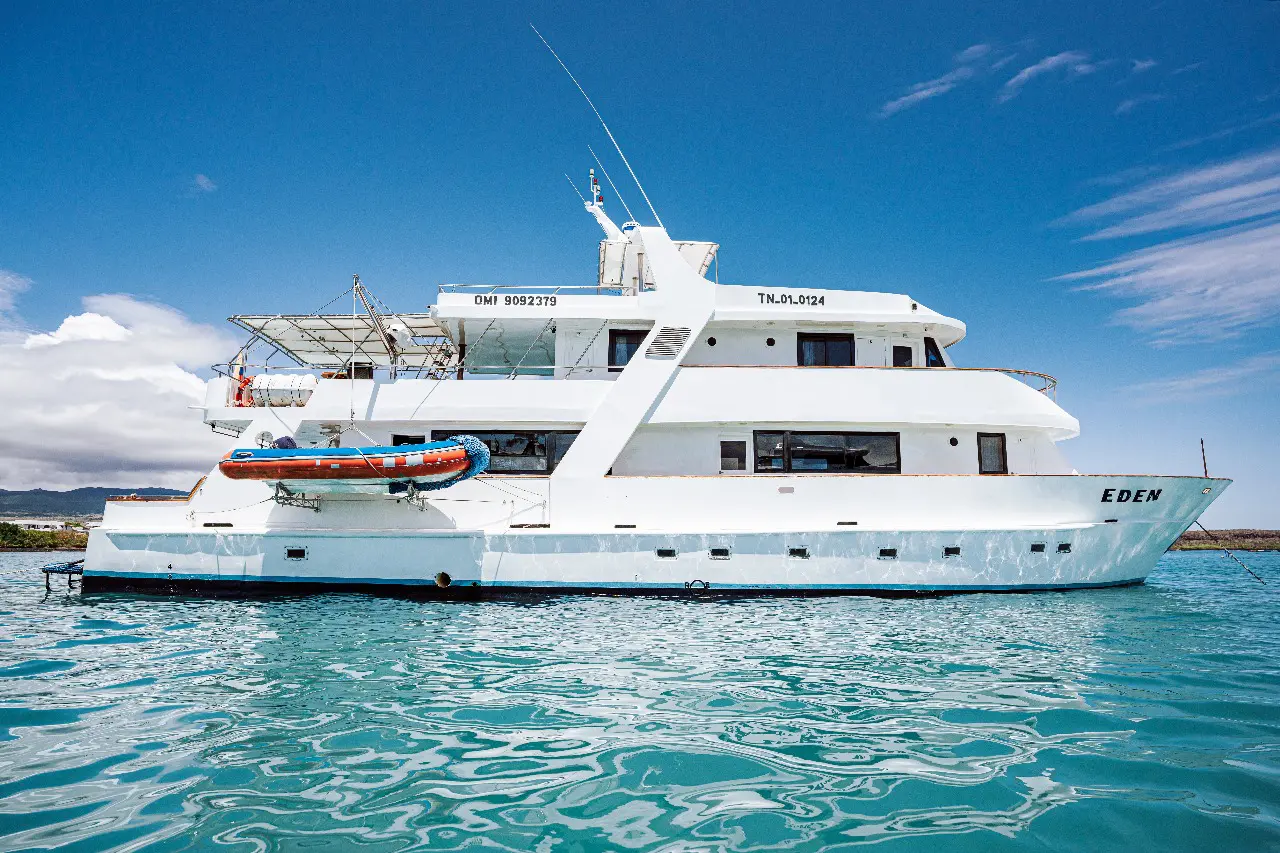
Eden is a comfortable and small Galapagos Tourist Class boat that’s ideal for people who enjoy great service onboard, beautiful itineraries, and comfortable spaces. It’s a fantastic choice for a small-ship cruise to the Galapagos Islands.
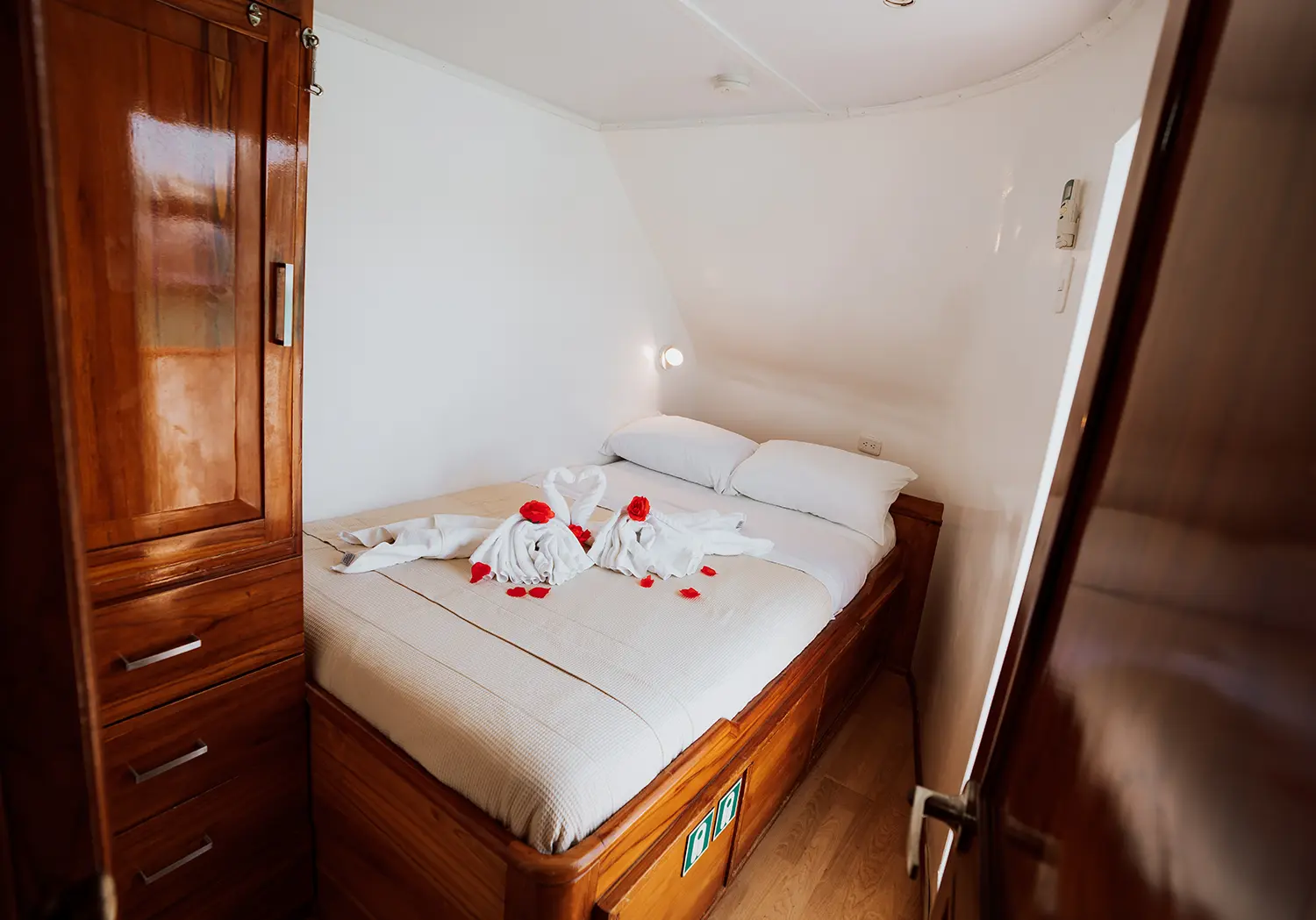
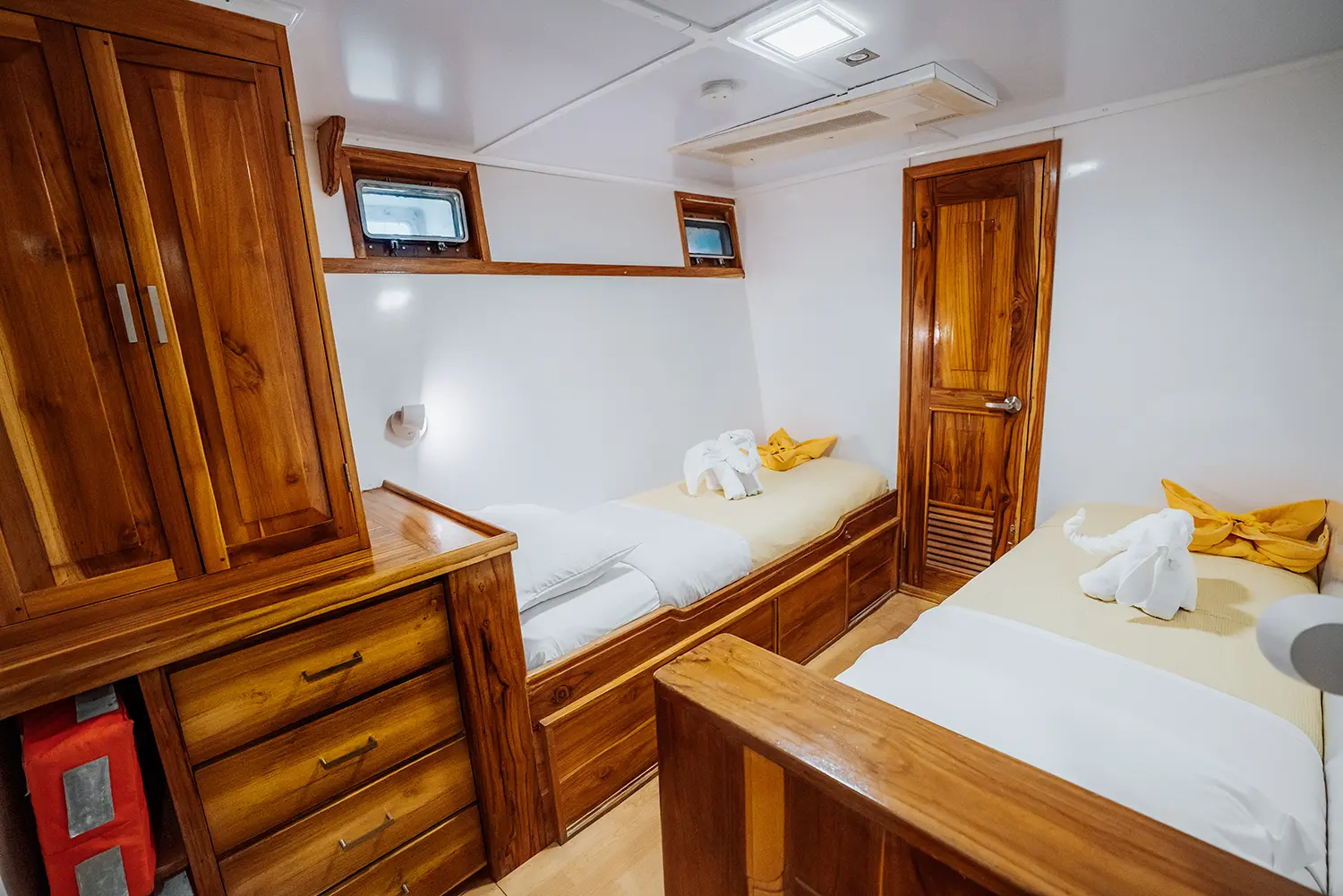
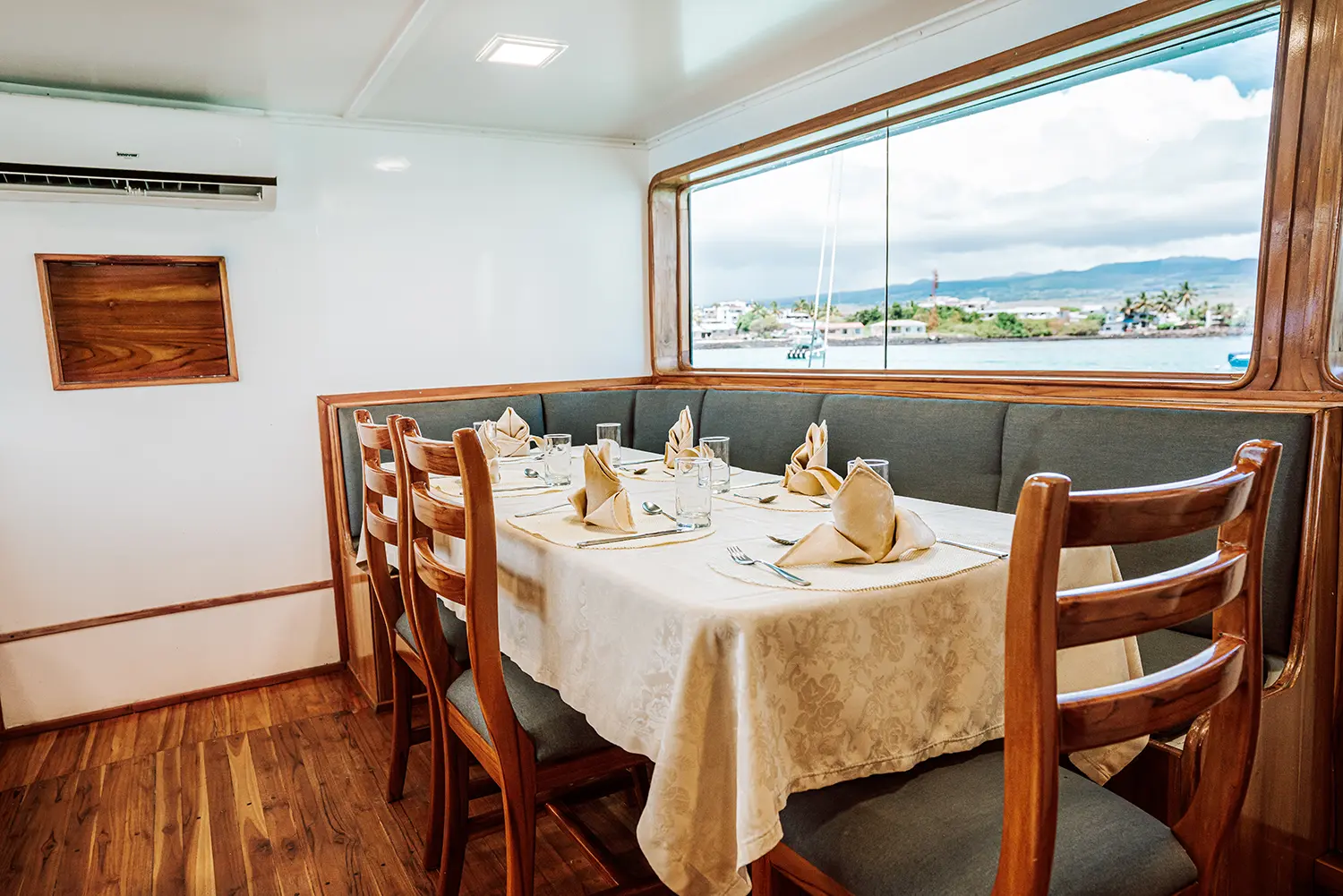
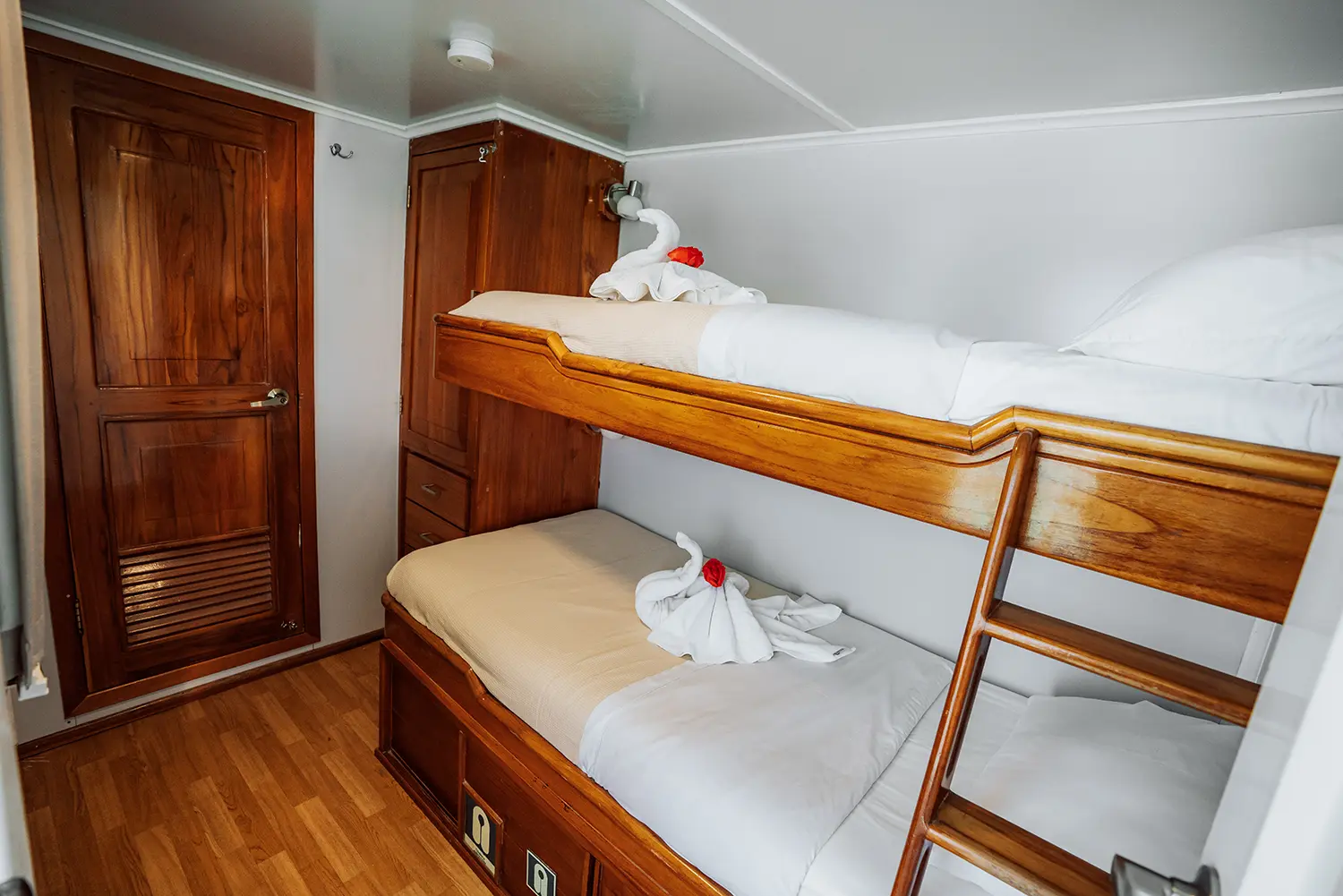
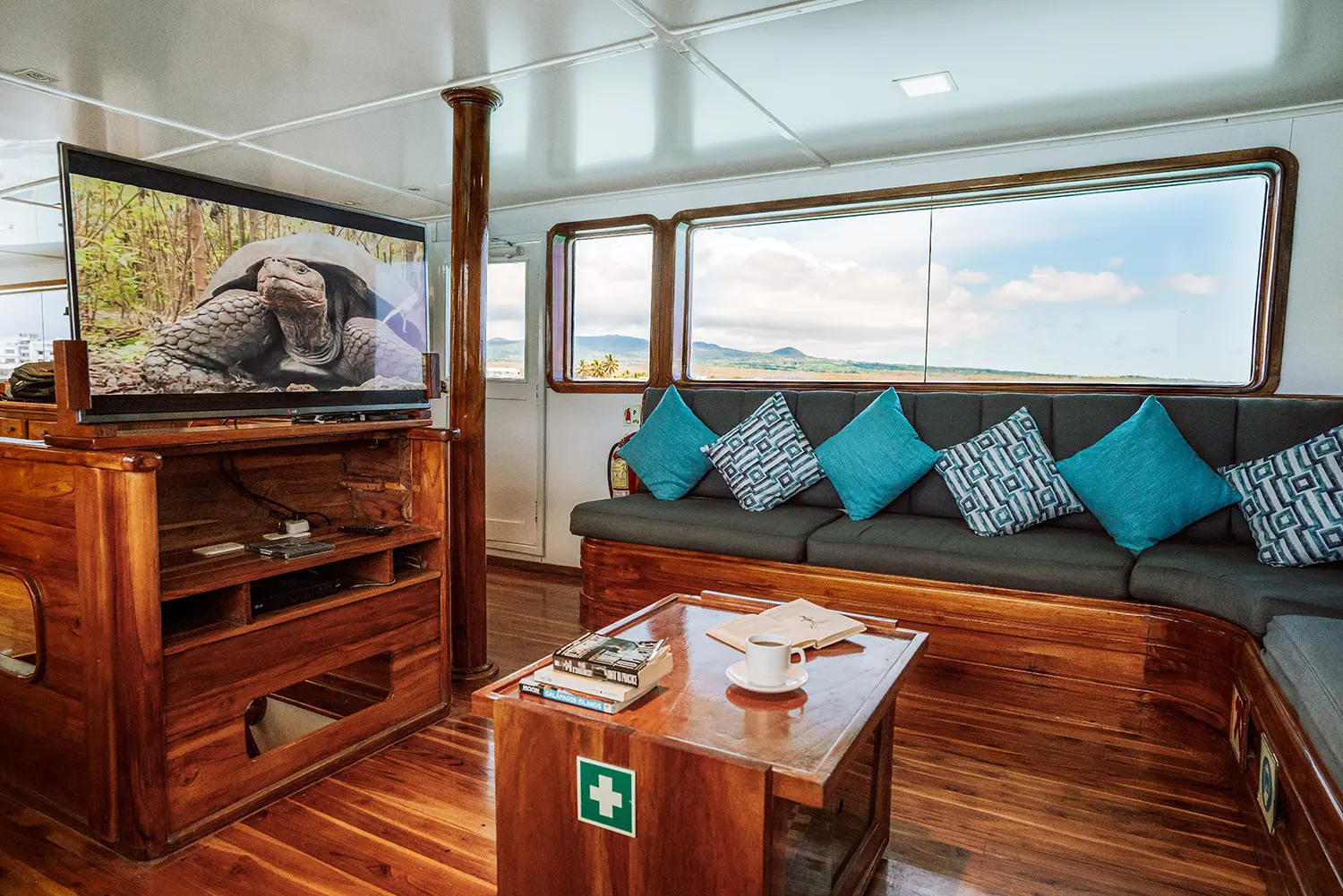
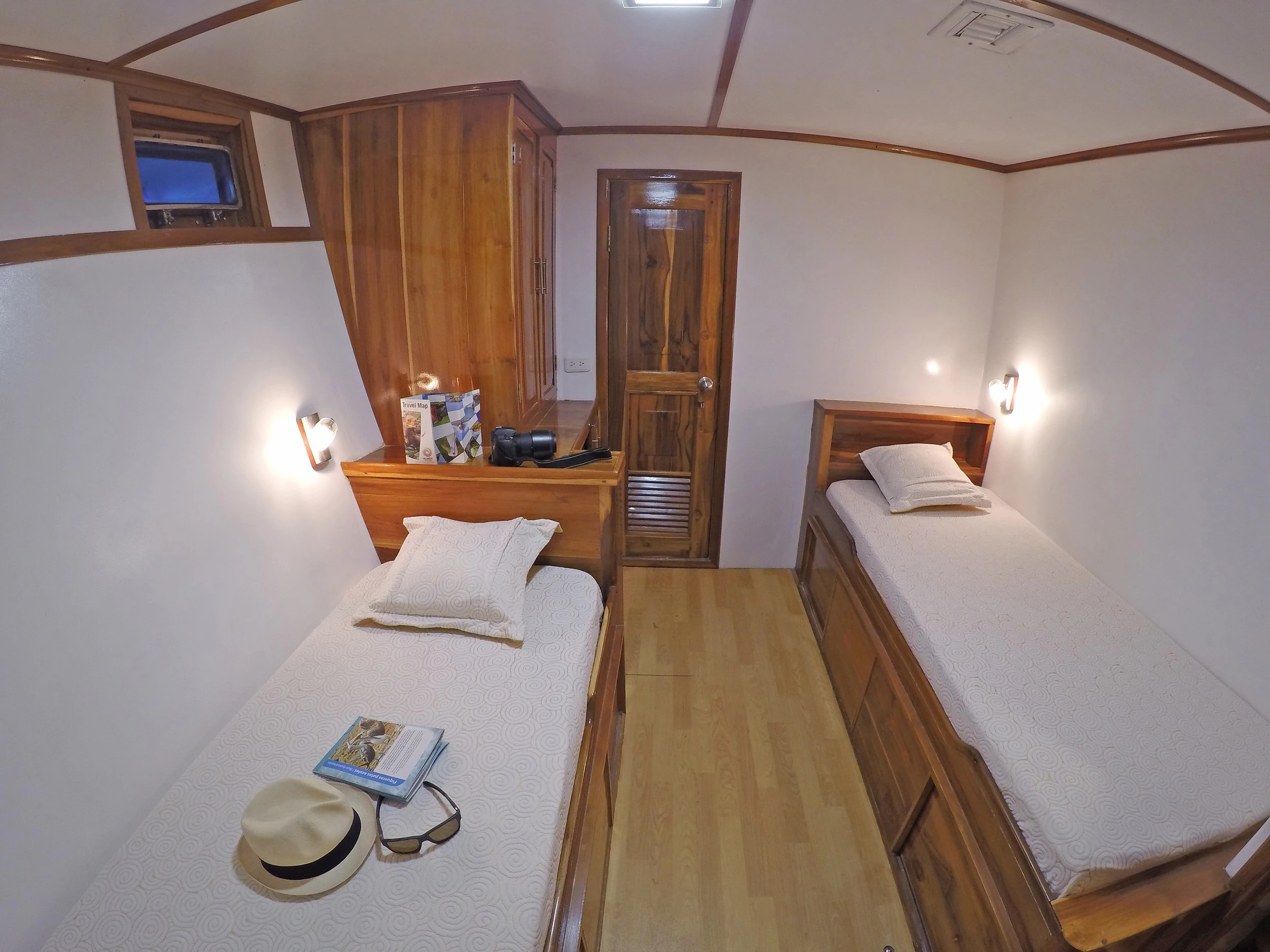
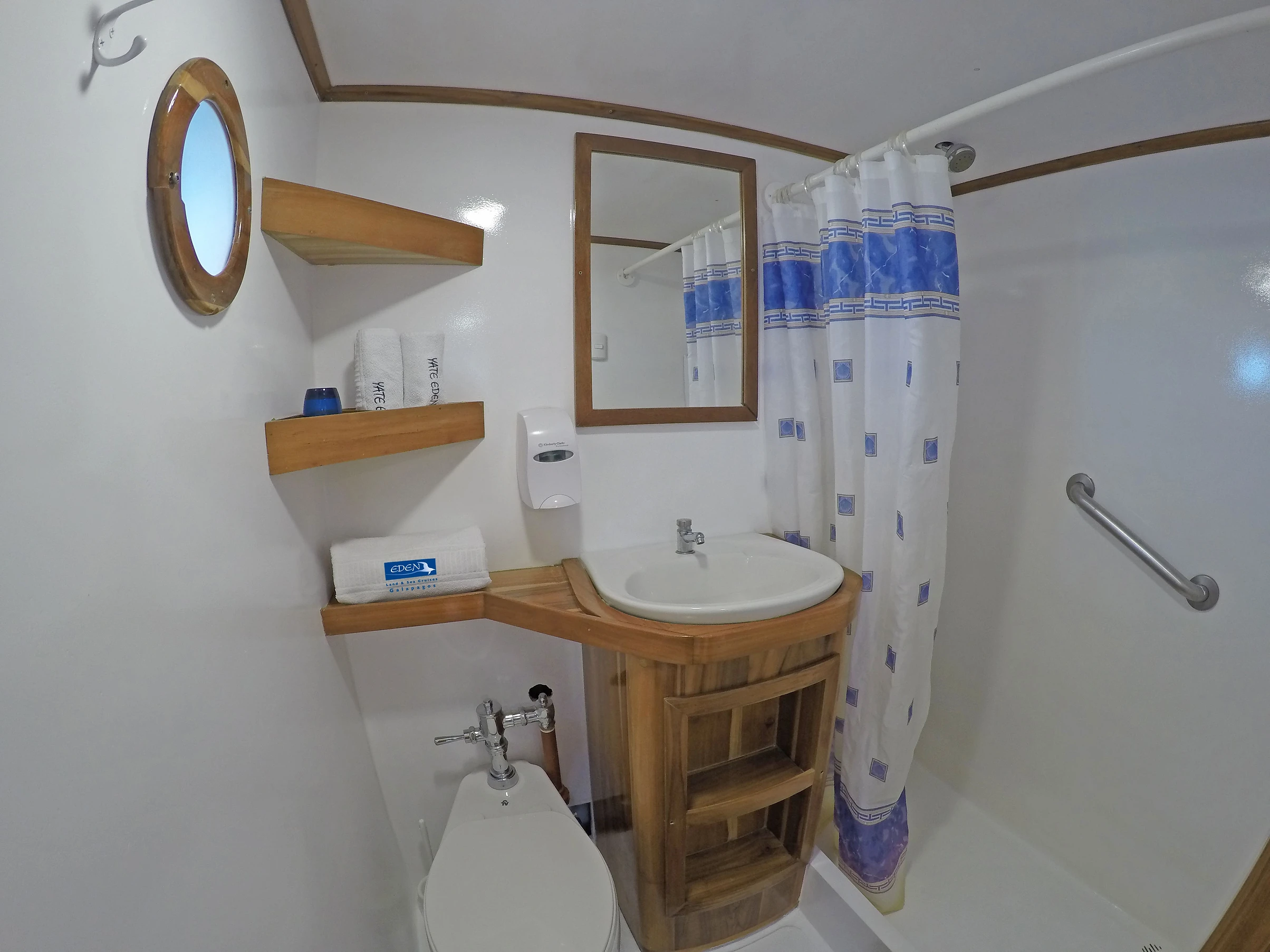
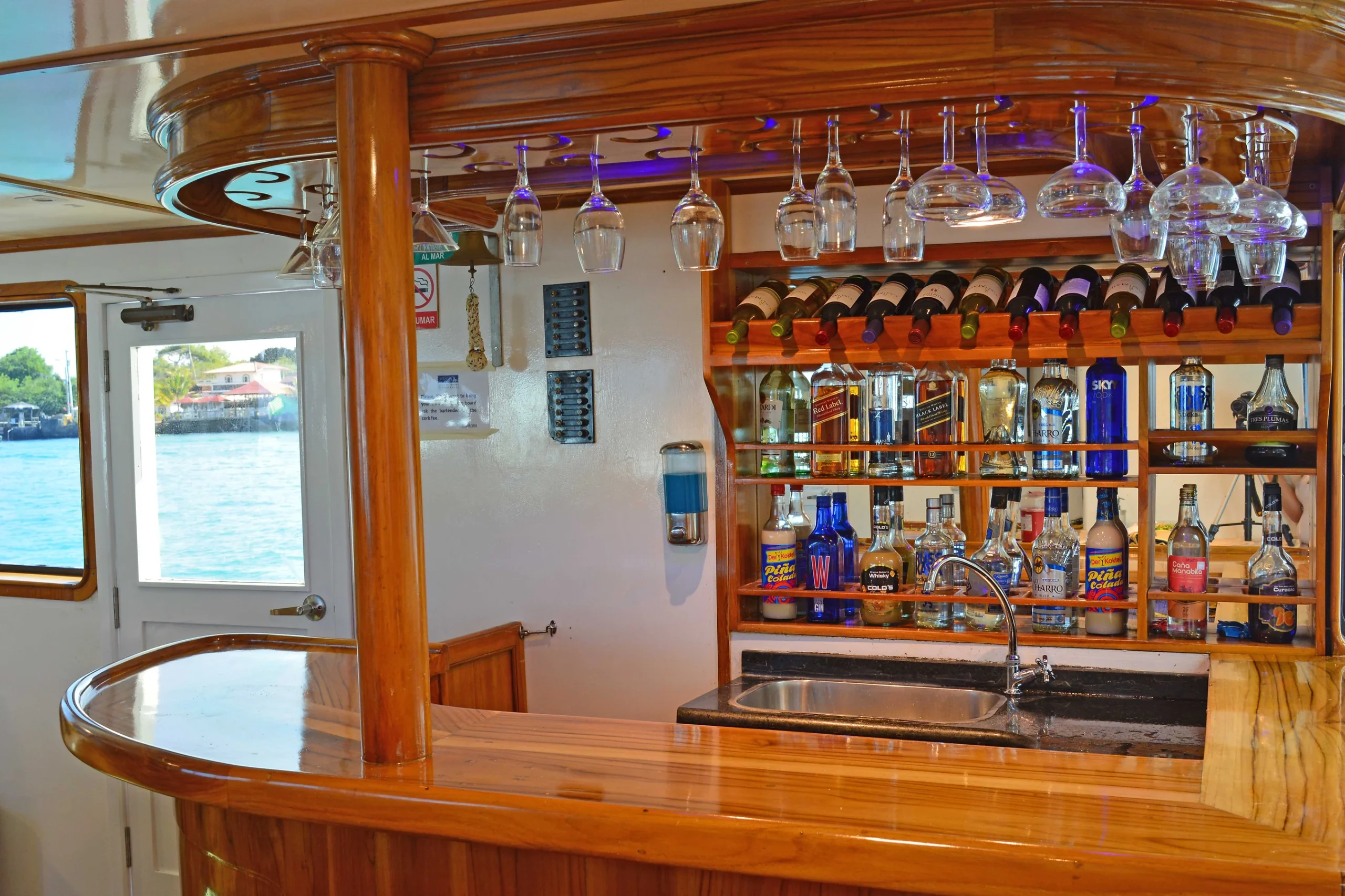
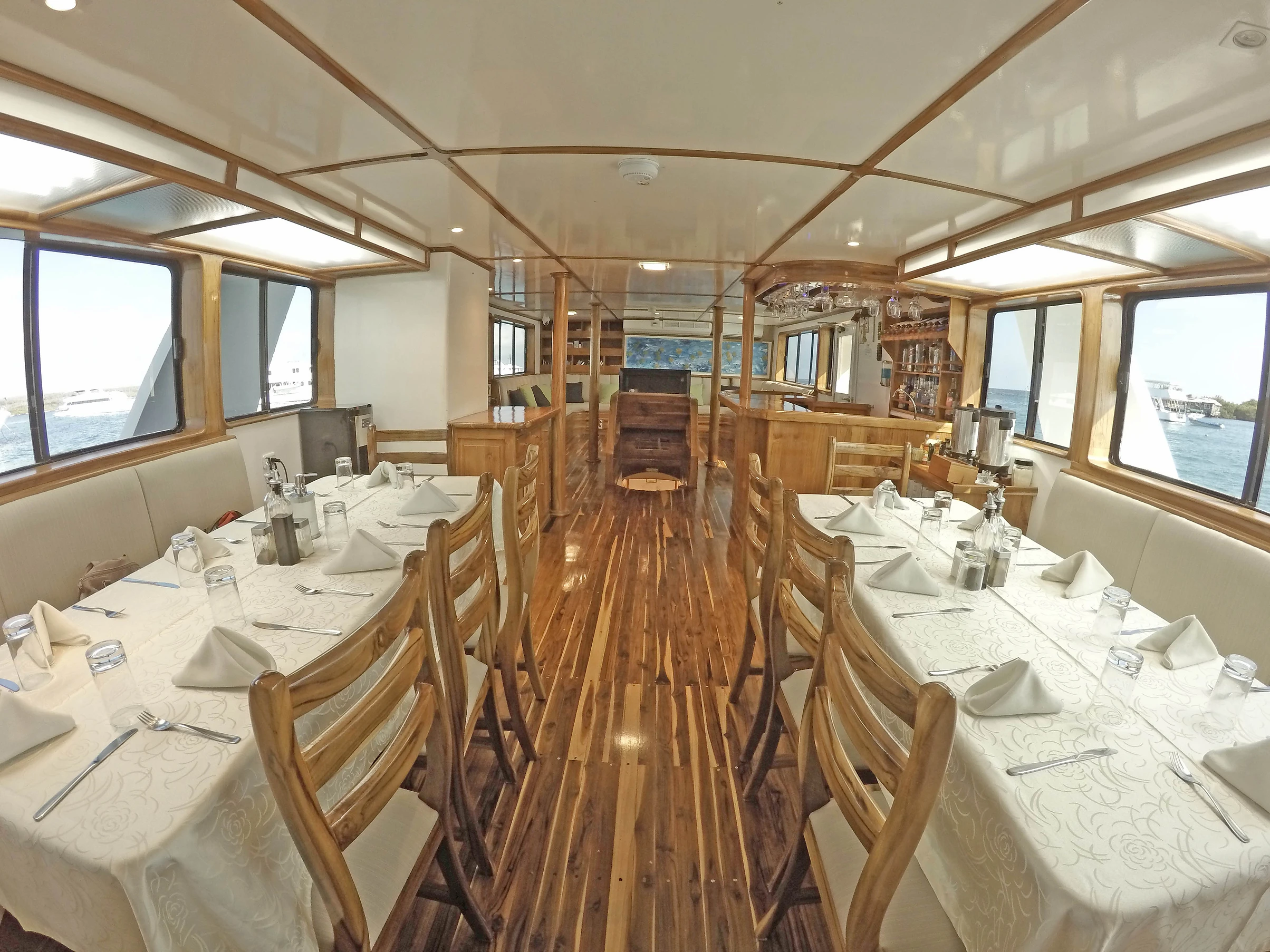
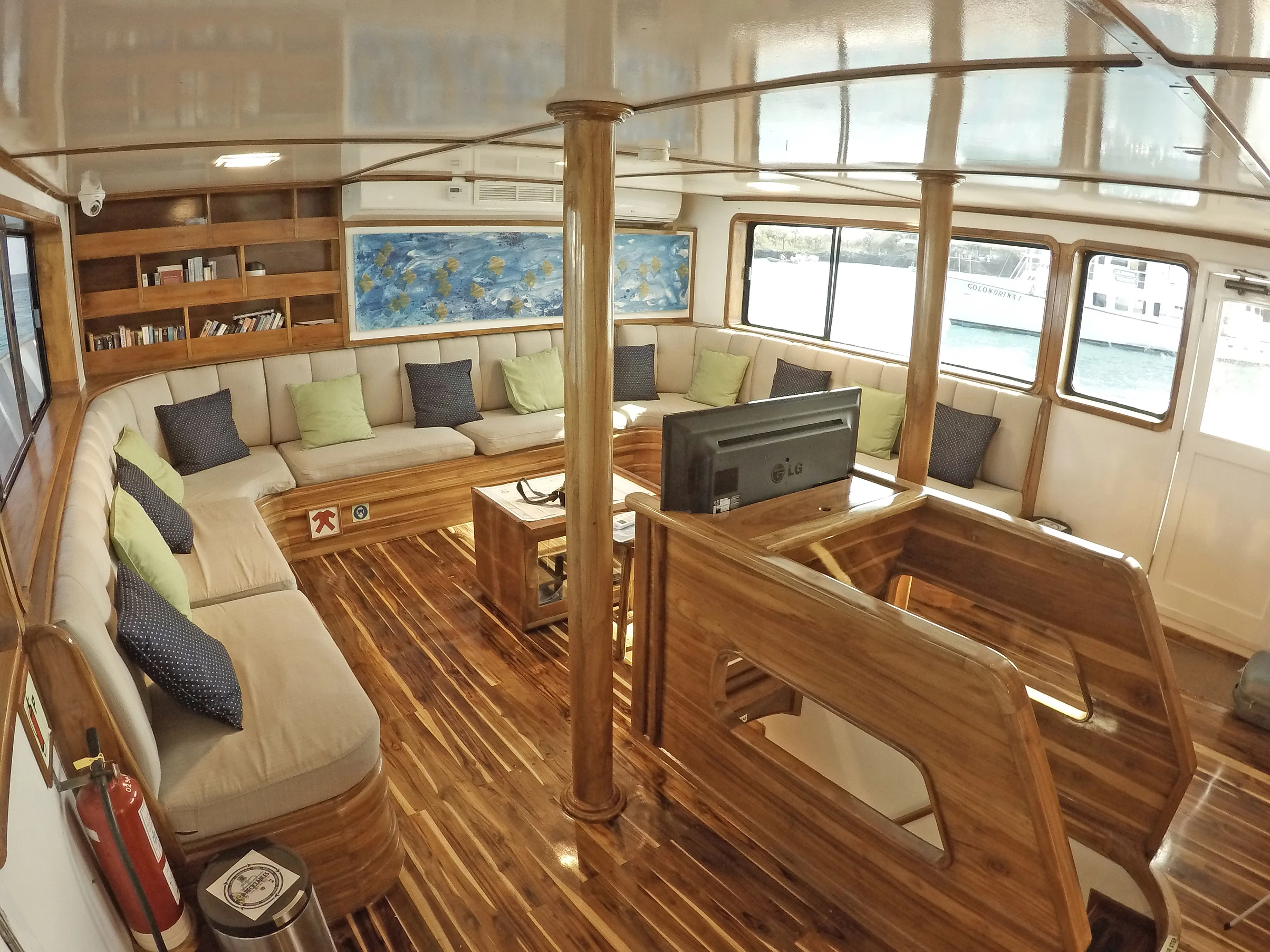
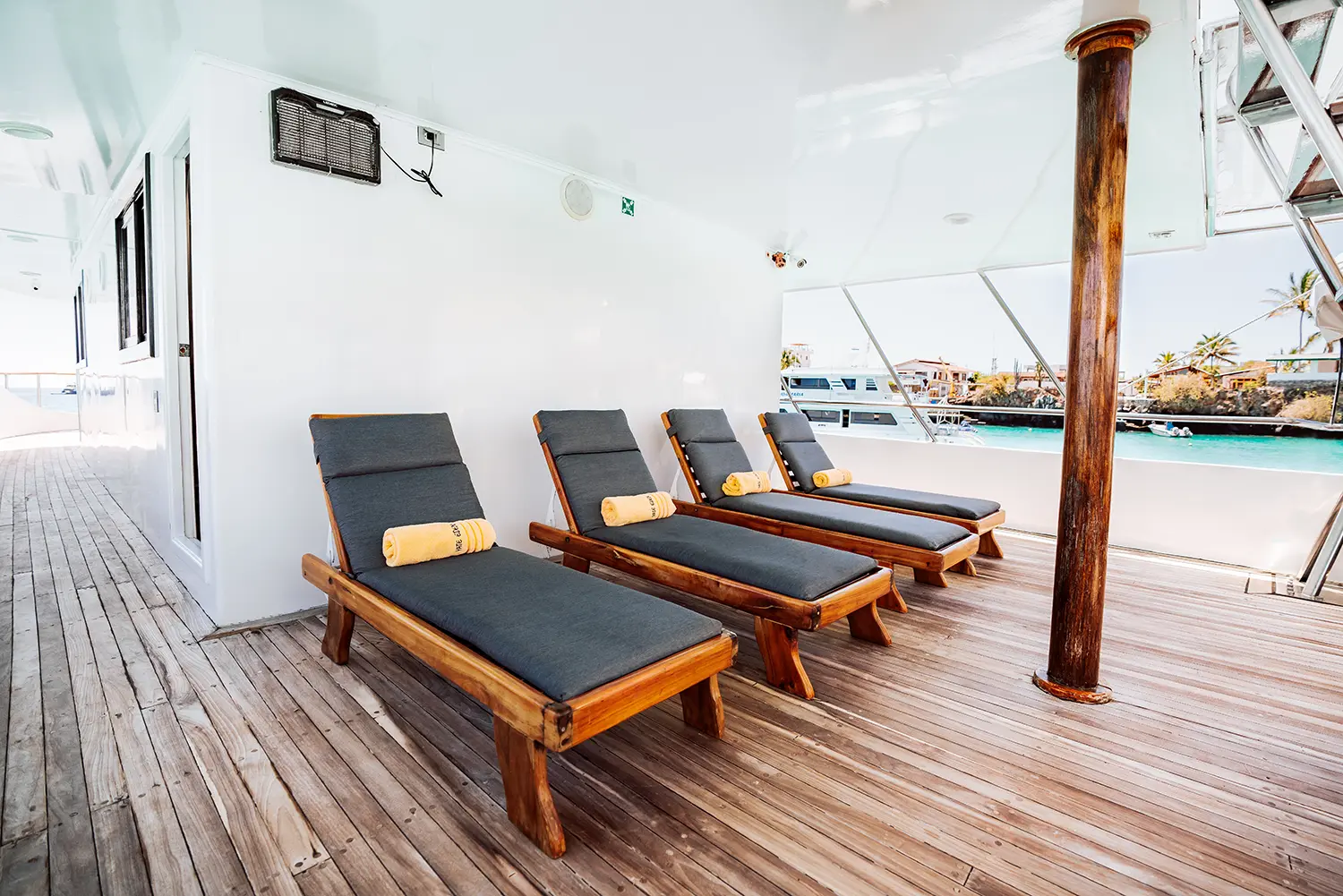
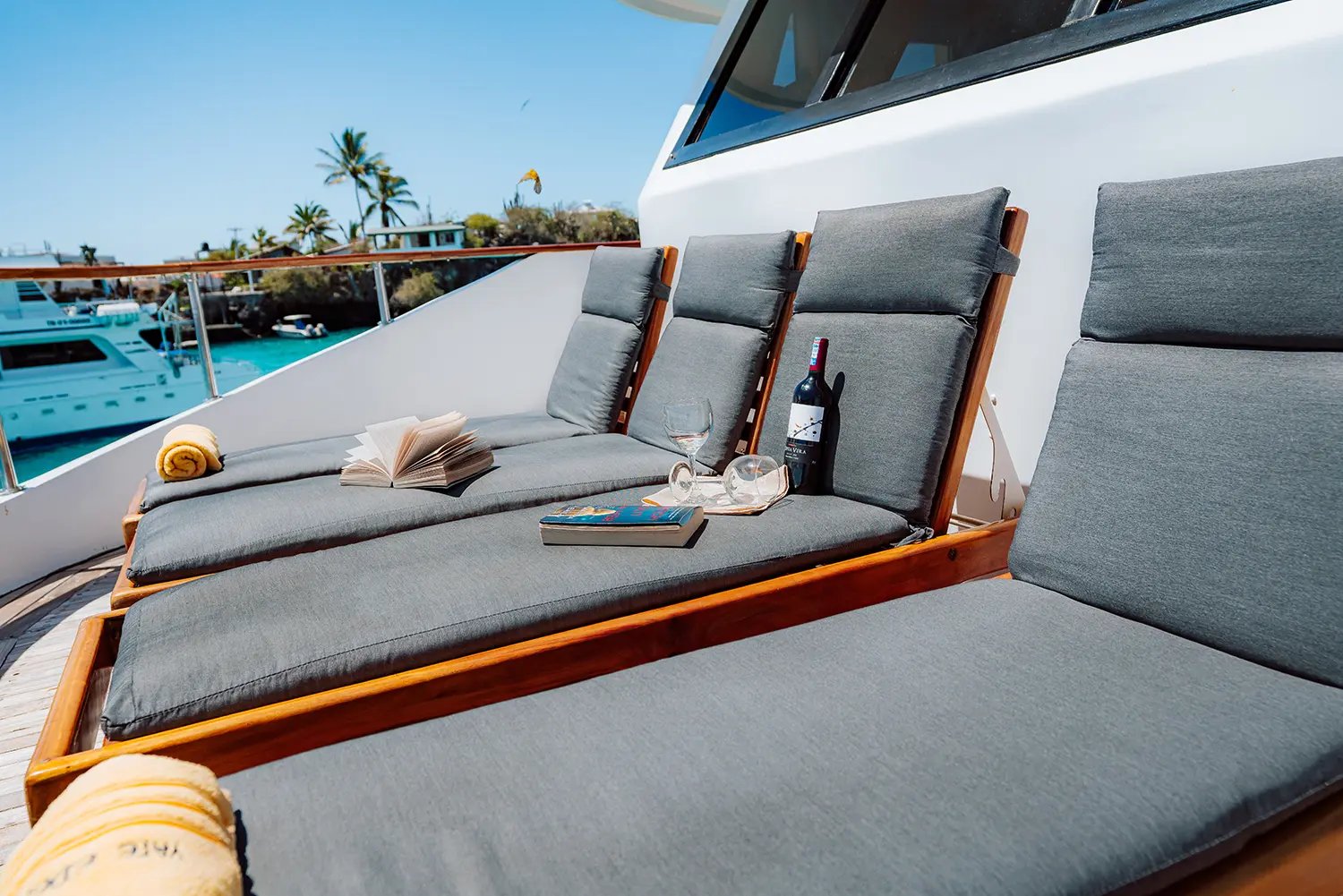
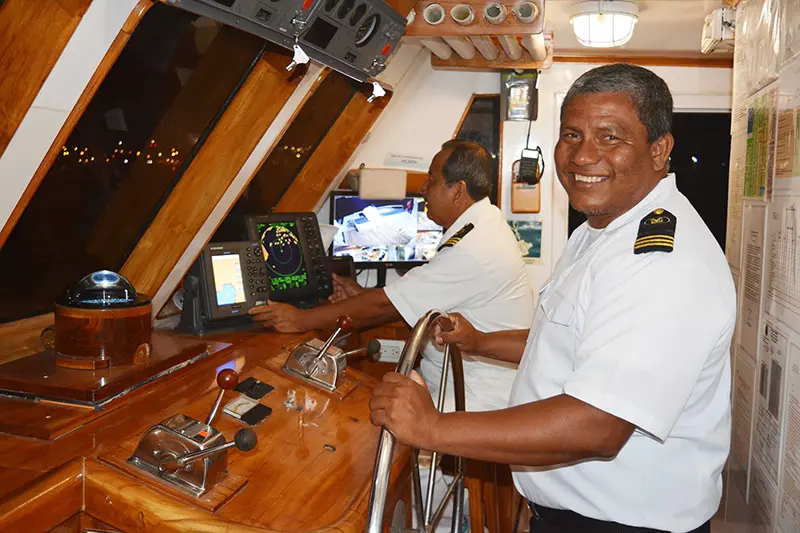
Catering to just 16 passengers, the onboard expert CEO Naturalist Guide and experienced captain and crew are on hand to make this a trip of a lifetime. Eight cabins are available, including 3 upper-deck twin share bunks, 1 main-deck double, and 4 lower-deck twins (lower berth) cabins. Each cabin features en-suite bathrooms, storage space, and plugs for charging devices. There is ample room for relaxation aboard the Eden cruise ship. The main deck is home to the bar, lounge, and dining area, with a wraparound deck showing off the stunning views. The upper deck also has a large outside lounge area, forward sun deck, and wraparound balcony, making it the perfect place to unwind after a day of exploring the Galapagos Islands. The talented onboard chefs will serve creative and delicious meals using various fresh ingredients.
Itinerary
Itinerary 1 8D/7N (Sunday to Sunday)
Day 1: Baltra – Bachas
A.M. Baltra (Airport)
Departure from Quito or Guayaquil to Baltra Island (2 ½-hour flight). Arriving in the Galapagos, passengers are picked up at the airport by our natural guides and taken to a ten-minute bus drive to the pier to board the Eden Yacht.
P.M. Bachas Beach(SN/WLK)
Wet landing. Named for some wrecked World War II barges whose ribs are still visible in the sand this visitor site offers great swimming, a lovely walk along the shore and a visit to a lagoon behind the high tide line with wading birds, marine iguanas and sometimes even flamingoes. The two beaches are also favorite nesting sites for green turtles which often leave tractor-like tracks in the sand.
Day 2: Genovesa
A.M. Darwin Bay (SN/WLK/PR)
Disembark onto a small sand and coral beach. A short trail heads west along a tidal lagoon and then up a rocky hill that leads to a point overlooking the cliffs and Darwin Bay. Along the trail near the tidal lagoon, visitors will see pairs of Swallow-tailed Gulls, Lava Gulls, Yellow-crowned and Lava Herons. The trail continues through Palo Santo trees, Opuntia cacti, and Saltbushes inhabited by Great Frigate birds and Red-footed Boobies.
P.M. Prince Philip’s Steps
Be marvelled at the variety of sea life that uses the crevices of the lava cliffs for shelter. Red-billed Tropicbirds fly overhead, switching between their nests and the bay, and a small colony of fur seals may be found near the landing site. You will be dropped off at a steep stairway that begins on rocks at the foot of a path that leads through a seabird colony full of Nazca and Red-footed Boobies.
Day 3: Bartholomew – Santiago
A.M. Bartolomé (SN/WLK/PR)
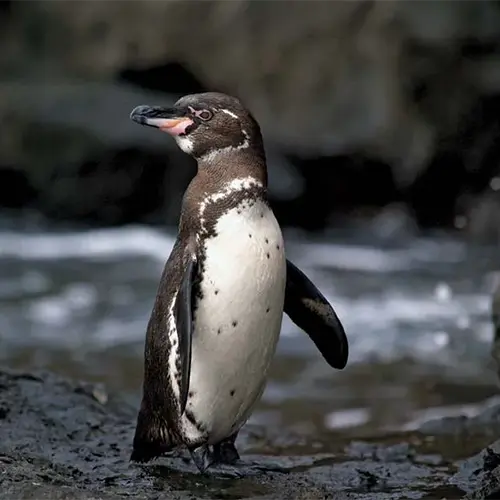
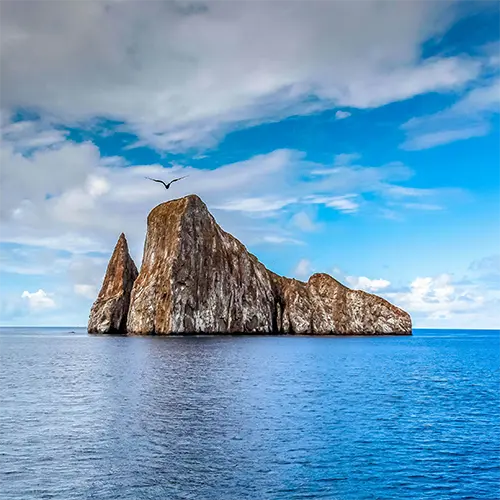
Dry or wet landing. Considered the most iconic landscape of the entire archipelago the view from the top of Bartolome Island, overlooking the famous Pinnacle Rock and the austere Santiago Island beyond, is well worth the climb up the wooden boardwalk. This volcanic scene has often been likened to a lunar landscape. Our subsequent snorkel here might put us face to face with Galapagos penguins, white-tipped reef sharks and playful sea lions.
P.M. Bahía Sullivan (SN/WLK)
We will have a dry landing on Sullivan Bay in Santiago Island to start our walk over a recent lava flow, including very fresh pahoehoe lava formations, lava bubbles containing crystallized minerals and pioneer plants. Along the shoreline, we may find Galapagos penguins and herons going after small fish.
Day 4: Santa Cruz
A.M. Black Turtle Cove (PR)
Here, we can find four species of mangrove in the extensive tidal lagoon system that stretches for almost a mile inland. During our panga ride through the labyrinth we will spot many turtles, herons of several species, sharks and rays. The experience is otherworldly and seems to transport us back to the beginning of time.
P.M. Dragón Hill (SN/WLK)
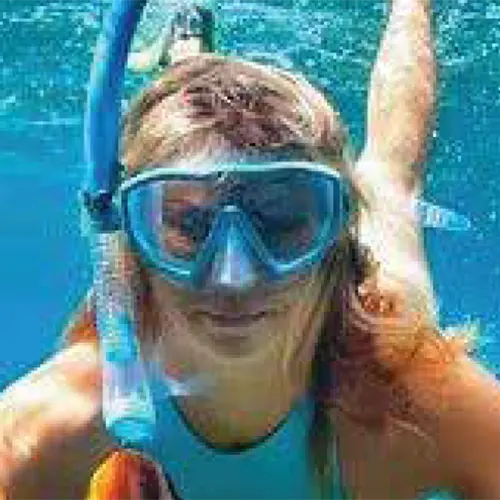
Dry landing. Arriving to a small lava dock our first encounters are with marine iguanas that blend-in perfectly to the dark rock. As we walk past large prickly pear cacti we arrive to one end of a long, sickle-shaped, beach with Dragon Hill standing in the distance. Our walk takes us on a circular path, past a shallow lake where flamingoes frequently come to feed. Waders such as stilts, turnstones and sandpipers work the muddy edges frenetically looking for food as we continue inland to a dry, forested habitat where land iguanas nest and burrow.
Day 5: Santa Cruz
A.M. Charles Darwin Research Stations & Fausto Llerena Breeding Center (WLK)
Dry landing. Once home to the famous Lonesome George, the last tortoise of the Pinta race, the breeding and relocation center is named in honour of his long-time guardian. The center is set in the Galapagos National Park Service where various interpretative buildings are available to visit. The grounds, with large stands of native vegetation, are one of the better places to spot some of the seldom seen Darwin’s finches such as the woodpecker, cactus and vegetarian finches.
P.M. Highlands Tortoise Reserve (WLK)
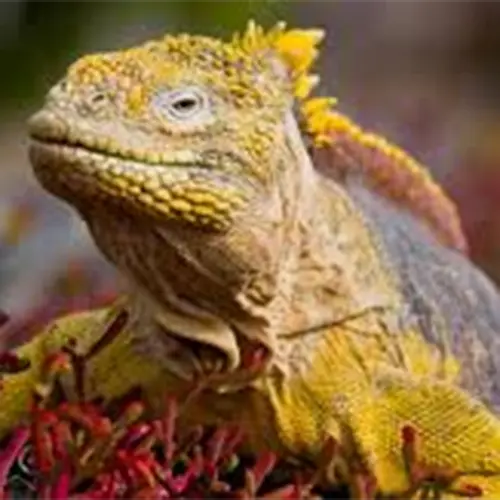
Dry landing. In the central highlands of Santa Cruz Island we have our best opportunity to interact at close quarters with totally wild, Galapagos giant tortoises. A short walk among these huge, 600 lb, reptiles will also offer the chance for more highland species, especially several species of the famed finches.
Day 6: Floreana
A.M. Post Office (SN/WLK)
Wet landing. A very short walk from the beach leads us to the famous Post Office Barrel. Claimed to have been first setup in 1793 by Captain James Colnett it remains the oldest functioning “post office” in the Pacific. The system was that whalers and fur sealers would leave addressed letters in the barrel to be picked up by homeward bound colleagues. In the spirit of maintaining tradition visitors today will often take letters and hand-deliver them in their home countries.
P.M. Cormorant Point (SN/WLK/PR)
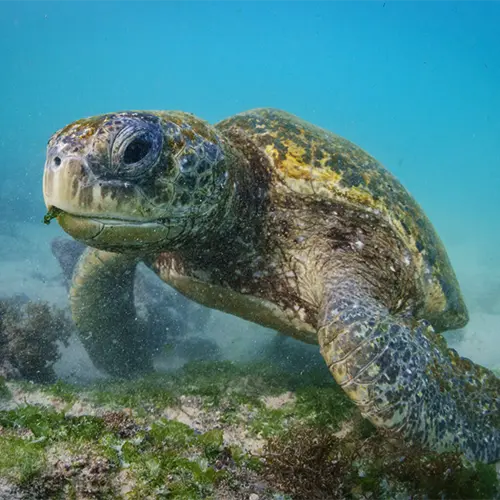
Wet landing. On arriving, the observant visitor will notice that olivine, a volcanic crystal, has proffered a subtle green hue on the dark beach. Our walk takes us past island-endemic Scalesia plants to a large, shallow, lagoon often inhabited by a variable number of shockingly pink greater flamingoes. We continue through a forest of palo santo trees to arrive at a powdery white beach, a nesting area of green turtles. As we paddle barefoot in the shallow water we will spot diamond stingrays and white-tipped reef sharks.
Day 7: Española
A.M. Suarez Point (WLK)
Dry landing. One of the highlight visits of the trip. Punta Suarez seems to have everything – a naturalist’s paradise. A slew of marine iguanas and sea lions greet us at the landing site from where our walk continues with close encounters of boobies, endemic lizards, gulls and even a dramatic blow hole. The oldest extant island in the archipelago it is our only opportunity to commune with the endemic waved albatross during their breeding season between April and December. With luck, we can watch their complex courtship display.
P.M. Gardner Bay – Gardner & Osborn Islet (SN/WLK)
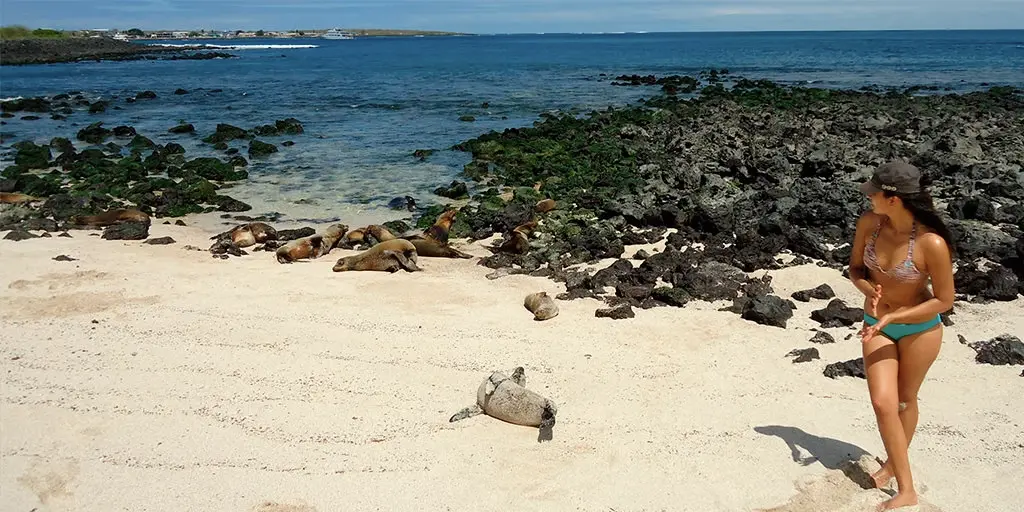
Wet landing. One of the most stunning beaches in all of Galapagos. The long, white, sandy beach, lapped by turquoise waters is home to a colony of Galapagos sea lions, indifferent to the humans that walk amongst them. The Hood mockingbirds, endemic to this particular island, will be eager to inspect the visitors and satisfy their innate curiosity. Darwin’s finches may also join the throng including the reclusive warbler finch. We can also snorkel here from the beach, in the shallows of the bay.
Day 8: San Cristobal
A.M. Leon Dormido – Centro de Interpretación (WLK)
Dry landing in Puerto Baquerizo Moreno, capital of the Galapagos Islands. Passenger visit to the Interpretation Center; Excellent place to learn about natural history in the Galapagos. The Natural History Museum displays information about the volcanic origin of the islands, their remoteness from the continent, their sea currents, climate, the arrival of different species and their colonization, among some topics of interest. Human history is also exposed, chronological narrative of the most important events related to the discovery and colonization of the islands.
Puerto Baquerizo Moreno (Airport)
After the visit, passengers will be transferred to the airport for their return flight to Guayaquil or Quito.
Itinerary 2 8D/7N (Sunday to Sunday)
Day 1: San Cristobal
A.M. Puerto Baquerizo Moreno (Airport)
Departure from Quito or Guayaquil to San Cristobal in a 2-hour flight. Upon arrival, passengers are picked up at the airport by our naturalist guides and taken on a ten-minute bus drive to the pier to board the Eden Yacht.
P.M. Isla Lobos (SN/PR)
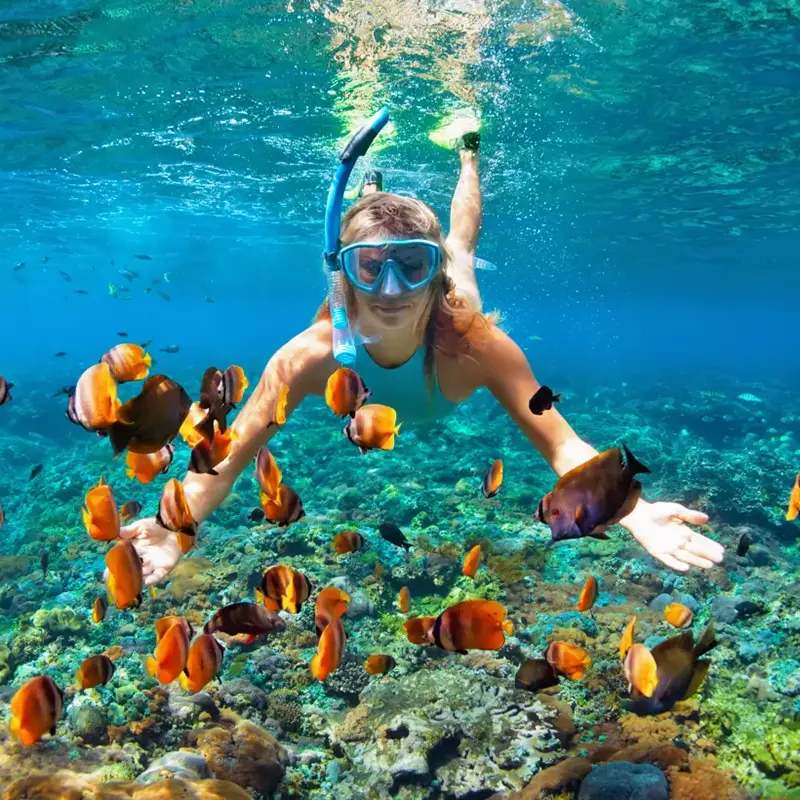
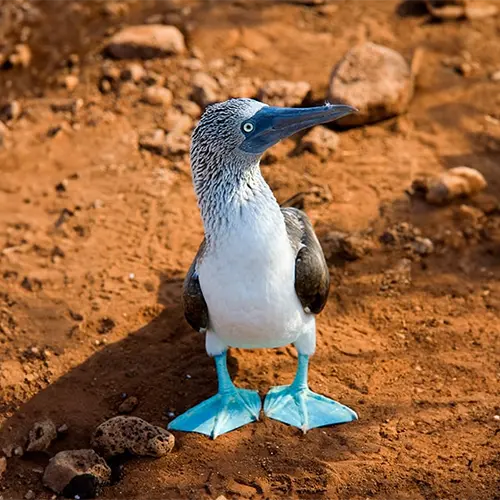
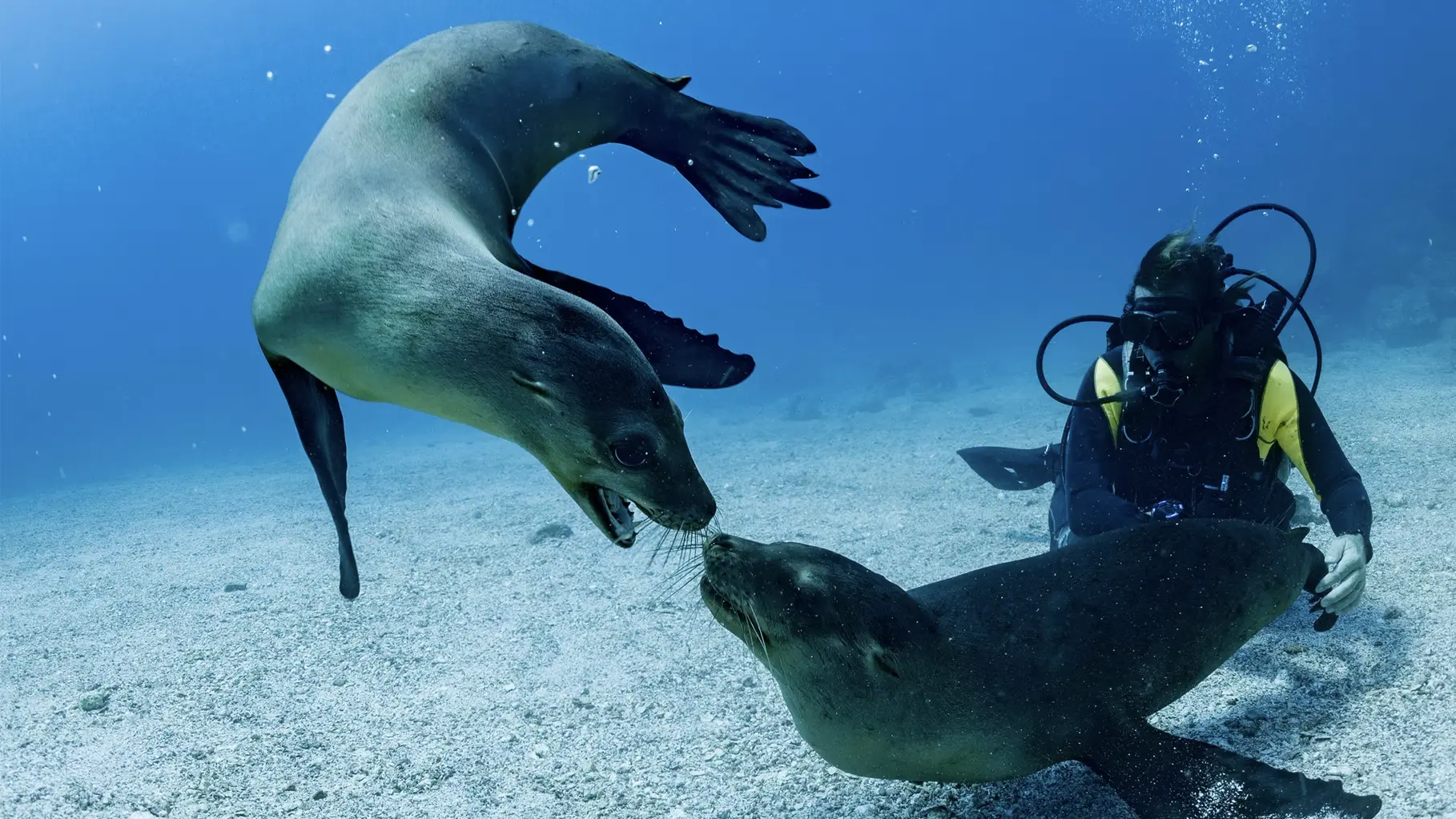
On this Galapagos tour to Lobos Islet, we will disembark and go for an hour-long hike and snorkel around the island, hopefully spotting blue-footed boobies, marine iguanas and frigatebirds. If luck is on our side, there is a chance to see the marine iguanas feeding underwater. Thanks to the channel this islet creates with the island of San Cristobal, we will be able to see rays and turtles on the sandy bottom. This is considered a great place for first time snorkelers as the water is clear and not far away from land.
Day 2: Santa Fe – Plazas / Española
A.M. Santa Fé (SN/WLK/PR)
Wet landing. Santa Fe shows white sand beaches surrounded by sea lion colonies; through the island path, an endemic cactus forest is passed, home the Santa Fe land iguanas(the largest in the islands). This island is the habitat for a number of species, including the Galapagos hawk, Galapagos snakes, rice rats (one of the few endemic Galapagos rodents) a variety of finches and one of the four mockingbird species of the archipelago.
P.M. South Plaza Islet (WLK)
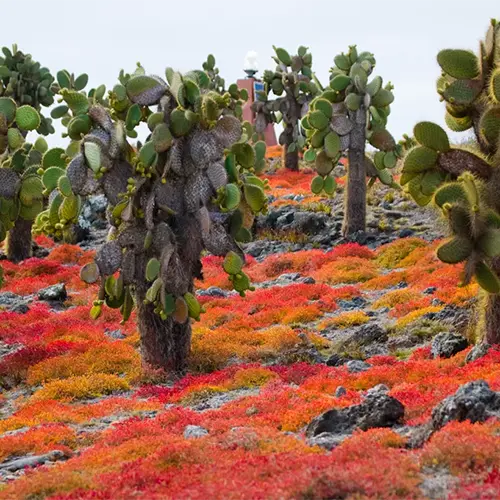
Dry landing. Sea lions, swallow-tailed gulls and land iguanas are all present at the landing site. The small island is covered with a carpet of a red succulent studded with Opuntia cacti. At the cliff edge, we spend time watching birds fly past at eye level in the up draught. These include, frigatebirds, flocks of Galapagos shearwaters and of particular note, flights of displaying red-billed tropicbirds. Back at sea level, we once again encounter land iguanas, some of which have hybridized with their resident marine cousins.
Day 3: Santa Cruz
A.M. Charles Darwin Research Station (WLK)
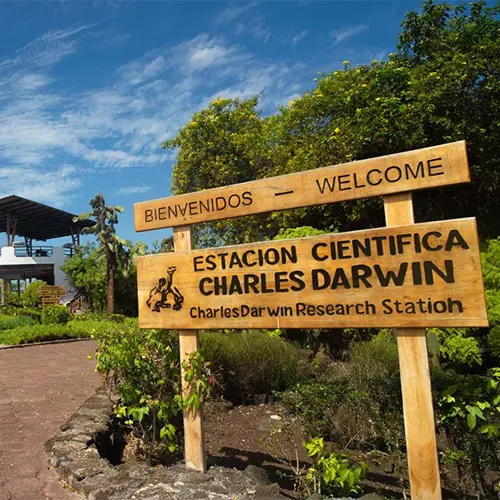
Dry landing. Once home to the famous Lonesome George, the last tortoise of the Pinta race, the breeding and relocation center is named in honour of his long-time guardian. The center is set in the Galapagos National Park Service where various interpretative buildings are available to visit. The grounds, with large stands of native vegetation, are one of the better places to spot some of the seldom seen.
P.M. Parte Alta (WLK)
Dry landing. In the central highlands of Santa Cruz Island we have our best opportunity to interact at close quarters with totally wild, Galapagos giant tortoises. A short walk among these huge, 600 lb reptiles will also offer the chance for more highland species, especially several species of the famed finches.
Day 4: Isabela
A.M. Humedales – Muro de las lagrimas (WLK)
“Los Humedales” is a 6km long trail complex, located south of Isabela Island, Galapagos. They have a great variety of flora and fauna, as well as the spectacular landscapes of the bay, the town of Puerto Villamil, volcanoes, islets and rocks. Isabela wetlands have both their own and introduced species. The “Muro de las Lagrimas” is at the end of the Wetlands route, on the way to the wall there is a viewpoint with a wonderful view of Puerto Villamil and you can also observe giant turtles in the wild along the way.
P.M. Breeding Center Arnaldo Tupiza (WLK)
We will be close to the majestic giant tortoises of the Galapagos Islands at Giant Tortoise Breeding Center Arnaldo Tupiza Chamaidan. With the last remaining Cerro Palomo tortoises – four male and two female – in its care, the breeding center dedicates itself to increasing and stabilizing the population of this endangered species. The center also cares for more than 300 other giant tortoises, which you can see on your visit.
Day 5: Isabela
A.M. Punta Moreno (SN/WLK/PR)
Punta Moreno is located on the north coast of Isabela Island between the volcano Sierra Negra and Cerro Azul volcano. The distance of the trail is about 2100 meters, and runs along a lava flow Pahohoe (solidified lava in the form of corrugated or an accordion) into a complex of coastal lagoons. The main attractions at Punta Moreno are coastal lagoons amid black lava flows where there are several species of birds. It has a panoramic view of three volcanoes, the most active of the Galapagos that are Sierra Negra, Cerro Azul of Isabela Island and La Cumbre of Fernandina Island.
P.M. Bahia Elizabeth (PR)
Elizabeth Bay is one of the best Galapagos destinations for the practice of surface diving. Its privileged location on Isabela Island, bathed by its crystalline waters and abundant marine life, make it a paradise for lovers of this water sport.
Day 6: Isabela
A.M. Tagus Cove (SN/WLK/PR)
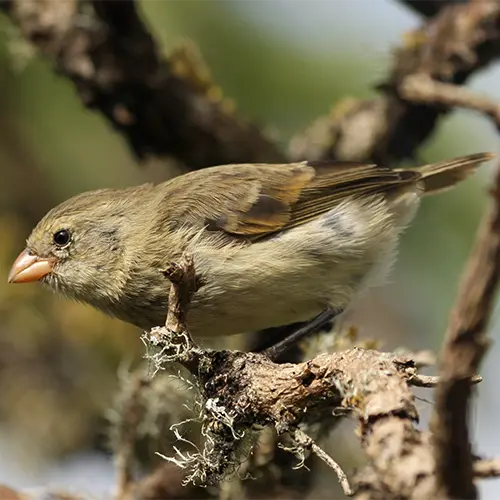
Dry landing. A well-known hideout and deep water anchorage in the days of pirates, Tagus Cove was also one of the few sites visited by Charles Darwin and the HMS Beagle in 1835. A beautiful hike leads us past an overview of Darwin Lake and on to a stunning volcanic landscape revealing Isabela island’s dramatic northern volcanoes. Once back at sea level the perfect activity is to snorkel along a submerged wall with turtles, lots of fish, penguins and potentially flightless cormorants. You might even be tempted by a panga ride or kayak!
P.M. Espinosa Point (SN/WLK)
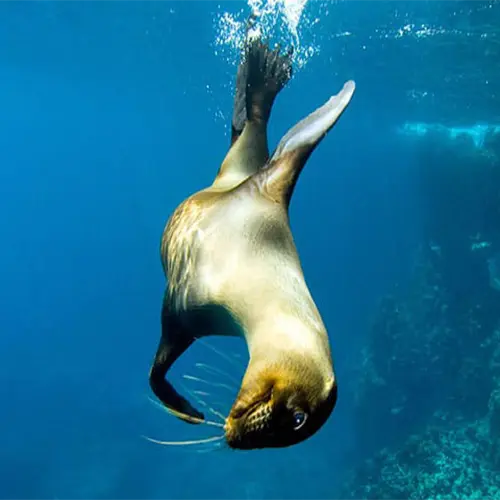
Dry landing. The youngest island of Galapagos and one of the most pristine in the world. Fernandina is simply the “marine iguana capital of the world”. This desolate volcanic backdrop is home to a huge concentration of these enigmatic reptiles. Incongruously, sharing the same shoreline, we can find the diminutive Galapagos penguins. Here we also have the exciting opportunity to snorkel with marine iguanas feeding underwater, penguins, turtles and the bizarre, endemic, flightless
Day 7: Santiago
A.M. Egas Port (SN/WLK)
Wet landing. The black volcanic sand sets this landing apart from most. It is best known for the dramatic shoreline where we meet a host of species that chose to live between land and sea. Particular among these are the endemic Galapagos fur seals which maintain a small colony at the end of our walk. Other species of note include American oystercatchers, sea lions, waders, herons, lava lizards and even Galapagos hawks. An optional visit takes us to an abandoned salt mine famous in its day for supplying salt to mainland Ecuador.
P.M. Rábida (SN/WLK/PR)
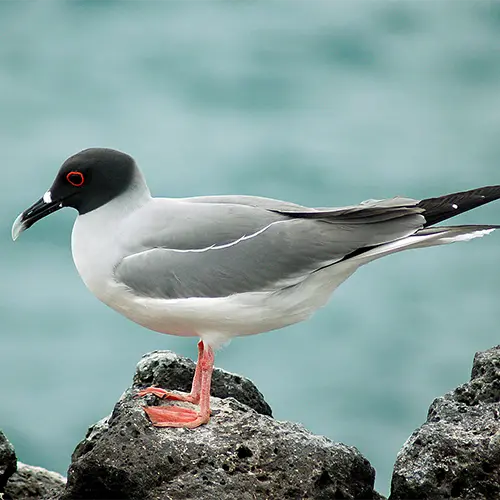
Wet landing. Lying at the heart of the archipelago this dramatic island, with its distinctive red-sand beach, is home to sea lions, mockingbirds, finches, endemic Galapagos doves and vermillion flycatchers. A walk takes us through a forest of palo santo and cacti to a beautiful overview of the bay. Snorkeling here can be excellent, often with large schools of black-striped salemas, sea lions and the ubiquitous turtles.
Day 8: North Seymour - Baltra
A.M. North Seymour Island (SN/WLK/PR)
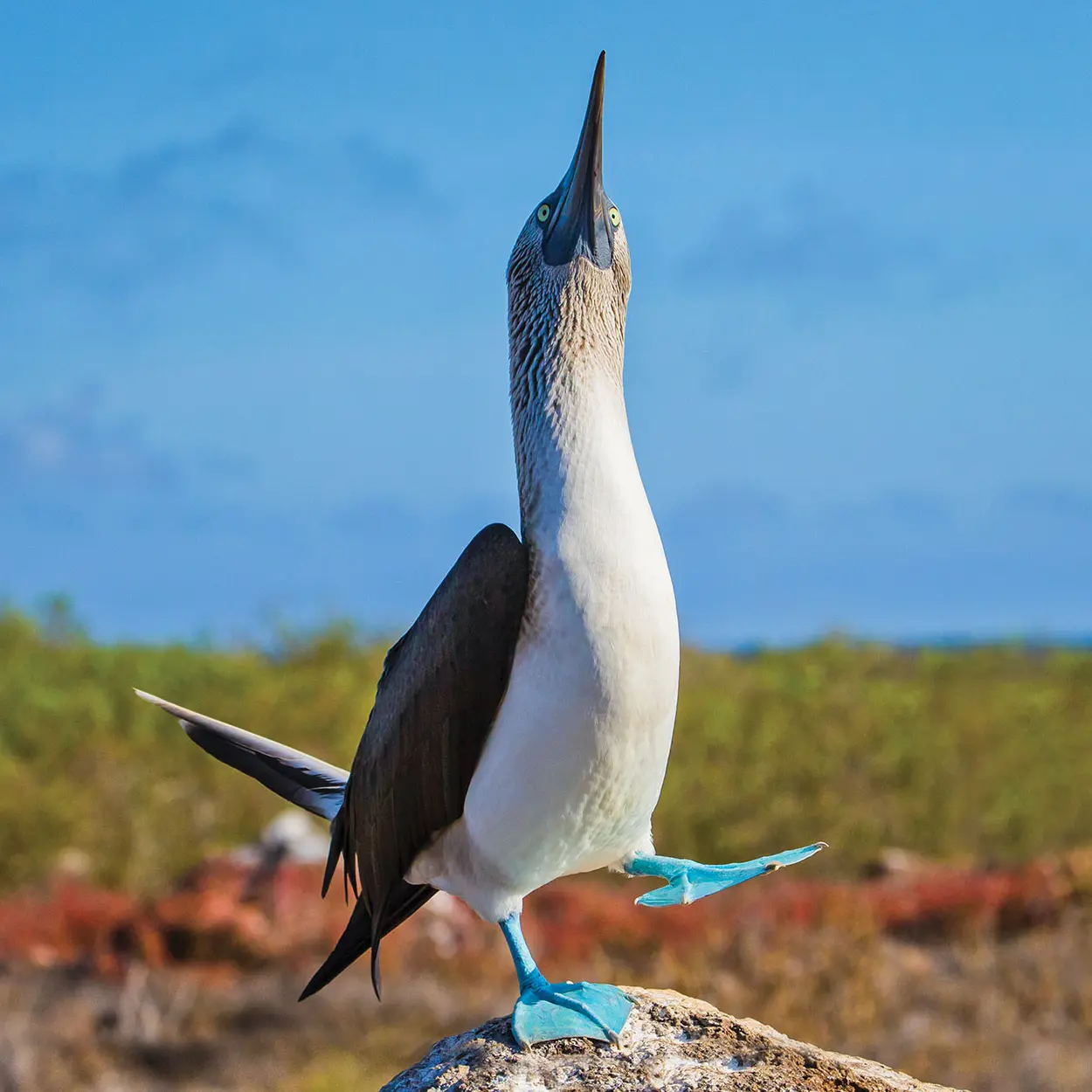
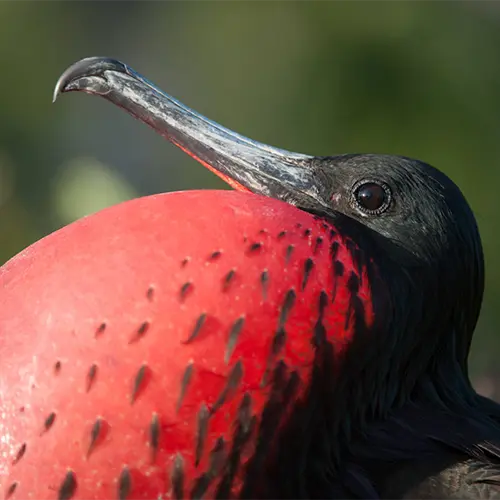
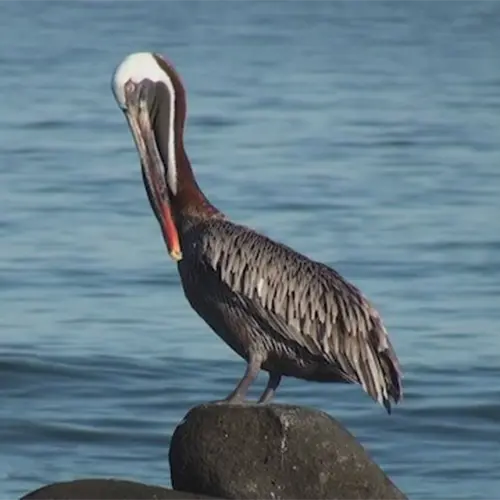
Dry landing. This flat, uplifted, island is an important spot to see both magnificent and great frigatebird males courting the females by clicking, bill-clapping, shuddering and flapping their wings, all while showing off their grossly inflated, bright red, gular pouch. We will also likely see courting blue-footed boobies displaying their unique feet while ‘dancing’ to a prospective mate. Sea lions, swallow-tailed gulls, crashing surf and distant views of the Daphne Islands top off a great visit.
Baltra (Airport)
After the visit, passengers will be transferred to the airport for their return flight to Guayaquil or Quito.
Itinerary A 5D/4N (Sunday to Thursday)
Day 1: Baltra – Bachas
A.M. Baltra (Airport)
Departure from Quito or Guayaquil to Baltra Island (2 ½-hour flight). Arriving in the Galapagos, passengers are picked up at the airport by our natural guides and taken to a ten-minute bus drive to the pier to board the Eden Yacht.
P.M. Bachas Beach(SN/WLK)
Wet landing. Named for some wrecked World War II barges whose ribs are still visible in the sand this visitor site offers great swimming, a lovely walk along the shore and a visit to a lagoon behind the high tide line with wading birds, marine iguanas and sometimes even flamingoes. The two beaches are also favorite nesting sites for green turtles which often leave tractor-like tracks in the sand.
Day 2: Genovesa
A.M. Darwin Bay (SN/WLK/PR)
Disembark onto a small sand and coral beach. A short trail heads west along a tidal lagoon and then up a rocky hill that leads to a point overlooking the cliffs and Darwin Bay. Along the trail near the tidal lagoon, visitors will see pairs of Swallow-tailed Gulls, Lava Gulls, Yellow-crowned and Lava Herons. The trail continues through Palo Santo trees, Opuntia cacti, and Saltbushes inhabited by Great Frigate birds and Red-footed Boobies.
P.M. Prince Philip’s Steps
Be marvelled at the variety of sea life that uses the crevices of the lava cliffs for shelter. Red-billed Tropicbirds fly overhead, switching between their nests and the bay, and a small colony of fur seals may be found near the landing site. You will be dropped off at a steep stairway that begins on rocks at the foot of a path that leads through a seabird colony full of Nazca and Red-footed Boobies.
Day 3: Bartholomew – Santiago
A.M. Bartolomé (SN/WLK/PR)
Dry or wet landing. Considered the most iconic landscape of the entire archipelago the view from the top of Bartolome Island, overlooking the famous Pinnacle Rock and the austere Santiago Island beyond, is well worth the climb up the wooden boardwalk. This volcanic scene has often been likened to a lunar landscape. Our subsequent snorkel here might put us face to face with Galapagos penguins, white-tipped reef sharks and playful sea lions.
P.M. Bahía Sullivan (SN/WLK)
We will have a dry landing on Sullivan Bay in Santiago Island to start our walk over a recent lava flow, including very fresh pahoehoe lava formations, lava bubbles containing crystallized minerals and pioneer plants. Along the shoreline, we may find Galapagos penguins and herons going after small fish.
Day 4: Santa Cruz
A.M. Black Turtle Cove (PR)
Here, we can find four species of mangrove in the extensive tidal lagoon system that stretches for almost a mile inland. During our panga ride through the labyrinth we will spot many turtles, herons of several species, sharks and rays. The experience is otherworldly and seems to transport us back to the beginning of time.
P.M. Dragon Hill (SN/WLK)
Dry landing. Arriving to a small lava dock our first encounters are with marine iguanas that blend-in perfectly to the dark rock. As we walk past large prickly pear cacti we arrive to one end of a long, sickle-shaped, beach with Dragon Hill standing in the distance. Our walk takes us on a circular path, past a shallow lake where flamingoes frequently come to feed. Waders such as stilts, turnstones and sandpipers work the muddy edges frenetically looking for food as we continue inland to a dry, forested habitat where land iguanas nest and burrow.
Day 5: Santa Cruz - Baltra
A.M. Charles Darwin Research Stations & Fausto Llerena Breeding Center (WLK)
Dry landing. Once home to the famous Lonesome George, the last tortoise of the Pinta race, the breeding and relocation center is named in honour of his long-time guardian. The center is set in the Galapagos National Park Service where various interpretative buildings are available to visit. The grounds, with large stands of native vegetation, are one of the better places to spot some of the seldom seen Darwin’s finches such as the woodpecker, cactus and vegetarian finches.
P.M. Baltra (Aeropuerto)
After the visit, passengers will be transferred to the airport for their return flight to Guayaquil or Quito.
Itinerary 1B 4D/3N (Thursday to Sunday)
Day 1: Baltra - Santa Cruz
A.M. Baltra (Airport)
Departure from Quito or Guayaquil to Baltra Island (2 ½-hour flight). Arriving in the Galapagos, passengers are picked up at the airport by our natural guides and taken to a ten-minute bus drive to the pier to board the Eden Yacht.
P.M. Highlands Tortoise Reserve (WLK)
Dry landing. In the central highlands of Santa Cruz Island we have our best opportunity to interact at close quarters with totally wild, Galapagos giant tortoises. A short walk among these huge, 600 lb, reptiles will also offer the chance for more highland species, especially several species of the famed finches.
Day 2: Floreana
A.M. Post Office (SN/WLK)
Wet landing. A very short walk from the beach leads us to the famous Post Office Barrel. Claimed to have been first setup in 1793 by Captain James Colnett it remains the oldest functioning “post office” in the Pacific. The system was that whalers and fur sealers would leave addressed letters in the barrel to be picked up by homeward bound colleagues. In the spirit of maintaining tradition visitors today will often take letters and hand-deliver them in their home countries.
P.M. Cormorant Point (SN/WLK/PR)
Wet landing. On arriving, the observant visitor will notice that olivine, a volcanic crystal, has proffered a subtle green hue on the dark beach. Our walk takes us past island-endemic Scalesia plants to a large, shallow, lagoon often inhabited by a variable number of shockingly pink greater flamingoes. We continue through a forest of palo santo trees to arrive at a powdery white beach, a nesting area of green turtles. As we paddle barefoot in the shallow water we will spot diamond stingrays and white-tipped reef sharks.
Day 3: Española
A.M. Suarez Point (WLK)
Dry landing. One of the highlight visits of the trip. Punta Suarez seems to have everything – a naturalist’s paradise. A slew of marine iguanas and sea lions greet us at the landing site from where our walk continues with close encounters of boobies, endemic lizards, gulls and even a dramatic blow hole. The oldest extant island in the archipelago it is our only opportunity to commune with the endemic waved albatross during their breeding season between April and December. With luck, we can watch their complex courtship display.
P.M. Gardner Bay – Gardner & Osborn Islet (SN/WLK)
Wet landing. One of the most stunning beaches in all of Galapagos. The long, white, sandy beach, lapped by turquoise waters is home to a colony of Galapagos sea lions, indifferent to the humans that walk amongst them. The Hood mockingbirds, endemic to this particular island, will be eager to inspect the visitors and satisfy their innate curiosity. Darwin’s finches may also join the throng including the reclusive warbler finch. We can also snorkel here from the beach, in the shallows of the bay.
Day 4: San Cristobal
A.M. Leon Dormido – Breeding Center (WLK)
Dry landing in Puerto Baquerizo Moreno, capital of the Galapagos Islands. Passenger visit to the Interpretation Center; Excellent place to learn about natural history in the Galapagos. The Natural History Museum displays information about the volcanic origin of the islands, their remoteness from the continent, their sea currents, climate, the arrival of different species and their colonization, among some topics of interest. Human history is also exposed, chronological narrative of the most important events related to the discovery and colonization of the islands.
Puerto Baquerizo Moreno (Airport)
After the visit, passengers will be transferred to the airport for their return flight to Guayaquil or Quito.
Itinerary 2A 3D/2N (Sunday to Tuesday)
Day 1: San Cristobal – Wolf
A.M. Puerto Baquerizo Moreno (Airport)
Departure from Quito or Guayaquil to San Cristobal in a 2-hour flight. Upon arrival, passengers are picked up at the airport by our naturalist guides and taken on a ten-minute bus drive to the pier to board the Eden Yacht.
P.M. Isla Lobos (SN/PR)
On this Galapagos tour to Lobos Islet, we will disembark and go for an hour-long hike and snorkel around the island, hopefully spotting blue-footed boobies, marine iguanas and frigatebirds. If luck is on our side, there is a chance to see the marine iguanas feeding underwater. Thanks to the channel this islet creates with the island of San Cristobal, we will be able to see rays and turtles on the sandy bottom. This is considered a great place for first time snorkelers as the water is clear and not far away from land.
Day 2: Santa Fe – South Plazas
A.M. Santa Fe (SN/WLK/PR)
Wet landing. Santa Fe shows white sand beaches surrounded by sea lion colonies; through the island path, an endemic cactus forest is passed, home the Santa Fe land iguanas(the largest in the islands). This island is the habitat for a number of species, including the Galapagos hawk, Galapagos snakes, rice rats (one of the few endemic Galapagos rodents) a variety of finches and one of the four mockingbird species of the archipelago.
P.M. South Plaza Islet (WLK)
Dry landing. Sea lions, swallow-tailed gulls and land iguanas are all present at the landing site. The small island is covered with a carpet of a red succulent studded with Opuntia cacti. At the cliff edge, we spend time watching birds fly past at eye level in the up draught. These include, frigatebirds, flocks of Galapagos shearwaters and of particular note, flights of displaying red-billed tropicbirds. Back at sea level, we once again encounter land iguanas, some of which have hybridized with their resident marine cousins.
Day 3: Santa Cruz – Baltra
A.M. Charles Darwin Research Station (WLK)
Dry landing. Once home to the famous Lonesome George, the last tortoise of the Pinta race, the breeding and relocation center is named in honour of his long-time guardian. The center is set in the Galapagos National Park Service where various interpretative buildings are available to visit. The grounds, with large stands of native vegetation, are one of the better places to spot some of the seldom seen.
Baltra (Airport)
After the visit, passengers will be transferred to the airport for their return flight to Guayaquil or Quito.
Itinerary 6D/5N (Tuesday to Sunday)
Day 1: Baltra – Santa Cruz
A.M. Baltra (Airport)
Departure from Quito or Guayaquil to Baltra Island (2 ½-hour flight). Arriving in the Galapagos, passengers are picked up at the airport by our natural guides and taken to a ten-minute bus drive to the pier to board the Eden Yacht.
P.M. Parte Alta (WLK)
Dry landing. In the central highlands of Santa Cruz Island we have our best opportunity to interact at close quarters with totally wild, Galapagos giant tortoises. A short walk among these huge, 600 lb reptiles will also offer the chance for more highland species, especially several species of the famed finches.
Day 2: Isabela
A.M. Humedales – Muro de las lagrimas (WLK)
“Los Humedales” is a 6km long trail complex, located south of Isabela Island, Galapagos. They have a great variety of flora and fauna, as well as the spectacular landscapes of the bay, the town of Puerto Villamil, volcanoes, islets and rocks. Isabela wetlands have both their own and introduced species. The “Muro de las Lagrimas” is at the end of the Wetlands route, on the way to the wall there is a viewpoint with a wonderful view of Puerto Villamil and you can also observe giant turtles in the wild along the way.
P.M. Breeding Center Arnaldo Tupiza (WLK)
We will be close to the majestic giant tortoises of the Galapagos Islands at Giant Tortoise Breeding Center Arnaldo Tupiza Chamaidan. With the last remaining Cerro Palomo tortoises – four male and two female – in its care, the breeding center dedicates itself to increasing and stabilizing the population of this endangered species. The center also cares for more than 300 other giant tortoises, which you can see on your visit.
Day 3: Isabela
A.M. Punta Moreno (SN/WLK/PR)
Punta Moreno is located on the north coast of Isabela Island between the volcano Sierra Negra and Cerro Azul volcano. The distance of the trail is about 2100 meters, and runs along a lava flow Pahohoe (solidified lava in the form of corrugated or an accordion) into a complex of coastal lagoons. The main attractions at Punta Moreno are coastal lagoons amid black lava flows where there are several species of birds. It has a panoramic view of three volcanoes, the most active of the Galapagos that are Sierra Negra, Cerro Azul of Isabela Island and La Cumbre of Fernandina Island.
P.M. Bahia Elizabeth (PR)
Elizabeth Bay is one of the best Galapagos destinations for the practice of surface diving. Its privileged location on Isabela Island, bathed by its crystalline waters and abundant marine life, make it a paradise for lovers of this water sport.
Day 4: Isabela - Fernandina
A.M. Tagus Cove (SN/WLK/PR)
Dry landing. A well-known hideout and deep water anchorage in the days of pirates, Tagus Cove was also one of the few sites visited by Charles Darwin and the HMS Beagle in 1835. A beautiful hike leads us past an overview of Darwin Lake and on to a stunning volcanic landscape revealing Isabela island’s dramatic northern volcanoes. Once back at sea level the perfect activity is to snorkel along a submerged wall with turtles, lots of fish, penguins and potentially flightless cormorants. You might even be tempted by a panga ride or kayak!
P.M. Espinosa Point (SN/WLK)
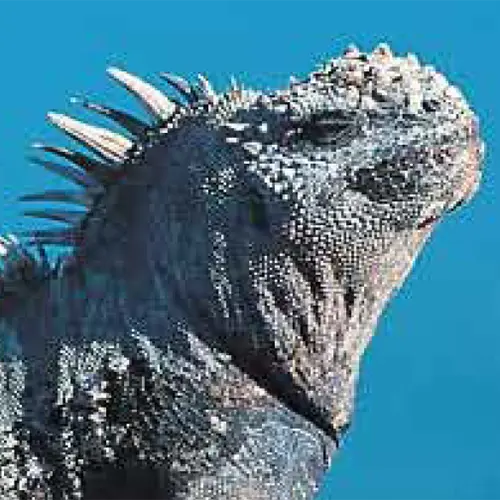
Dry landing. The youngest island of Galapagos and one of the most pristine in the world. Fernandina is simply the “marine iguana capital of the world”. This desolate volcanic backdrop is home to a huge concentration of these enigmatic reptiles. Incongruously, sharing the same shoreline, we can find the diminutive Galapagos penguins. Here we also have the exciting opportunity to snorkel with marine iguanas feeding underwater, penguins, turtles and the bizarre, endemic, flightless
Day 5: Santiago – Rabida
A.M. Egas Port (SN/WLK)
Wet landing. The black volcanic sand sets this landing apart from most. It is best known for the dramatic shoreline where we meet a host of species that chose to live between land and sea. Particular among these are the endemic Galapagos fur seals which maintain a small colony at the end of our walk. Other species of note include American oystercatchers, sea lions, waders, herons, lava lizards and even Galapagos hawks. An optional visit takes us to an abandoned salt mine famous in its day for supplying salt to mainland Ecuador.
P.M. Rábida (SN/WLK/PR)
Wet landing. Lying at the heart of the archipelago this dramatic island, with its distinctive red-sand beach, is home to sea lions, mockingbirds, finches, endemic Galapagos doves and vermillion flycatchers. A walk takes us through a forest of palo santo and cacti to a beautiful overview of the bay. Snorkeling here can be excellent, often with large schools of black-striped salemas, sea lions and the ubiquitous turtles.
Day 6: North Seymour – Baltra
A.M. North Seymour Island (SN/WLK/PR)
Dry landing. This flat, uplifted, island is an important spot to see both magnificent and great frigatebird males courting the females by clicking, bill-clapping, shuddering and flapping their wings, all while showing off their grossly inflated, bright red, gular pouch. We will also likely see courting blue-footed boobies displaying their unique feet while ‘dancing’ to a prospective mate. Sea lions, swallow-tailed gulls, crashing surf and distant views of the Daphne Islands top off a great visit. • Baltra (Airport) After the visit, passengers will be transferred to the airport for their return flight to Guayaquil or Quito.
Itinerary 1B+2A 6D/5N (Thursday to Tuesday)
Day 1: Baltra – Santa Cruz
A.M. Baltra (Airport)
Departure from Quito or Guayaquil to Baltra Island (2 ½-hour flight). Arriving in the Galapagos, passengers are picked up at the airport by our natural guides and taken to a ten-minute bus drive to the pier to board the Eden Yacht.
P.M. Highlands Tortoise Reserve (WLK)
Dry landing. In the central highlands of Santa Cruz Island we have our best opportunity to interact at close quarters with totally wild, Galapagos giant tortoises. A short walk among these huge, 600 lb, reptiles will also offer the chance for more highland species, especially several species of the famed finches.
Day 2: Floreana
A.M. Post Office (SN/WLK)
Wet landing. A very short walk from the beach leads us to the famous Post Office Barrel. Claimed to have been first setup in 1793 by Captain James Colnett it remains the oldest functioning “post office” in the Pacific. The system was that whalers and fur sealers would leave addressed letters in the barrel to be picked up by homeward bound colleagues. In the spirit of maintaining tradition visitors today will often take letters and hand-deliver them in their home countries.
P.M. Cormorant Point (SN/WLK/PR)
Wet landing. On arriving, the observant visitor will notice that olivine, a volcanic crystal, has proffered a subtle green hue on the dark beach. Our walk takes us past island-endemic Scalesia plants to a large, shallow, lagoon often inhabited by a variable number of shockingly pink greater flamingoes. We continue through a forest of palo santo trees to arrive at a powdery white beach, a nesting area of green turtles. As we paddle barefoot in the shallow water we will spot diamond stingrays and white-tipped reef sharks.
Day 3: Española
A.M. Suarez Point (WLK)
Dry landing. One of the highlight visits of the trip. Punta Suarez seems to have everything – a naturalist’s paradise. A slew of marine iguanas and sea lions greet us at the landing site from where our walk continues with close encounters of boobies, endemic lizards, gulls and even a dramatic blow hole. The oldest extant island in the archipelago it is our only opportunity to commune with the endemic waved albatross during their breeding season between April and December. With luck, we can watch their complex courtship display.
P.M. Gardner Bay – Gardner & Osborn Islet (SN/WLK)
Wet landing. One of the most stunning beaches in all of Galapagos. The long, white, sandy beach, lapped by turquoise waters is home to a colony of Galapagos sea lions, indifferent to the humans that walk amongst them. The Hood mockingbirds, endemic to this particular island, will be eager to inspect the visitors and satisfy their innate curiosity. Darwin’s finches may also join the throng including the reclusive warbler finch. We can also snorkel here from the beach, in the shallows of the bay.
Day 4: San Cristobal – Wolf
A.M. Leon Dormido – Breeding Center (WLK)
Dry landing in Puerto Baquerizo Moreno, capital of the Galapagos Islands. Passenger visit to the Interpretation Center; Excellent place to learn about natural history in the Galapagos. The Natural History Museum displays information about the volcanic origin of the islands, their remoteness from the continent, their sea currents, climate, the arrival of different species and their colonization, among some topics of interest. Human history is also exposed, chronological narrative of the most important events related to the discovery and colonization of the islands.
P.M. Isla Lobos (SN/PR)
On this Galapagos tour to Lobos Islet, we will disembark and go for an hour-long hike and snorkel around the island, hopefully spotting blue-footed boobies, marine iguanas and frigatebirds. If luck is on our side, there is a chance to see the marine iguanas feeding underwater. Thanks to the channel this islet creates with the island of San Cristobal, we will be able to see rays and turtles on the sandy bottom. This is considered a great place for first time snorkelers as the water is clear and not far away from land.
Day 5: Santa Fe – South Plaza
A.M. Santa Fe (SN/WLK/PR)
Wet landing. Santa Fe shows white sand beaches surrounded by sea lion colonies; through the island path, an endemic cactus forest is passed, home the Santa Fe land iguanas(the largest in the islands). This island is the habitat for a number of species, including the Galapagos hawk, Galapagos snakes, rice rats (one of the few endemic Galapagos rodents) a variety of finches and one of the four mockingbird species of the archipelago.
P.M. South Plaza Islet (WLK)
Dry landing. Sea lions, swallow-tailed gulls and land iguanas are all present at the landing site. The small island is covered with a carpet of a red succulent studded with Opuntia cacti. At the cliff edge, we spend time watching birds fly past at eye level in the up draught. These include, frigatebirds, flocks of Galapagos shearwaters and of particular note, flights of displaying red-billed tropicbirds. Back at sea level, we once again encounter land iguanas, some of which have hybridized with their resident marine cousins.
Day 6: Santa Cruz – Baltra
A.M. Charles Darwin Research Station (WLK)
Dry landing. Once home to the famous Lonesome George, the last tortoise of the Pinta race, the breeding and relocation center is named in honour of his long-time guardian. The center is set in the Galapagos National Park Service where various interpretative buildings are available to visit. The grounds, with large stands of native vegetation, are one of the better places to spot some of the seldom seen.
Baltra (Airport)
After the visit, passengers will be transferred to the airport for their return flight to Guayaquil or Quito.
Explore the
place you stay
- Category: Tourist class boat
- Capacity: 16 guests
- Length: 88.9 feet
- Breadth: 21.35 feet
- Engines: 9 knots / 2 Detroit diesel
- Guide: Naturalist bilingual guide
- Crew: 7 and 1 Naturalist bilingual guide
- Facilities: 8 double cabins, 3 of them with bunk beds, 1 matrimonial cabin and 4 with low beds, all of them with private bathroom with hot/cold water, living room, dining room, bar, and sundeck. Complete navigation and safety equipment, 2 dingies with 16 hp outboard motor.
Dates & Rates
To request a quote or make a reservation let's start with your details...*
Get in touch with us
Explore more of
Tourist Class Boats
Experience the Galapagos Islands aboard a comfortable tourist-class boat, your floating basecamp for exploring this extraordinary archipelago. Enjoy daily excursions to different islands, guided by knowledgeable naturalists who will introduce you to the unique wildlife and volcanic landscapes. Expect comfortable accommodations, delicious meals, and opportunities for snorkeling, hiking, and wildlife viewing, all while cruising through the stunning Galapagos waters. It's an accessible and immersive way to discover the magic of these enchanted isles.