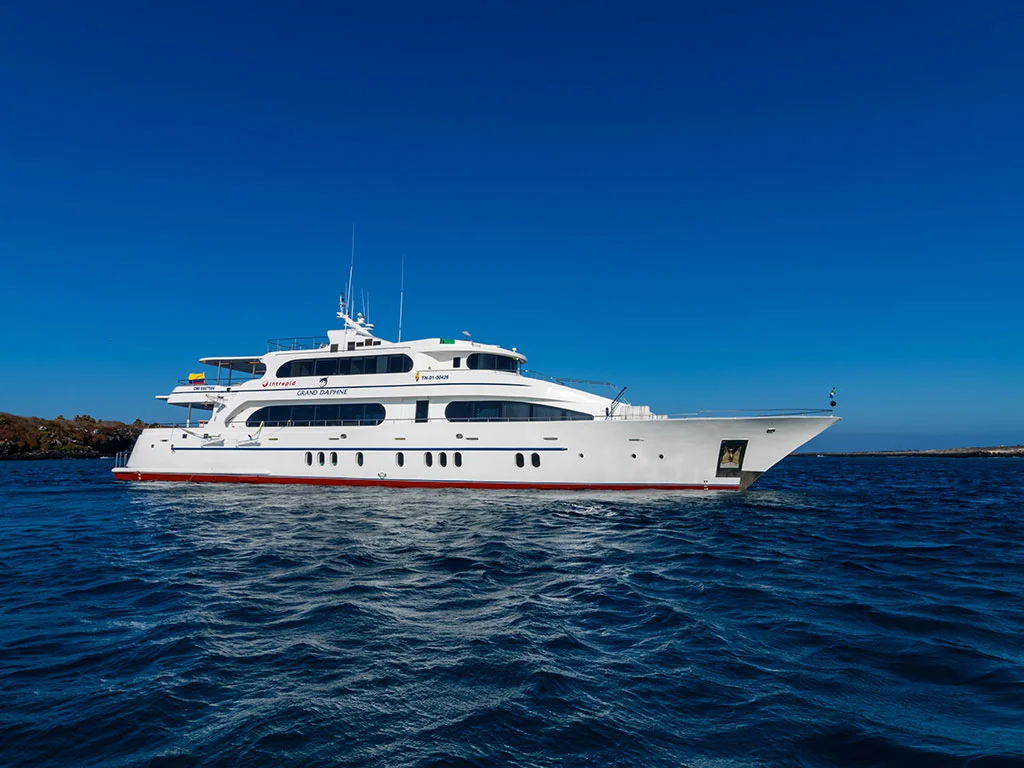
First Class Galapagos cruise, M/Y Grand Daphne
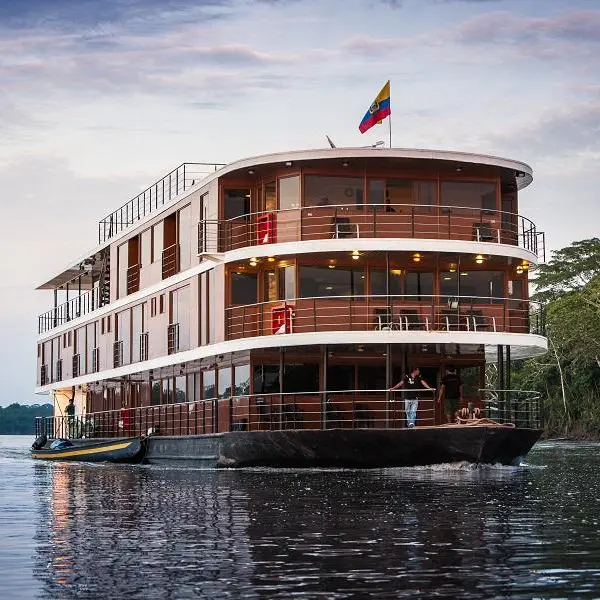
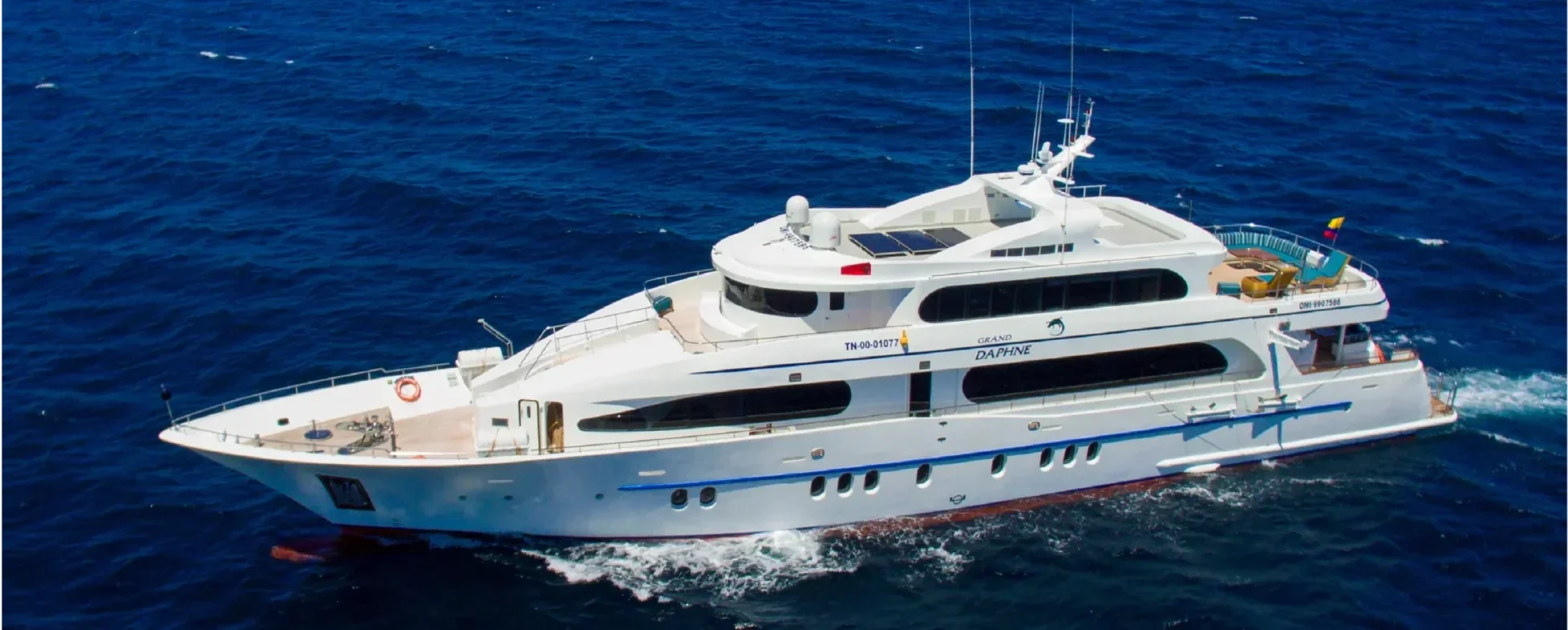
M/Y Grand Daphne is a first-class Galapagos cruise, you can expect the outmost level of service. Explore the unspoiled, unique and abundant natural wonders of the Galapagos.
Built with the highest standards for comfort, travelling and that covers all the demanding safety measures to operate in the Galapagos Islands. It complies with all the standards set by the Galapagos National Park to best protect the environment and the islands.
Itinerary
Itinerary 4D/3N B (Wednesday to Saturday)
Day 1: Baltra / Santa Cruz: Highlands
Baltra / Santa Cruz: Highlands
On arrival in the Galapagos, you collect your luggage and meet the cruise guide at the arrival’s hall. First you need to take the bus from the airport to the dock. Our guide will provide you the ticket for this. On arrival to the dock you will then take the Ferry to cross the Itabaca Channel and get from Baltra to Santa Cruz Island. We then head to the Highlands of Santa Cruz for our first Galapagos adventure.
Beginning at the coast in the northern part of the island, we travel across Santa Cruz through the agricultural region and into the misty forests where we can see the unique Scalesia cloud forest, dome-shaped giant tortoises in the wild, different species of Darwin finches and possibly the world famous woodpecker and warbler finches, as well as vermillion flycatchers. Today we will enjoy lunch in the highlands.
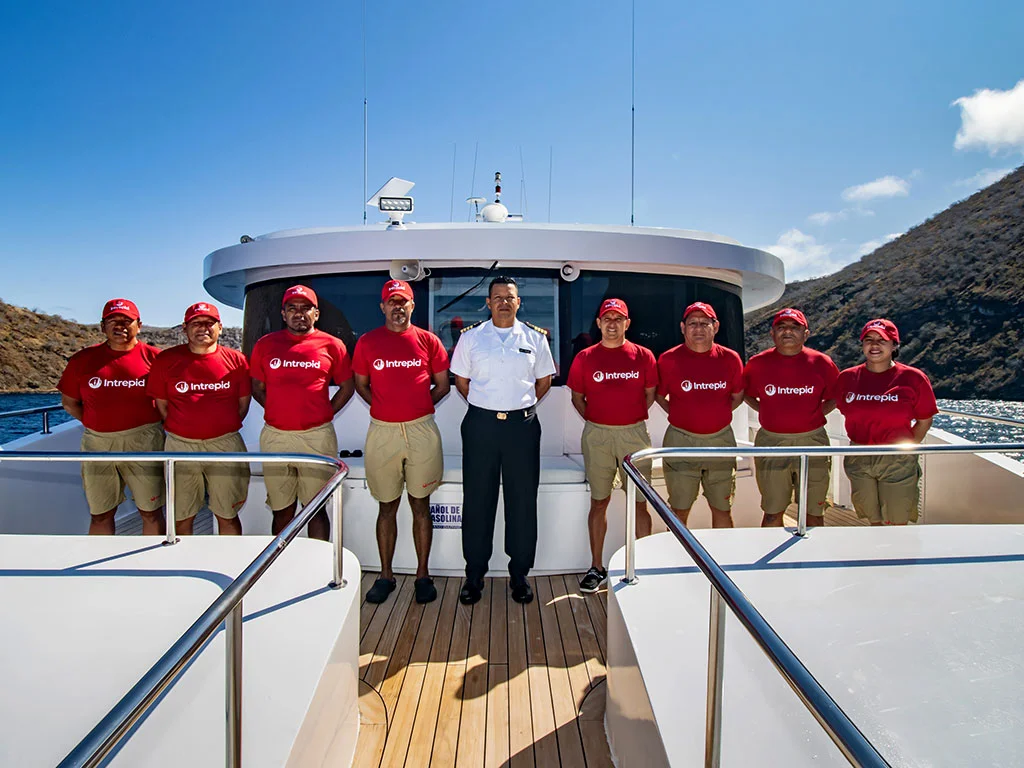
This afternoon we travel to Puerto Ayora, where we are then transferred to our boat, the Grand Daphne. Once on board, you will be assigned your cabin, meet the crew members and get to know better our guide and the group.
Day 2: Floreana
Post Office Bay, Cormorant Point and Devil’s Crown
t was simple, a sailor leaves a letter with its destination and to whom it goes and take a letter from another sailor if he is going to that letter´s destination. This custom continues today with Galapagos visitors leaving letters and postcards to be collected by the next passing boat. Send one of your own and check if there are any you can deliver back home. Snorkeling and enjoying a panga ride are activities also included in this outing.
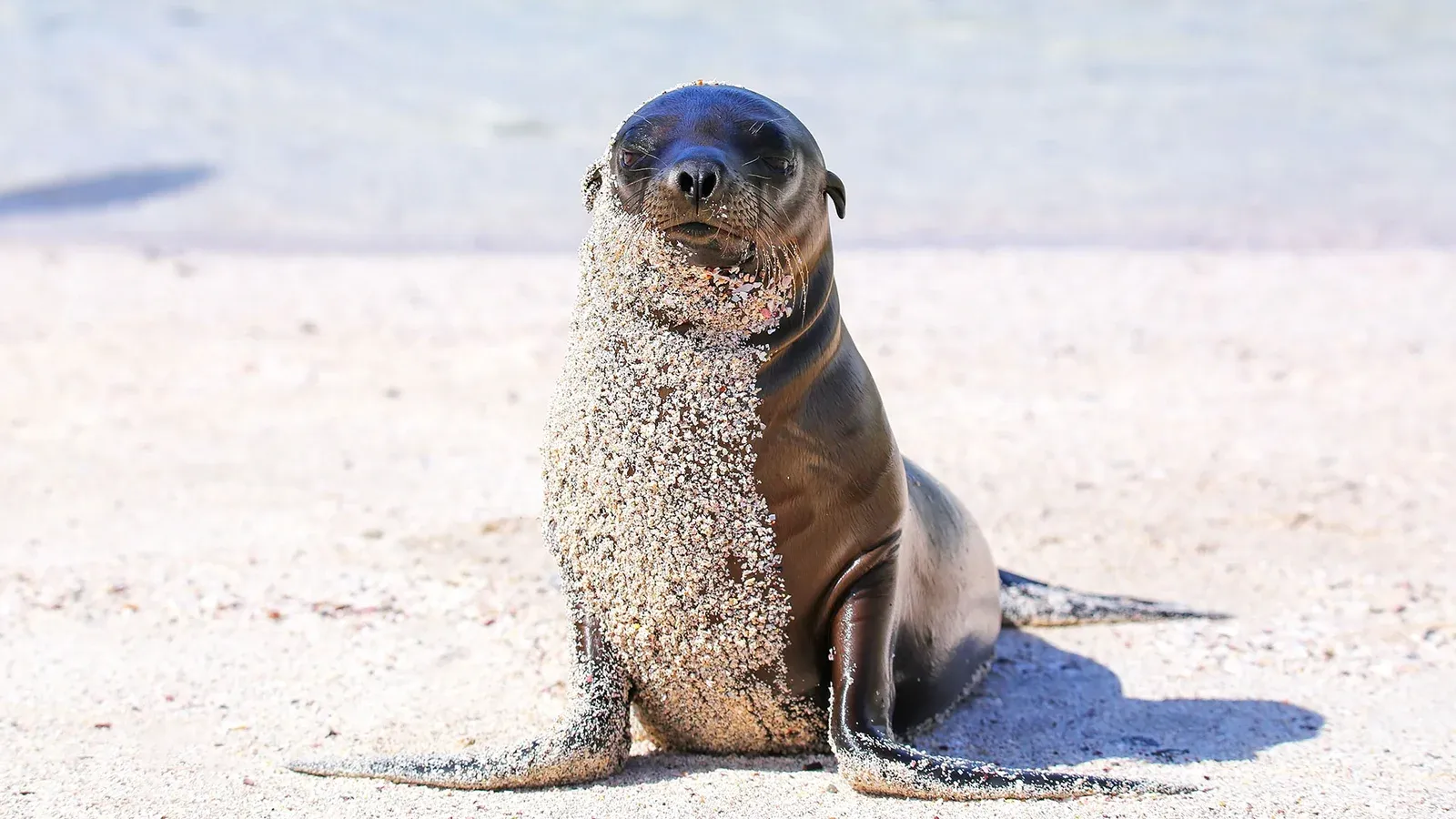
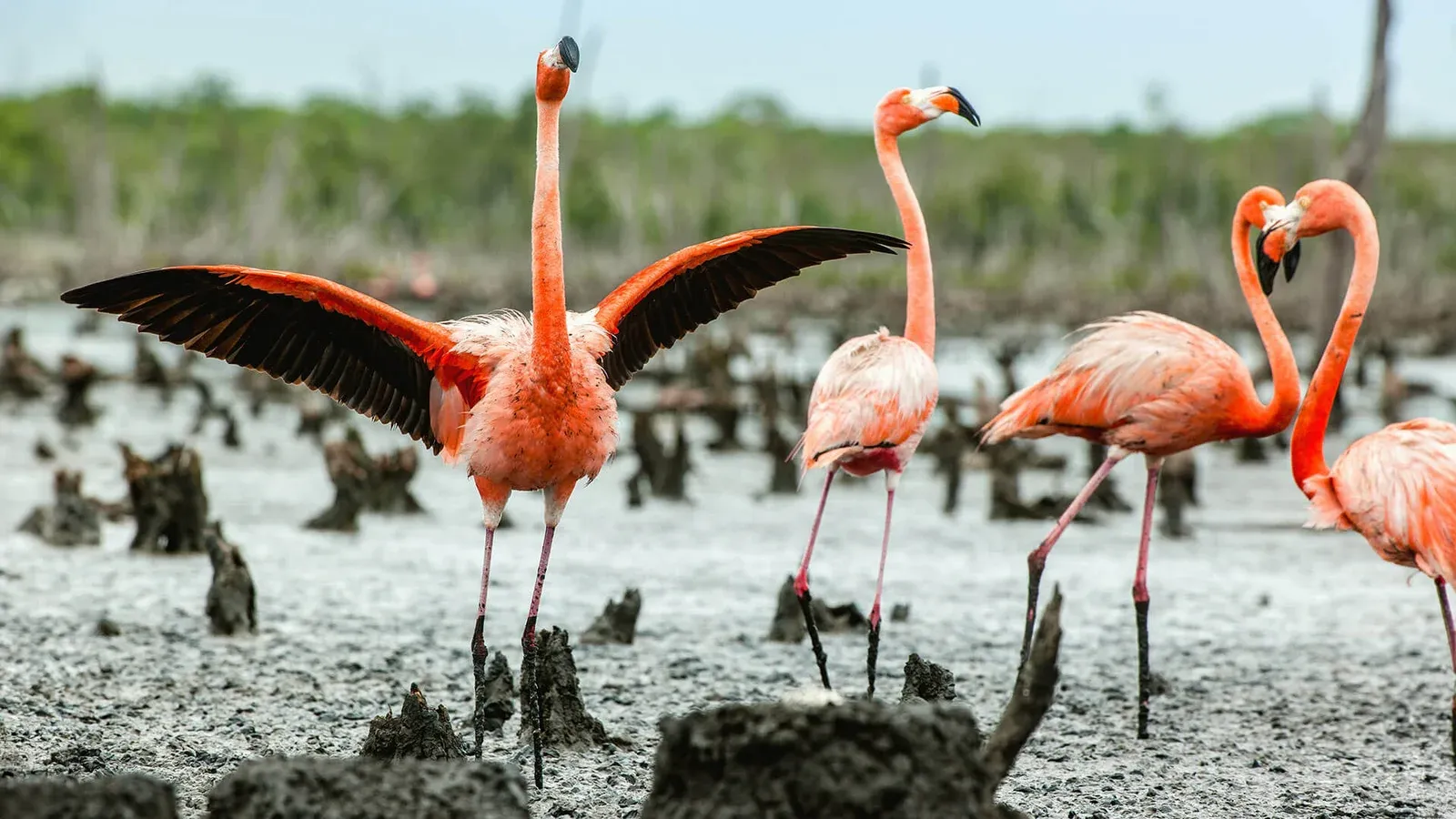
We go ashore at Punta Cormorant where the sand is made up of fine olivine crystals, a glassy volcanic mineral, giving the beach an olive-green color. It is the best place to see Galapagos sea lions. Today is also one of our finest opportunities to see pink flamingos and other water birds wading in the lagoons, including pintails and stilts. The walk continues to a white flour sandy beach to an Eastern Pacific green turtle nesting site. Young diamond stingrays are commonly found in the shoreline and enjoy the view of the turquoise crystalline ocean.
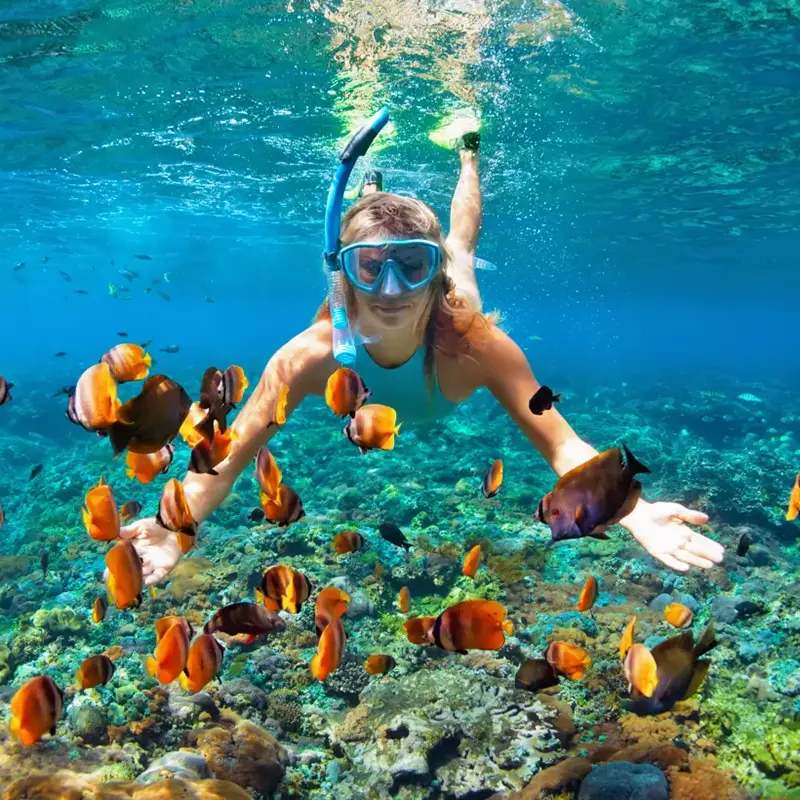
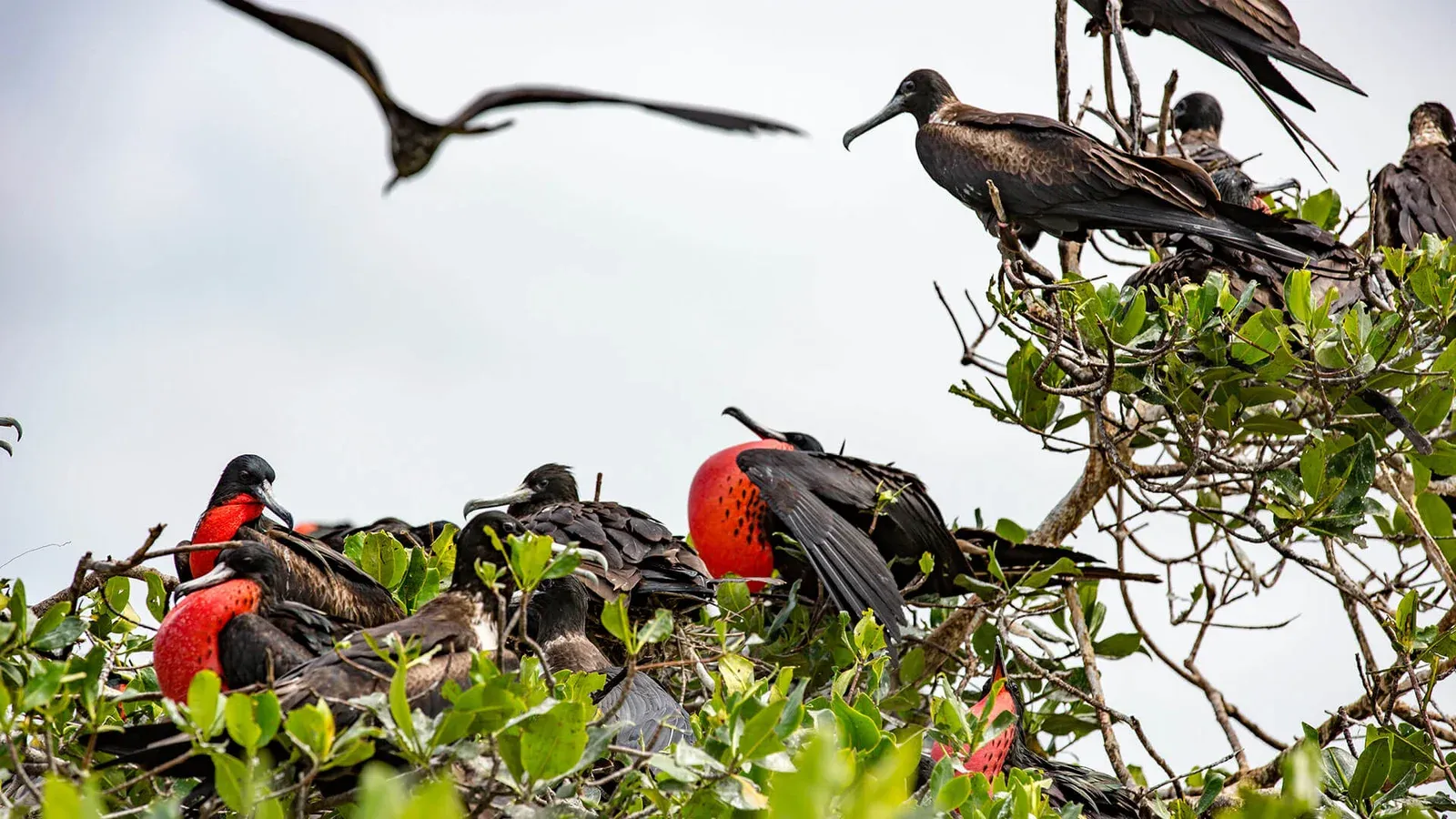
Just offshore, the famous Devil’s Crown is an old eroded volcanic cone and a popular roosting site for seabirds such as boobies, pelicans and frigates. Red-billed tropicbirds can also be seen nesting in the rocky crevices. The center of the cone is an outstanding snorkeling spot and many people find this one of the best snorkeling experiences of their trip. We might see rays, sharks, sea lions and turtles.
Day 3: Española
Suarez Point & Gardner Bay
We land in Suarez Point, one of the most attractive locations in the Galapagos and home to large and varied wildlife population – a walk along its trails takes us to a cliff top viewpoint, where we gain a magical panorama. Keep in mind that the terrain is uneven, so it is recommended to use appropriate footwear. Boobies line the rocky shoreline beneath us, while frigate birds may be seen overhead; nearby enormous male sea lions can be seen lounging and albatross use the cliffs as their ‘runway’, helping become airborne by the southeast winds that blow across this part of the island. If we’re lucky we’ll see the elaborate courtship rituals performed by albatrosses before the female chooses her lifelong mate. You may see marine iguanas throughout many of the islands in Galapagos, but none like the marine iguanas in Española, also called “Christmas marine iguanas”, with a red and green variation combined with its black color, it makes them unique and only possible to see here.
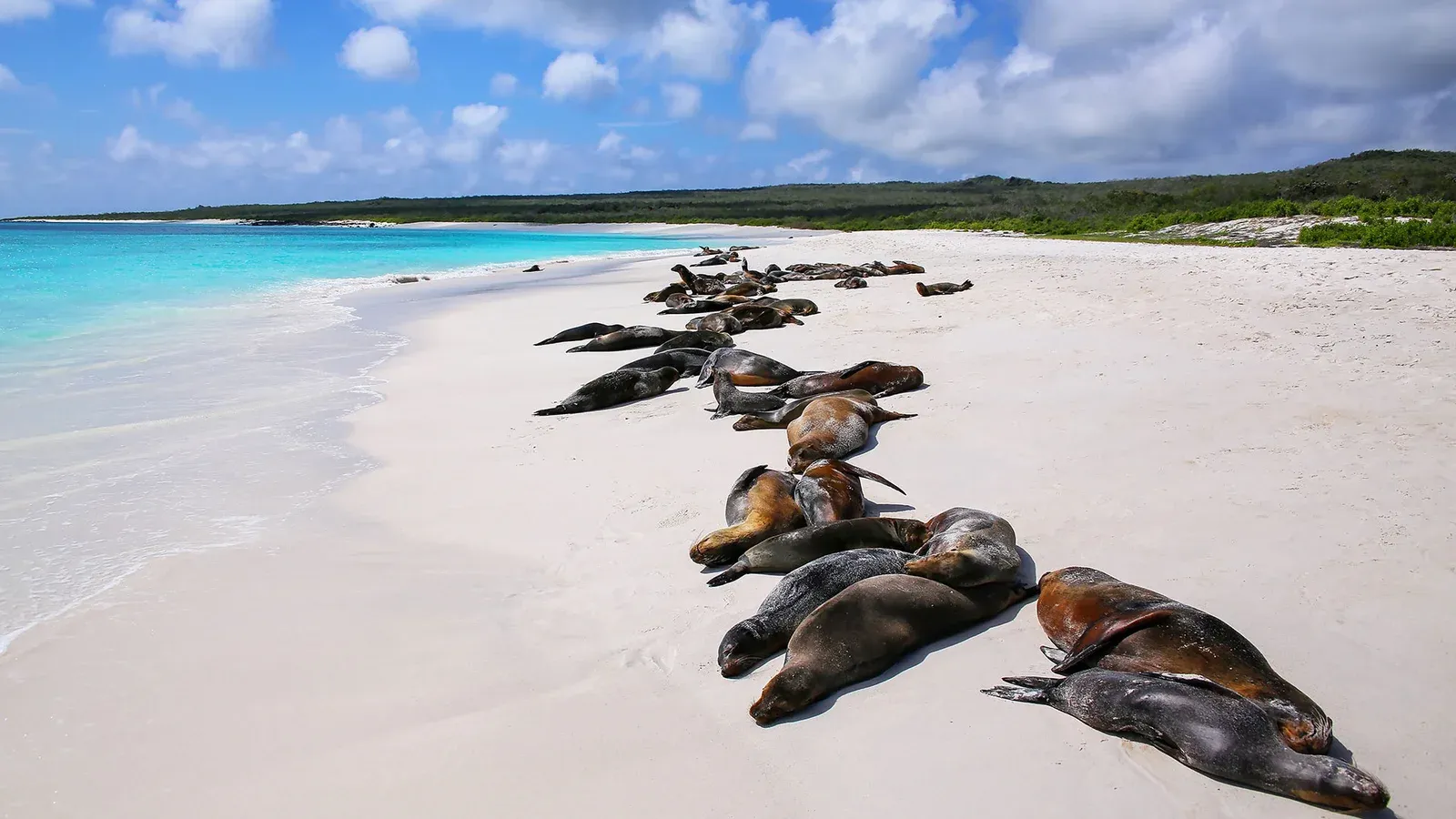
We then head to Gardner Bay which is considered by many as one of the most beautiful beaches in the Galapagos Islands and full of sea lions and hood mockingbirds. Enjoy the beach and do some snorkeling which could be great for playing with sea lion pups and lots of different type of fish. The rocks off the coast provide excellent snorkeling opportunities, with reef sharks, turtles and many species of tropical fish, including surgeon and angelfish, often seen. The small white-tipped reef sharks are also often spotted resting under the rocks.
Day 4: San Cristobal
Kicker Rock & Airport
Shake off any early morning doziness with a trip to Leon Dormido (Kicker Rock). This basalt crater rises 150 metres above the water and is divided into two parts by a narrow channel. Cruise around kicker rock as nesting seabirds flank the boat, tropicbirds soar overhead and sea lions lounge by the water. Next, spend some time snorkelling at Cerro Brujo, providing opportunities to see Galapagos sharks and sea turtles. Or perhaps enjoy the beautiful beach with a leisurely walk to photograph the interesting sea lions who can often be seen at this location.
Head to the airport on Isla San Cristobal for your flight back to Quito or Guayaquil.
Itinerary 5D/4N B (Saturday to Wednesday)
Day 1: San Cristobal
Interpretation Center
On arrival in the Galapagos, meet your local naturalist guide in the arrival hall and transfer to the Grande Daphne. Climb aboard and settle into your assigned cabin, meet the crew and listen to a safety drill. With the formalities out of the way, sit down to lunch and get to know your shipmates a little better.
The first stop today is the San Cristobal Interpretation Center. The centre brings the history and geography of the archipelago to life, from its volcanic origins to the present day. Get a complete overview of the Galapagos, the perfect way to start your adventure.
Day 2: Santa Fe - South Plazas
Santa Fe Island & South Plazas Island
Take a walk on Isla Santa Fe, home to a collection of the most spectacular wildlife in the Galapagos. You can expect to see sea lions, Galapagos hawks, land iguanas, a variety of finches, Galapagos mockingbirds, marine turtles, frigatebirds, Galapagos doves and lava lizards. Phew. The approximately 1.5-hour hike takes you along the coast and through a forest of opuntia (prickly pear cacti). The trail can be a little rocky, so mind your step and wear solid walking shoes. Later enjoy a snorkel in deep water and look out for schools of fish, rays and sea turtles.
Afterwards, continue to Isla Plaza Sur, a small, picturesque island. Take a walk (approximately 1.5 hours), getting close to sea lions and passing one of the Galapagos’ largest land iguana populations which rest among cacti. The southern cliffs of Plaza Sur are great for spotting tropicbirds and swallow-tailed gulls, as well as ‘the Gentlemen’s Club’ – a gathering of male sea lions. Today there may be an extra stop along the way to Plaza Sur to restock the provisions for the boat. Later tonight, set sail for Isla Genovesa.
Day 3: Genovesa
Genovesa
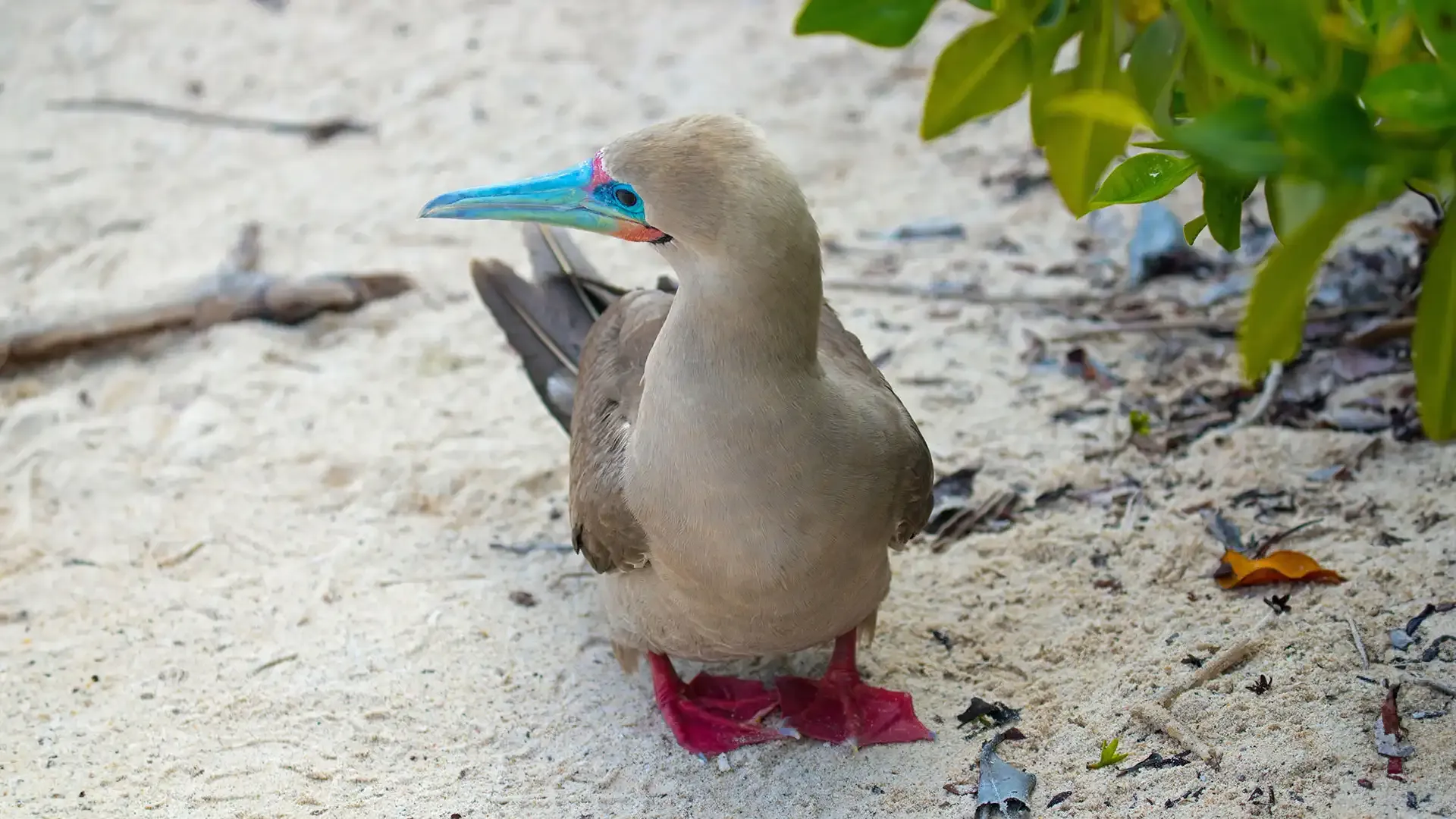
After an overnight sail, reach Isla Genovesa, the archipelago’s north-eastern outpost. It’s undeniably worth the voyage. Dolphins are often spotted in the waters here, so keep your eyes peeled. These varied landscapes are a twitcher’s paradise, with all three kinds of boobies, including the rare red-footed booby, making their home here. Next up is Bahia Darwin (Darwin Beach), another superb site with large breeding colonies of seabirds and frigates and other birds such as lava herons, swallow-tailed gulls, mockingbirds and, hopefully, vampire finches.
Enjoy a moderate walk (approximately 2.5 hours) that passes tide pools, sea lions and diamond stingrays. This walk involves sand and some rocky sections. The steep Prince Philip’s Steps lead you to the heart of the seabird rookeries, with birds overhead and nesting among the cliffs. Look out for storm petrels on the island’s rocky plains; Genovesa is the only place in the world where these birds can be seen flying during the day. Afterwards, perhaps cool off with a snorkel. The island’s magnificent marine life makes for spectacular snorkelling – you might encounter manta rays, sharks, turtles and moray eels, plus many species of fish.
Later tonight, depart Isla Genovesa for Isla Santiago.
Day 4: Santiago - Santa Cruz
Santiago Island & Santa Cruz
On Santiago Island’s eastern coast sits Bahia Sullivan. Take a walk along pahoehoe lava (approximately 1 hour), which was created by an eruption that occurred here in 1897. With some luck you might see some marine iguanas, Sally Lightfoot crabs, sea lions, finches, turtles, sharks and penguins. During your walk, as always, your naturalist guide will take you through the geological history of the island.
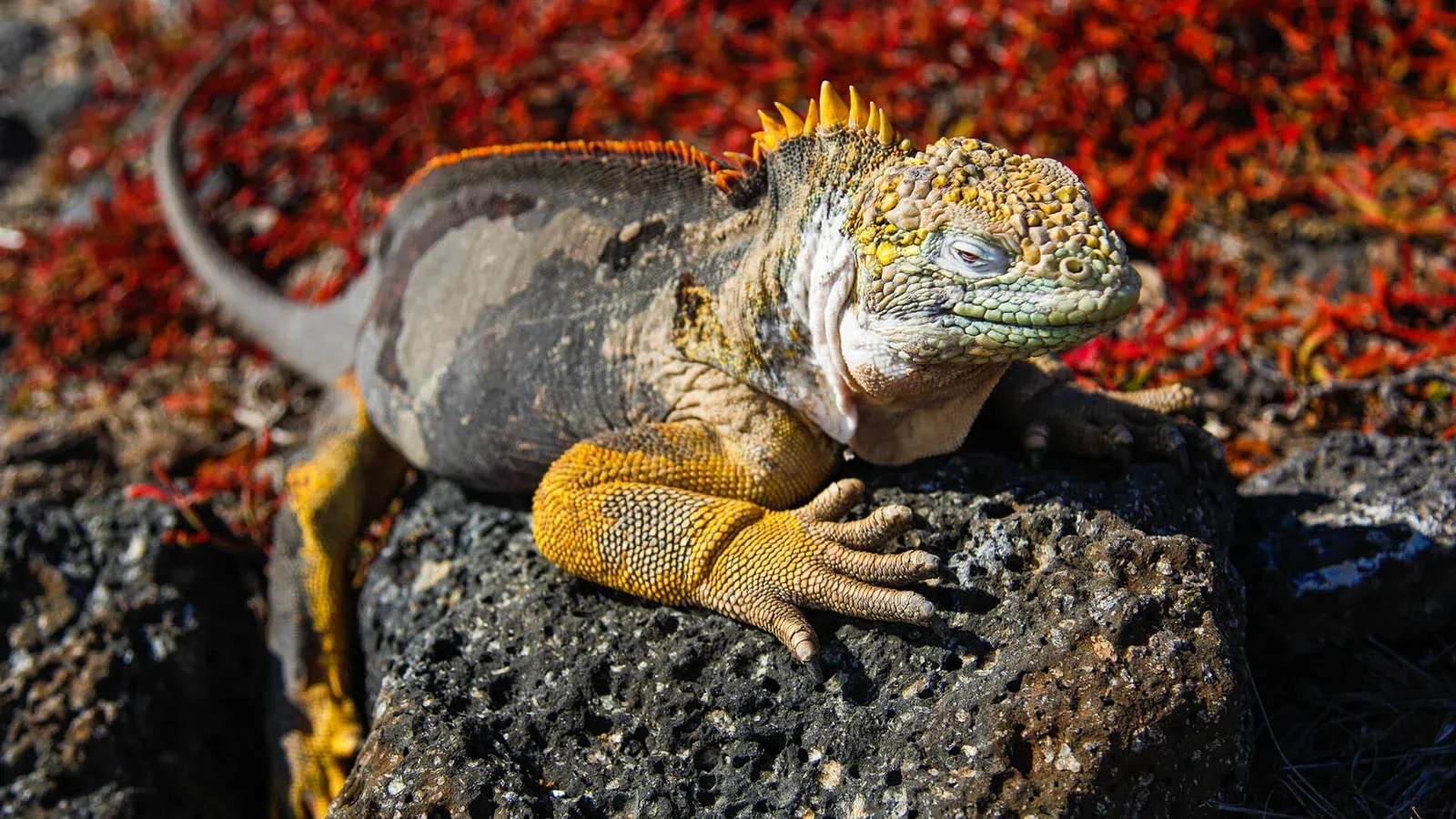
Travel to Cerro Dragon (Dragon Hill): one of the best places to see land iguanas in the islands. From our dry landing, walk to a brackish, lagoon spotting lagoon birds such as stilts, pintail ducks, sandpipers, sanderlings and flamingos. Further inland, the trail offers a beautiful view of the bay and the western area of the archipelago. This area is a nesting site for land iguanas, which is constantly monitored and assisted by the Charles Darwin Research Station. The arid-zone vegetation makes for an ideal place to see Darwin’s finches, Galapagos mockingbirds, the endemic Galapagos flycatcher and yellow warblers. The path can be challenging but it will be worth it for a spectacular view of the bay.
Day 5: Santa Cruz - Baltra airport
Black Turtle Cove & Baltra airport
Brave an early start to explore Caleta Tortuga Negra (Black Turtle Cove) on a Zodiac ride. This red mangrove wetland is located on the north shore of Isla Santa Cruz. A breeding area for green turtles, this is a good place to catch sight of them mating. There is also abundant bird life, such as the yellow warbler and lava heron. It is also a nursery for golden cow-nose rays, eagle rays and Galapagos sharks. This is your final excursion before you head to the airport in Isla Baltra for your flight back to Quito or Guayaquil.
Itinerary 8D/7N A (Wednesday to wednesday)
Day 1: Baltra - Santa Cruz: Bachas Beach
Baltra / Santa Cruz: Bachas Beach
When you arrive to Baltra airport, you’ll be met in the arrivals hall by your naturalist guide and transferred to your boat, M/Y Le Grande Daphne, which will be moored close to Isla Baltra. Once on board, you’ll meet the crew, be assigned a cabin and enjoy a delicious lunch with your fellow travellers. Try on the snorkelling gear to ensure it fits, before your first snorkelling session. Wetsuits can also be hired at an additional cost.
Sail from Baltra to Las Bachas, on the north shore of Isla Santa Cruz, which is a nesting site for the Pacific green turtle. You may also see some marine iguanas. The sand here, made of decomposed coral, is particularly white and soft, and the nearby rocks make for an excellent snorkelling spot, where you might see some of the many Sally Lightfoot crabs on the island. A saltwater lagoon just near the beach is home to flamingos, whimbrel, and great blue herons.
Day 2: Rabida - Isabela
Rabida Island & Isabela Island: Punta Albemarle
Today you will sail from Las Bachas to Isla Rabida, known for its spectacular red sand beaches, caused by the high content of iron in the sand which rusts to form the unusual shade. Follow a trail from the shore along to a lagoon which is one of the best spots in the Galapagos to view flamingos. Keep an eye out for nesting pelicans, pintail ducks, marine iguanas and sea lions – all are commonly sighted on the island. Check out a vast opuntia cactus forest, hinting at the previous habitation of land iguanas, Galapagos hawks, mockingbirds, doves, finches and lava lizards. You may like to take the chance to go snorkelling and seek out sea stars, damsels, gobbies and surgeon fish.
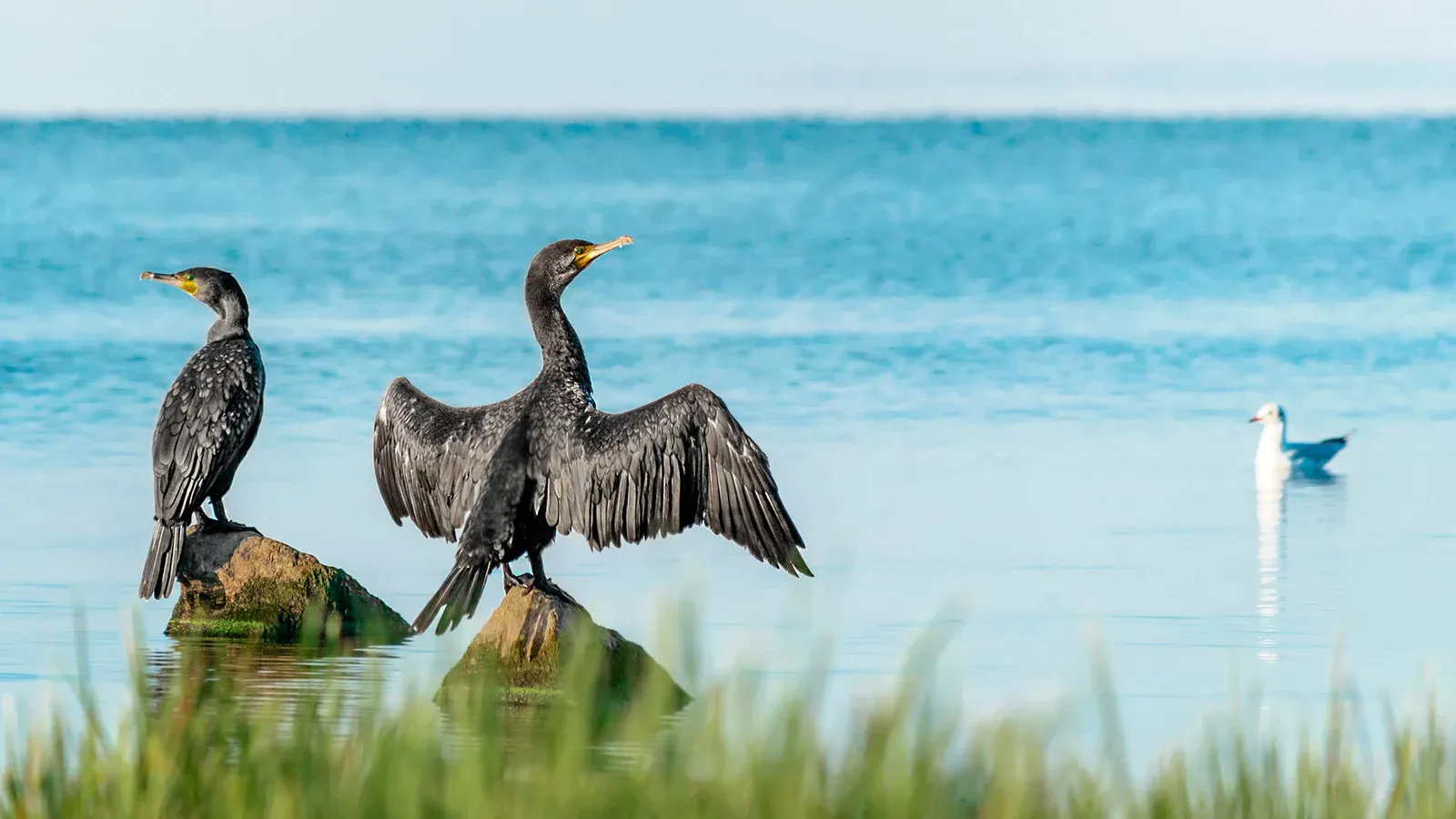
In the afternoon, head to Albemarle on the northeast side of Isabela Island. Covered in mangroves, the bay is home to sea turtles, sea lions, penguins and flightless cormorants who feed on the algae and fish here. Another fantastic location for snorkeling, you may like to have a look beneath the water’s surface in search of sea turtles and flightless cormorants.
Day 3: Isabela
Tagus Cove & Urbina Bay
Sail overnight from Punta Albermarle around to the western shores of Isla Isabela. Wake up near Tagus Cove, where pirates and whalers used to collect tortoises for their travels. Enjoy a short visit here (approximately 2 hours), perhaps snorkelling or checking out the graffiti on the walls (the oldest of which is from 1836). Witness flightless cormorants, blue-footed boobies, a variety of waterfowl and the most northerly penguins in the world. You will walk to a lookout point for a stunning view of the north of Isabela Island and Volcan Wolf (Wolf Volcano).
Today you will also visit Bahia Urbina on the west of Isabela Island, Urbina Bay has a wide variety of plant life which changes depending on the season. You will be able to observe the beautiful color of the plants which attracts many different insects. The site also features a short trek inland, where giant tortoises can be spotted amongst the bushes in their natural habitat. You may also see land iguanas which often nest in the middle of the trail where their distinctive, textured and yellowish skin can be observed from up close. Flycatchers, Darwin’s finches and mockingbirds are common on the ground and in the trees.
Day 4: Fernandina - Isabela
Fernandina Island: Punta Espinosa & Isabela Island: Punta Vicente Roca
Today we visit Punta Espinosa that is a narrow ledge of lava and sand extending from the base of La Cumbre volcano. Take a walk around the beautiful peninsula, which boasts such wildlife and plant life as lava cacti, marine iguanas, barking sea lions, tiny penguins and Sally Lightfoot crabs. Keep a lookout for that marvelous Galapagos predator hunting from the treetops: the Galapagos hawk. Top-notch snorkeling opportunities await in the clear waters, and turtles and sea lions can be seen swimming around and feeding on the shore. This is also a great spot to see flightless cormorants drying their atrophied wings on the rocks.
In the afternoon head to Punta Vicente Roca, this site allowed for panga rides to observe the abundant wildlife and offers one of the best snorkeling spots of the Archipelago. The snorkeling “route” takes us along the cliffs and offers the not so common chance of exploring two shallow underwater caves.
The primitive and unaggressive bullhead shark, known locally as the Port Jackson shark, is often seen here sharing its space with red-lipped batfish, frogfishes, Pacific seahorses, the endemic Camotillo, schools of barracuda and brown-stripped snappers. Sponges, corals, and other marine invertebrates are also abundant in the area.
Day 5: Santiago
Santiago Island: Puerto Egas & Caleta Bucanero
Sail this morning to Puerto Egas, a black-sand beach on the west side of James Bay, northwest of Isla Santiago, home to incredible volcanic tuff formations. Take a stroll along the beach with the native marine iguanas, pelicans, finches, mockingbirds, oystercatchers, Galapagos sea lions and Galapagos fur seals. You can see the amazing tidal pools, formed from ancient lava flow, providing a home for sponges, snails, hermit crabs, barnacles and fish. You might also end up snorkelling with a Galapagos fur seal – they’re always looking for a friend! In the afternoon travel to the northwest side of Santiago Island where you’ll find Caleta Bucanero, named after the pirates and buccaneers who once found shelter in the bay. Here you’ll have the chance to go snorkelling and take a dinghy ride to look for blue-footed boobies, pelicans and nocturnal seagulls nesting in the cliffs.
Day 6: Bartolome - Sombrero Chino
Bartolome Island & Sombrero Chino
Wake up in Bartolome Island, a spectacular volcanic landscape full of spatter cones and lava flows, and home to Galapagos penguins and lava lizards. Put on your walking shoes and climb up 360 wooden steps to the summit, where an amazing view of Pinnacle Rock awaits. This is one of the most photographed sights in the Galapagos – an abrupt jag of rock protruding from the earth like a tooth, providing a focal point for two nearby bays. Hike to the top of a once-active volcano and enjoy superb views across to Bahia Sullivan on nearby Isla Santiago. If you’re in luck, you might catch a glimpse of the Galapagos hawk. There’s also the chance to go snorkelling among the colourful marine life. In the afternoon, travel to the small island of Sombrero Chino, found on the southeast side of Santiago Island. With lovely sandy beaches and a striking volcanic landscape, this is a fantastic place to take a hike and look out for the sea lions and penguins that rest here, and snorkel in search of reef sharks and sea turtles.
Day 7: North Seymour - Charles Darwin Station
North Seymour Island & Charles Darwin Station
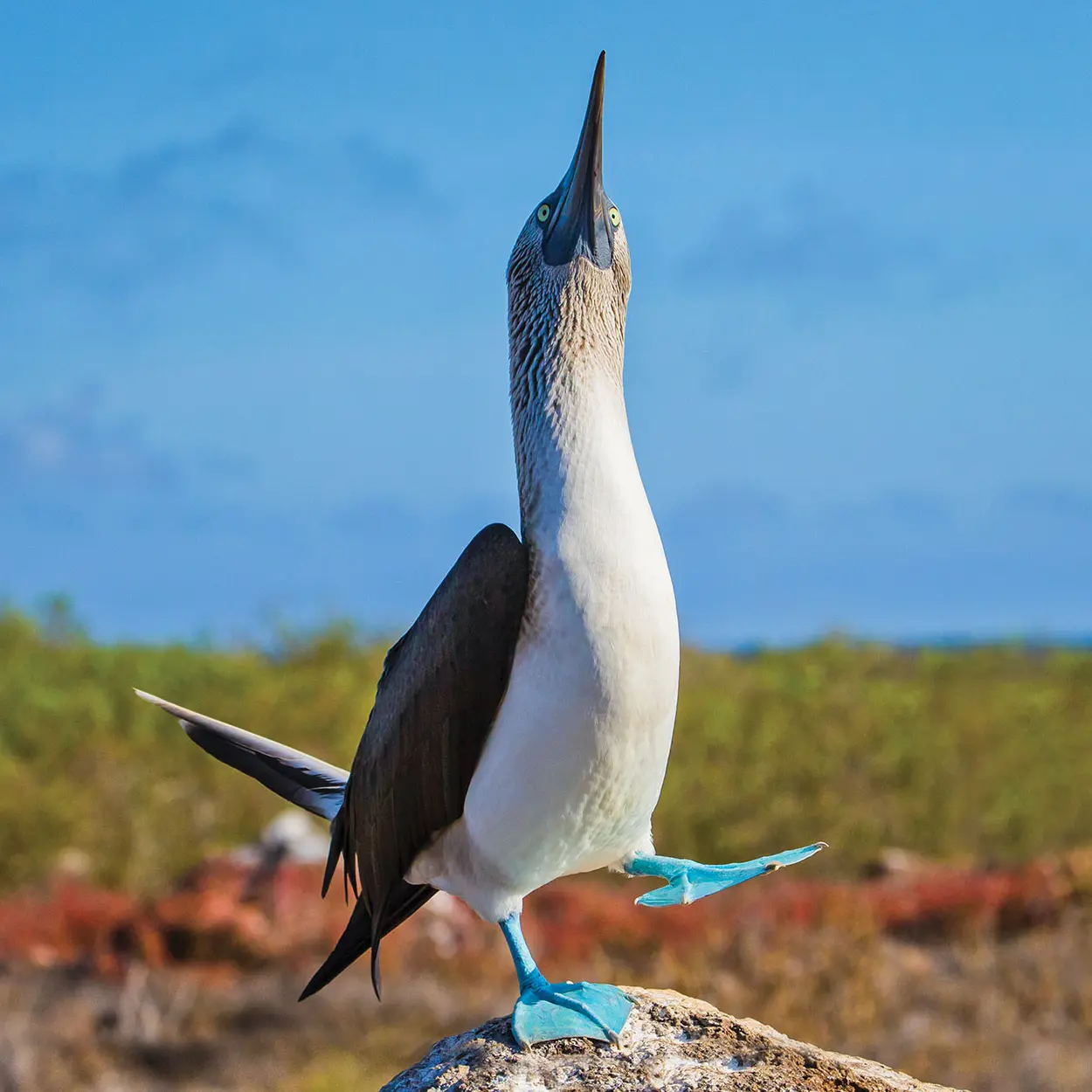
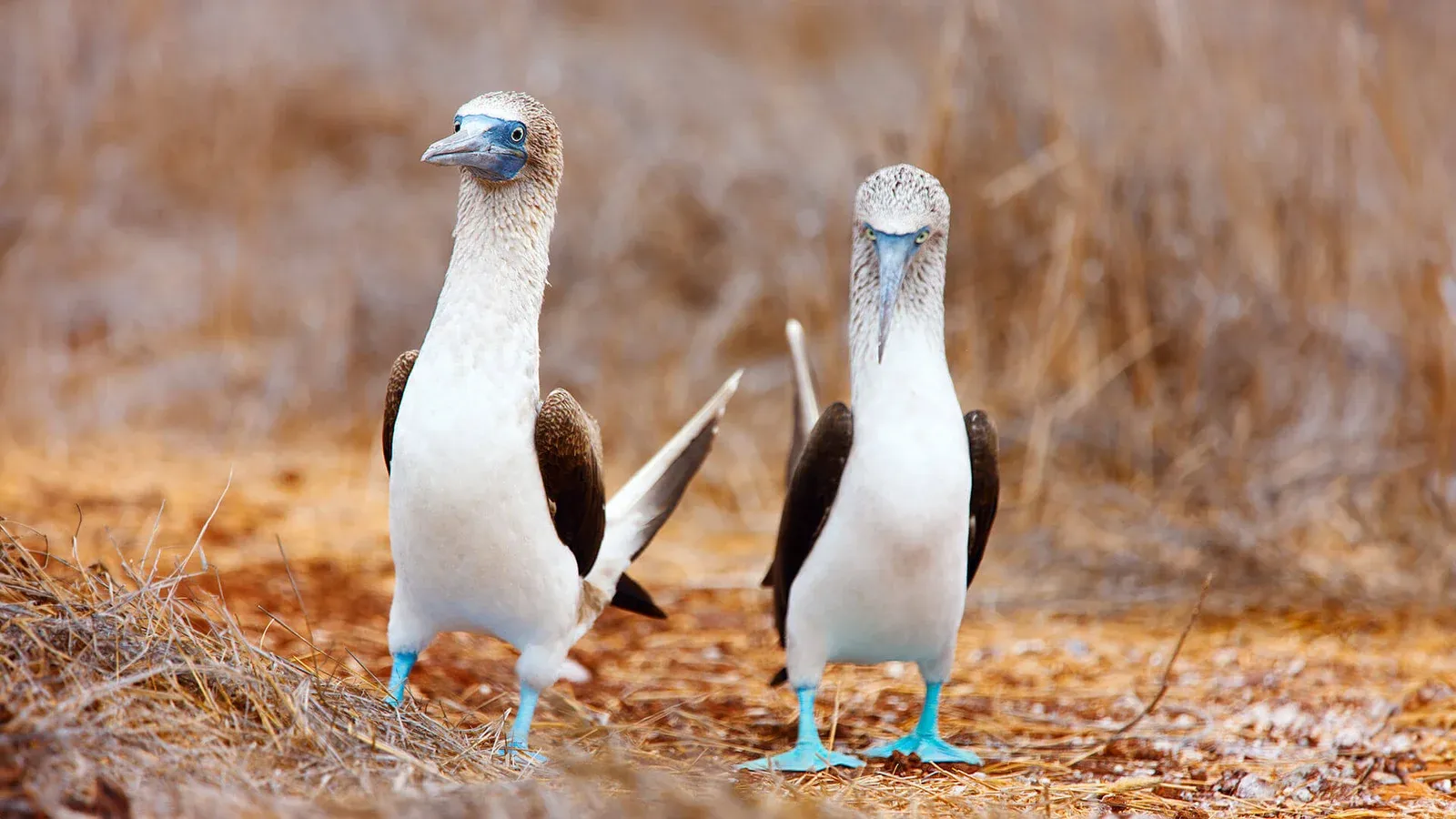
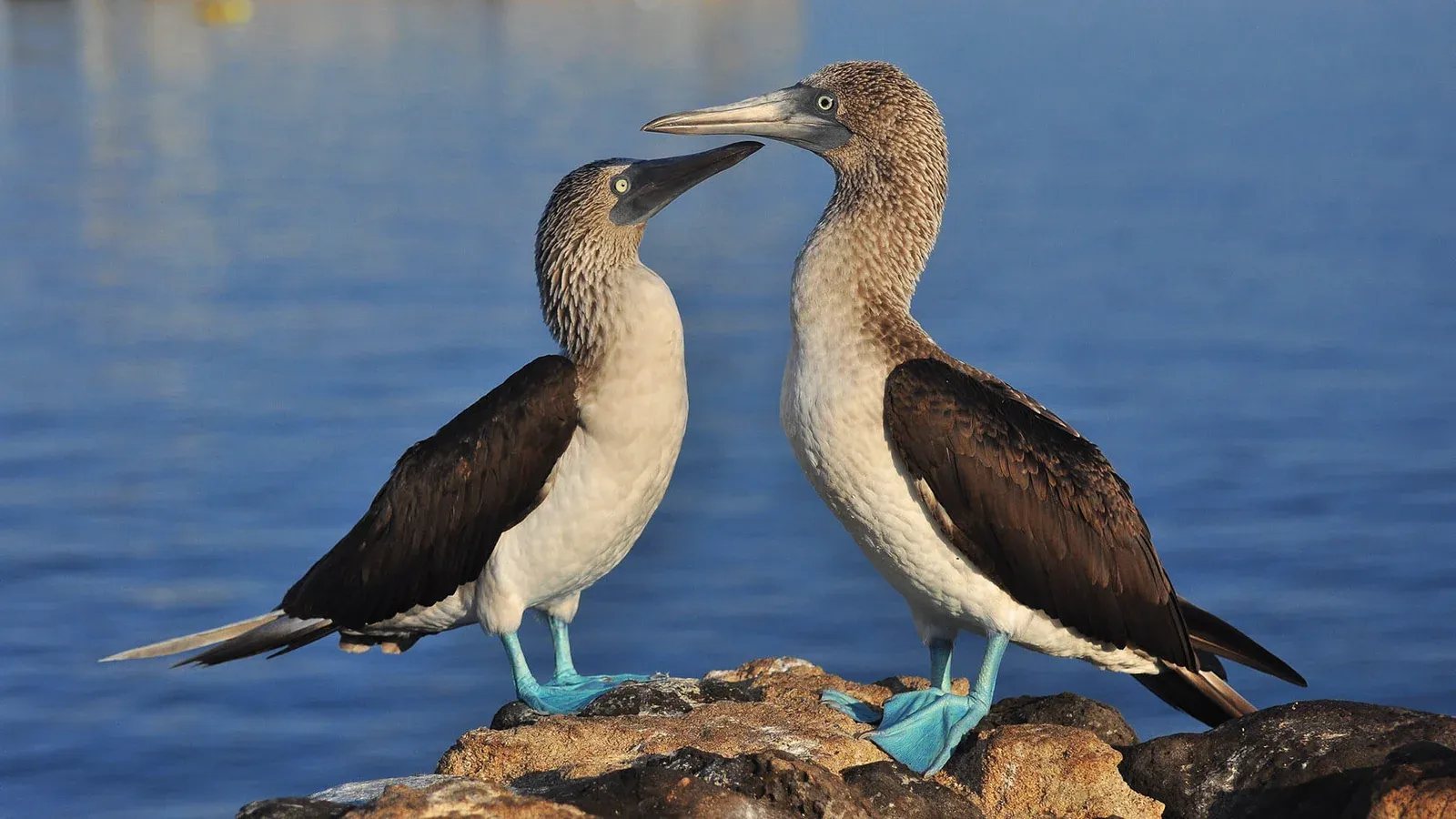
Wake up this morning in North Seymour, one of the most visited islands of the Galapagos. First up is a walk around the island to spot some blue-footed boobies and swallow-tailed gulls. Boobies and frigates have an interesting relationship, sharing the same nesting area on North Seymour. Blue-footed boobies nest on the ground while the frigate birds nest just above them in the saltbushes. As you walk, look out for land iguanas, marine iguanas, Galapagos sea lions and the endemic incense tree. After the walk, cool off and go snorkelling and encounter a great variety of fish and perhaps some white-tipped reef sharks, rays and sea lions. Later in the day, travel to Isla Santa Cruz, the second largest island in the Galapagos. Pay a visit to the Charles Darwin Research Station in the small town of Puerto Ayora. As well as undertaking vital conservation work, the station also makes for interesting exploration and offers the best opportunities for close encounters with giant tortoises. You may also see baby tortoises. Enjoy some free time to walk around the town where you can purchase a souvenir or two to take back home with you.
Day 8: Santa Cruz Highlands - Baltra airport
Santa Cruz Highlands & Baltra airport
Flights to the mainland from Galapagos depart mid-morning, so it’s an early start for your last morning on the islands.
You will visit the Santa Cruz Highlands. Travel through the agricultural region and into the misty forests where you can see the unique scalesia cloud forest, dome-shaped giant tortoises in the wild, different species of Darwin finches and possibly the world-famous woodpecker and warbler finches. You might also glimpse a vermillion flycatcher.
Then it’s time to bid farewell to the archipelago and head to the airport for your mid-morning flight back to Quito.
Itinerary B 8D/7N (Wednesday to Wednesday)
Day 1: Baltra / Santa Cruz: Highlands
Baltra / Santa Cruz: Highlands
On arrival in the Galapagos, you collect your luggage and meet the cruise guide at the arrival’s hall. First you need to take the bus from the airport to the dock. Our guide will provide you the ticket for this. On arrival to the dock you will then take the Ferry to cross the Itabaca Channel and get from Baltra to Santa Cruz Island. We then head to the Highlands of Santa Cruz for our first Galapagos adventure.
Beginning at the coast in the northern part of the island, we travel across Santa Cruz through the agricultural region and into the misty forests where we can see the unique Scalesia cloud forest, dome-shaped giant tortoises in the wild, different species of Darwin finches and possibly the world famous woodpecker and warbler finches, as well as vermillion flycatchers. Today we will enjoy lunch in the highlands.
This afternoon we travel to Puerto Ayora, where we are then transferred to our boat, the Grand Daphne. Once on board, you will be assigned your cabin, meet the crew members and get to know better our guide and the group.
Day 2: Floreana
Floreana Island: Post Office Bay, Cormorant Point and Devil’s Crown
Discover the quirky maritime history of Post Office Bay, which has the oldest postal system in the Americas. Steeped in history, in 1793 a post office barrel was erected for mariners to post their mail and assist in delivery of mail to the United States and Europe.
It was simple, a sailor leaves a letter with its destination and to whom it goes and take a letter from another sailor if he is going to that letter´s destination. This custom continues today with Galapagos visitors leaving letters and postcards to be collected by the next passing boat. Send one of your own and check if there are any you can deliver back home. Snorkeling and enjoying a panga ride are activities also included in this outing.
We go ashore at Punta Cormorant where the sand is made up of fine olivine crystals, a glassy volcanic mineral, giving the beach an olive-green color. It is the best place to see Galapagos sea lions. Today is also one of our finest opportunities to see pink flamingos and other water birds wading in the lagoons, including pintails and stilts. The walk continues to a white flour sandy beach to an Eastern Pacific green turtle nesting site. Young diamond stingrays are commonly found in the shoreline and enjoy the view of the turquoise crystalline ocean.
Just offshore, the famous Devil’s Crown is an old eroded volcanic cone and a popular roosting site for seabirds such as boobies, pelicans and frigates. Red-billed tropicbirds can also be seen nesting in the rocky crevices. The center of the cone is an outstanding snorkeling spot and many people find this one of the best snorkeling experiences of their trip. We might see rays, sharks, sea lions and turtles.
Day 3: Española
Suarez Point & Gardner Bay
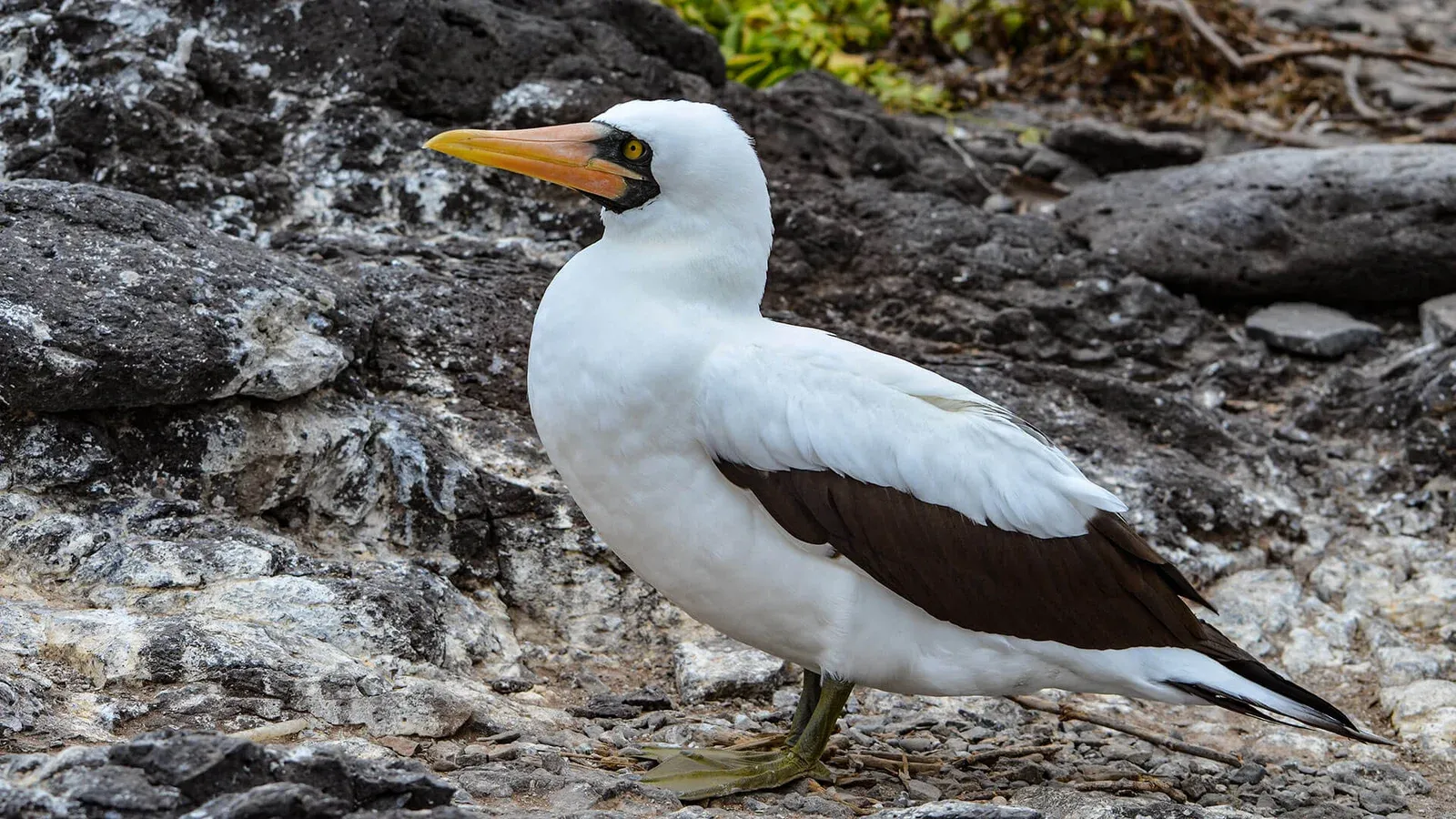
Today we cruise to the island of Española – the southernmost island of the Galapagos and one of the most spectacular ones. Because of its remote location this island has a large population of endemic fauna. It is the breeding site for nearly all of the world’s 12,000 pairs of waved albatrosses and also home to colonies of blue-footed and masked boobies. Trails from the golden beaches, where sea lions bathe and marine iguanas make their way towards the water, lead us right through the middle of booby colonies, and Galapagos doves and mockingbirds are also often seen.
We land in Suarez Point, one of the most attractive locations in the Galapagos and home to large and varied wildlife population – a walk along its trails takes us to a cliff top viewpoint, where we gain a magical panorama. Keep in mind that the terrain is uneven, so it is recommended to use appropriate footwear. Boobies line the rocky shoreline beneath us, while frigate birds may be seen overhead; nearby enormous male sea lions can be seen lounging and albatross use the cliffs as their ‘runway’, helping become airborne by the southeast winds that blow across this part of the island. If we’re lucky we’ll see the elaborate courtship rituals performed by albatrosses before the female chooses her lifelong mate. You may see marine iguanas throughout many of the islands in Galapagos, but none like the marine iguanas in Española, also called “Christmas marine iguanas”, with a red and green variation combined with its black color, it makes them unique and only possible to see here.
We then head to Gardner Bay which is considered by many as one of the most beautiful beaches in the Galapagos Islands and full of sea lions and hood mockingbirds. Enjoy the beach and do some snorkeling which could be great for playing with sea lion pups and lots of different type of fish. The rocks off the coast provide excellent snorkeling opportunities, with reef sharks, turtles and many species of tropical fish, including surgeon and angelfish, often seen. The small white-tipped reef sharks are also often spotted resting under the rocks.
Day 4: San Cristobal
Kicker Rock & Airport
Shake off any early morning doziness with a trip to Leon Dormido (Kicker Rock). This basalt crater rises 150 metres above the water and is divided into two parts by a narrow channel. Cruise around kicker rock as nesting seabirds flank the boat, tropicbirds soar overhead and sea lions lounge by the water. Next, spend some time snorkelling at Cerro Brujo, providing opportunities to see Galapagos sharks and sea turtles. Or perhaps enjoy the beautiful beach with a leisurely walk to photograph the interesting sea lions who can often be seen at this location.
Later, sail to Puerto Baquerizo Moreno on the island of San Cristobal. Some passengers will be leaving and others joining the group today, so you have some free time to explore the town of San Cristobal. In the afternoon you will visit the San Cristobal Interpretation Centre, which brings the history and geography of the archipelago to life, from its volcanic origins to the present day. If there’s time, your guide may be able to organise an optional visit to the highlands of San Cristobal, for a chance to see giant tortoises in the wild. The price of this optional activity depends on the number of passengers attending. Relaxing on the beach is a great option for those who don’t wish to partake in this excursion.
Day 5: Santa Fe - South Plazas
Santa Fe Island & South Plazas
Take a walk on Isla Santa Fe, home to a collection of the most spectacular wildlife in the Galapagos. You can expect to see sea lions, Galapagos hawks, land iguanas, a variety of finches, Galapagos mockingbirds, marine turtles, frigatebirds, Galapagos doves and lava lizards. Phew. The approximately 1.5-hour hike takes you along the coast and through a forest of opuntia (prickly pear cacti). The trail can be a little rocky, so mind your step and wear solid walking shoes. Later enjoy a snorkel in deep water and look out for schools of fish, rays and sea turtles.
Afterwards, continue to Isla Plaza Sur, a small, picturesque island. Take a walk (approximately 1.5 hours), getting close to sea lions and passing one of the Galapagos’ largest land iguana populations which rest among cacti. The southern cliffs of Plaza Sur are great for spotting tropicbirds and swallow-tailed gulls, as well as ‘the Gentlemen’s Club’ – a gathering of male sea lions. Today there may be an extra stop along the way to Plaza Sur to restock the provisions for the boat. Later tonight, set sail for Isla Genovesa.
Day 6: Genovesa
Genovesa
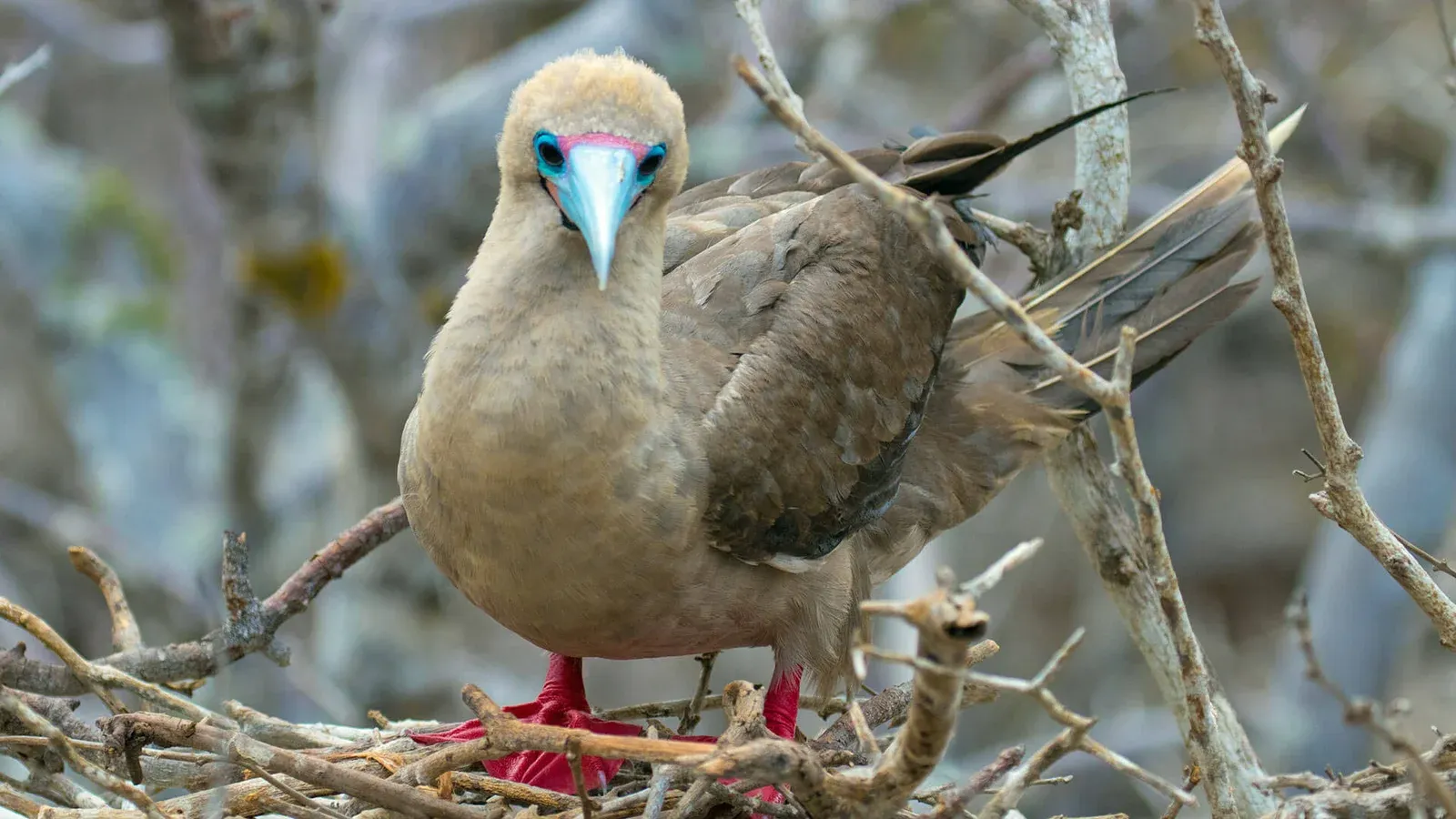
After an overnight sail, reach Isla Genovesa, the archipelago’s north-eastern outpost. It’s undeniably worth the voyage. Dolphins are often spotted in the waters here, so keep your eyes peeled. These varied landscapes are a twitcher’s paradise, with all three kinds of boobies, including the rare red-footed booby, making their home here. Next up is Bahia Darwin (Darwin Beach), another superb site with large breeding colonies of seabirds and frigates and other birds such as lava herons, swallow-tailed gulls, mockingbirds and, hopefully, vampire finches.
Enjoy a moderate walk (approximately 2.5 hours) that passes tide pools, sea lions and diamond stingrays. This walk involves sand and some rocky sections. The steep Prince Philip’s Steps lead you to the heart of the seabird rookeries, with birds overhead and nesting among the cliffs. Look out for storm petrels on the island’s rocky plains; Genovesa is the only place in the world where these birds can be seen flying during the day. Afterwards, perhaps cool off with a snorkel. The island’s magnificent marine life makes for spectacular snorkelling – you might encounter manta rays, sharks, turtles and moray eels, plus many species of fish.
Later tonight, depart Isla Genovesa for Isla Santiago.
Day 7: Santiago - Santa Cruz
Santiago Island & Santa Cruz
On Santiago Island’s eastern coast sits Bahia Sullivan. Take a walk along pahoehoe lava (approximately 1 hour), which was created by an eruption that occurred here in 1897. With some luck you might see some marine iguanas, Sally Lightfoot crabs, sea lions, finches, turtles, sharks and penguins. During your walk, as always, your naturalist guide will take you through the geological history of the island.
Travel to Cerro Dragon (Dragon Hill): one of the best places to see land iguanas in the islands. From our dry landing, walk to a brackish, lagoon spotting lagoon birds such as stilts, pintail ducks, sandpipers, sanderlings and flamingos. Further inland, the trail offers a beautiful view of the bay and the western area of the archipelago. This area is a nesting site for land iguanas, which is constantly monitored and assisted by the Charles Darwin Research Station. The arid-zone vegetation makes for an ideal place to see Darwin’s finches, Galapagos mockingbirds, the endemic Galapagos flycatcher and yellow warblers. The path can be challenging but it will be worth it for a spectacular view of the bay.
Day 8: Black Turtle Cove - Baltra airport
Black Turtle Cove & Baltra airport
Brave an early start to explore Caleta Tortuga Negra (Black Turtle Cove) on a Zodiac ride. This red mangrove wetland is located on the north shore of Isla Santa Cruz. A breeding area for green turtles, this is a good place to catch sight of them mating. There is also abundant bird life, such as the yellow warbler and lava heron. It is also a nursery for golden cow-nose rays, eagle rays and Galapagos sharks. This is your final excursion before you head to the airport in Isla Baltra for your flight back to Quito or Guayaquil.
Explore the
place you stay
- Category: First class
- Capacity: 16 guests
- Year built: 2020
- Length: 38.32 meters
- Beam: 7.20 meters
- Speed: 12 knots
- Crew: 8 members + 1 naturalist guide
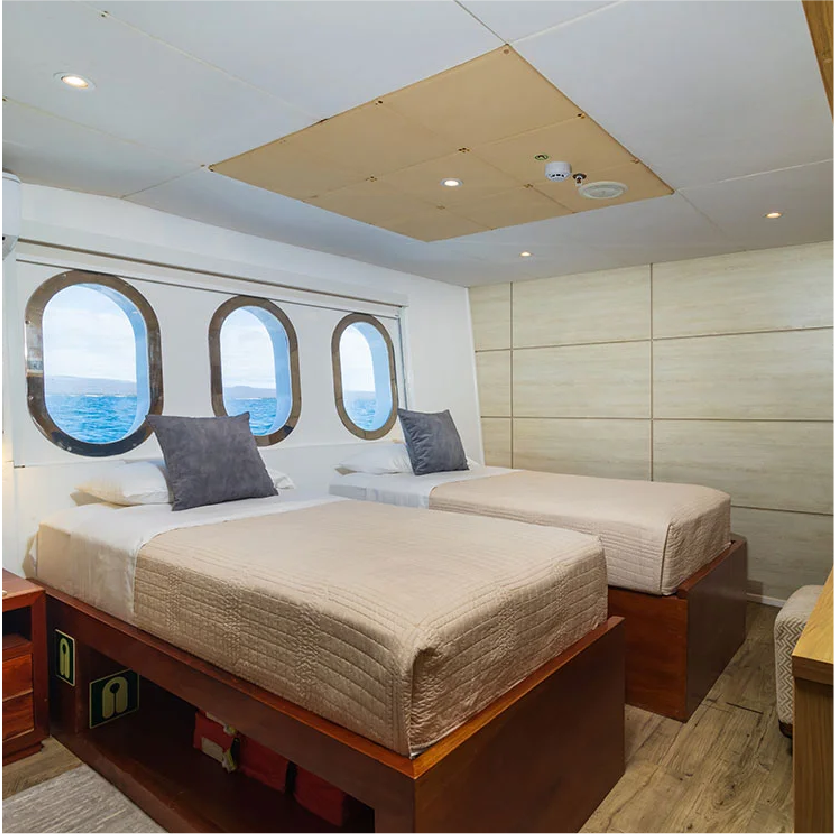
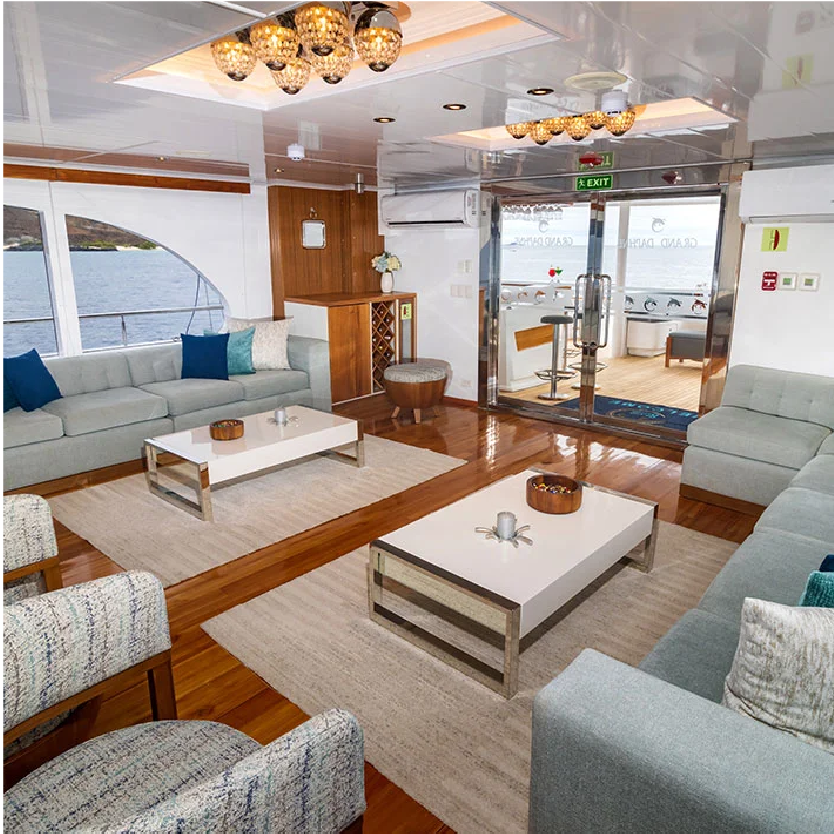
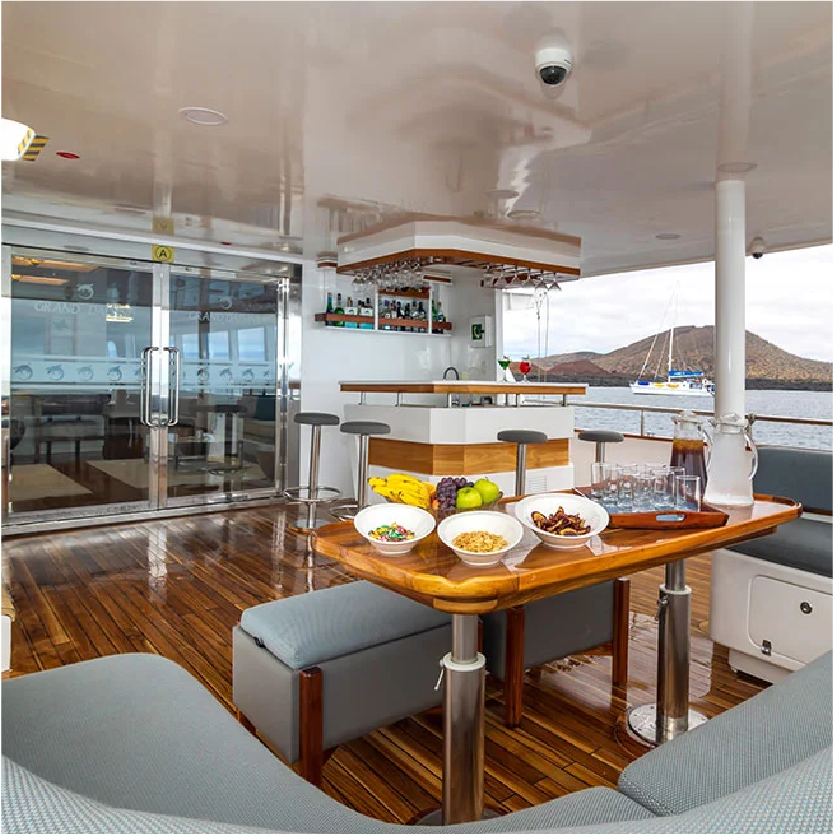
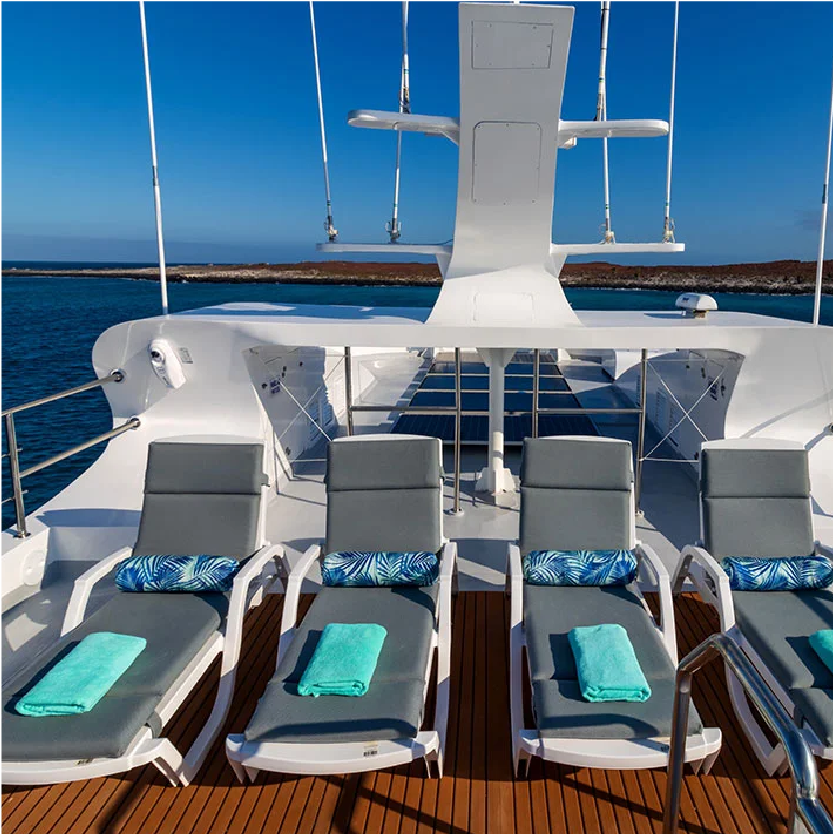
- Facilities: 3 decks, 6 standard cabins, 2 superior cabins in upper deck and 1 suite, 1 dining room, 1 lounge with DVD player, 1 bar, 1 sundeck, bar and 1 open dining. Snorkeling equipment, wetsuits, all meals/snacks, coffee, water, hair dryers and beach towels included.
Dates & Rates
To request a quote or make a reservation let's start with your details...*
What's Included
- Accommodation as confirmed.
- All mentioned meals (full-board); filtered water, tea and coffee.
- All guided excursions and activities as mentioned in the itinerary by a National Park certified naturalist guide.
- Beach towels and snorkelling gear (snorkel, mask, flippers; optional wet-suits for hire).
What's Not Included
- Round-trip flight to the Galapagos.
- Soft and alcoholic drinks.
- Galapagos National Park entrance fee and Transit Control Card (currently $220, subject to change).
- Personal travel insurance.
- Personal expenses, extras and tipping.
Get in touch with us
Explore more of
First Class Boats
Galapagos First-Class boat cruises offer a high level of comfort and service, providing spacious cabins, elegant common areas, and gourmet dining. These vessels typically feature attentive staff, expert naturalist guides, and well-designed itineraries that maximize wildlife encounters and exploration. Expect a more intimate and luxurious experience, balancing immersive adventure with exceptional amenities for a truly memorable journey through the archipelago.