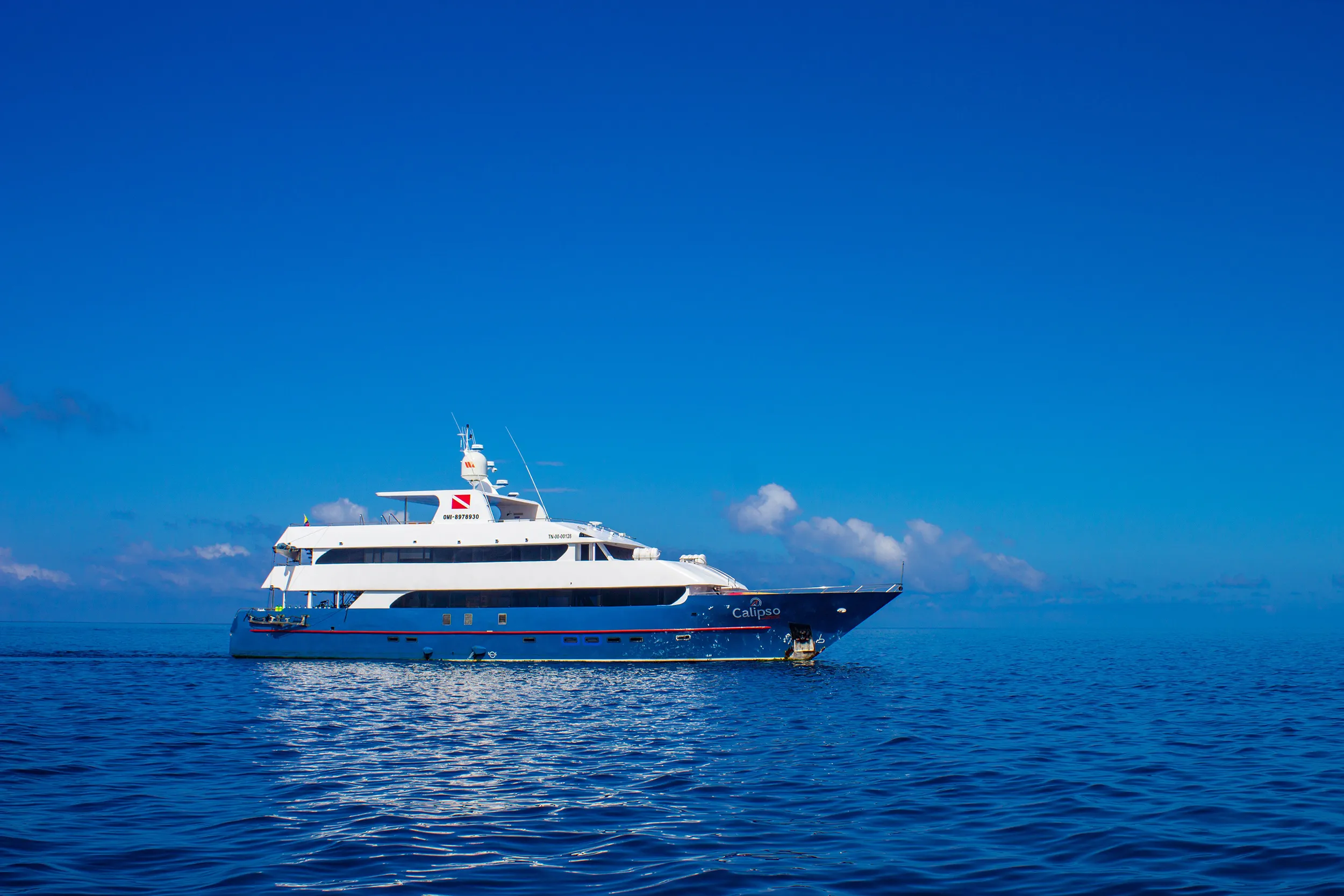
First-class diving boat Galapagos vacation, M/Y Calipso
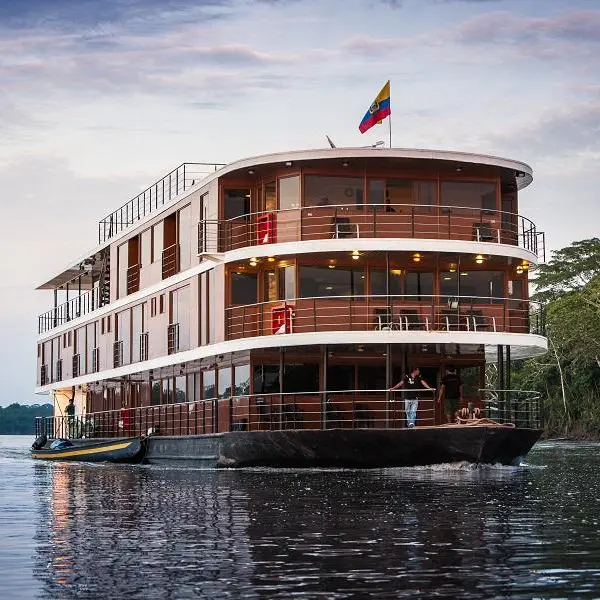
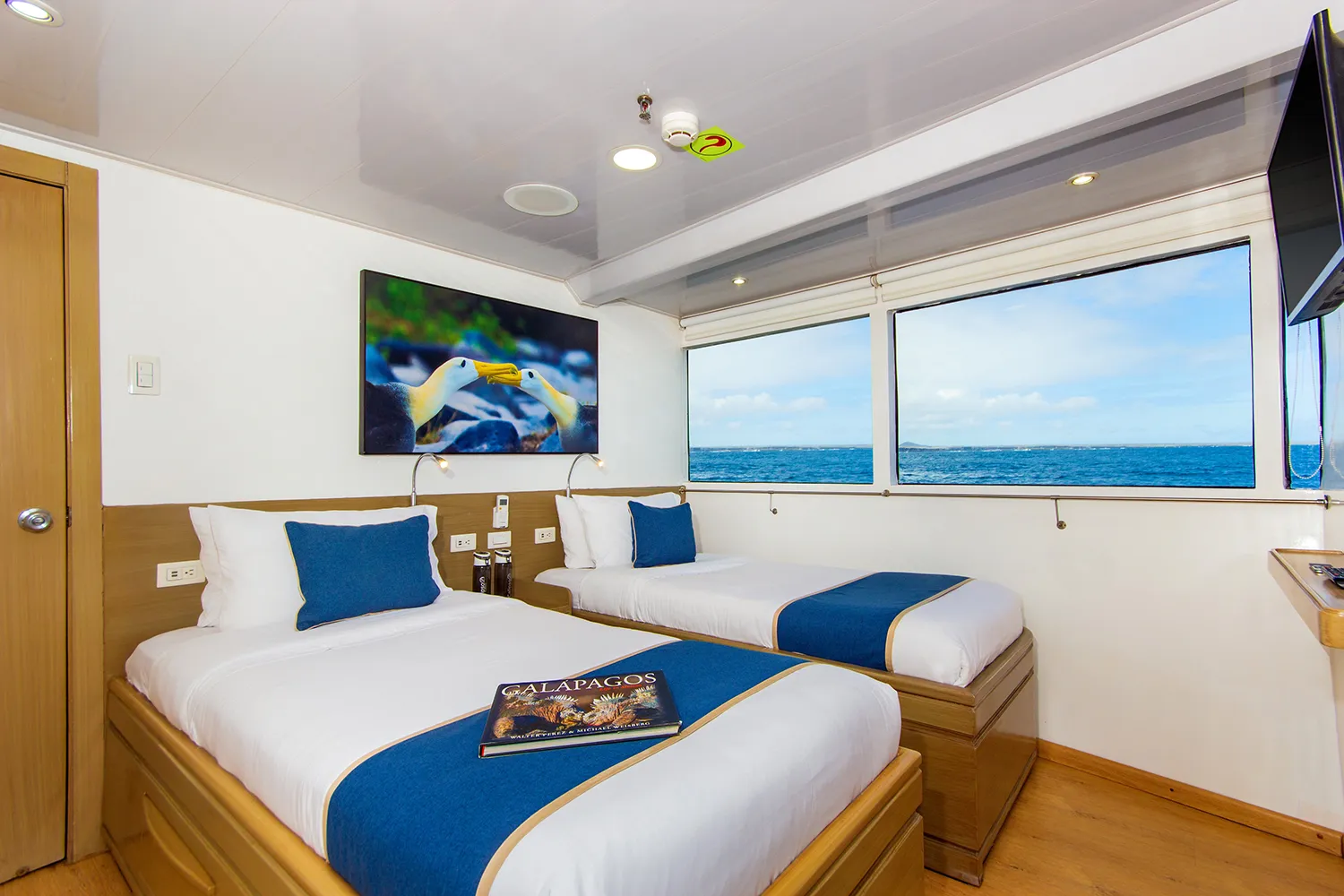
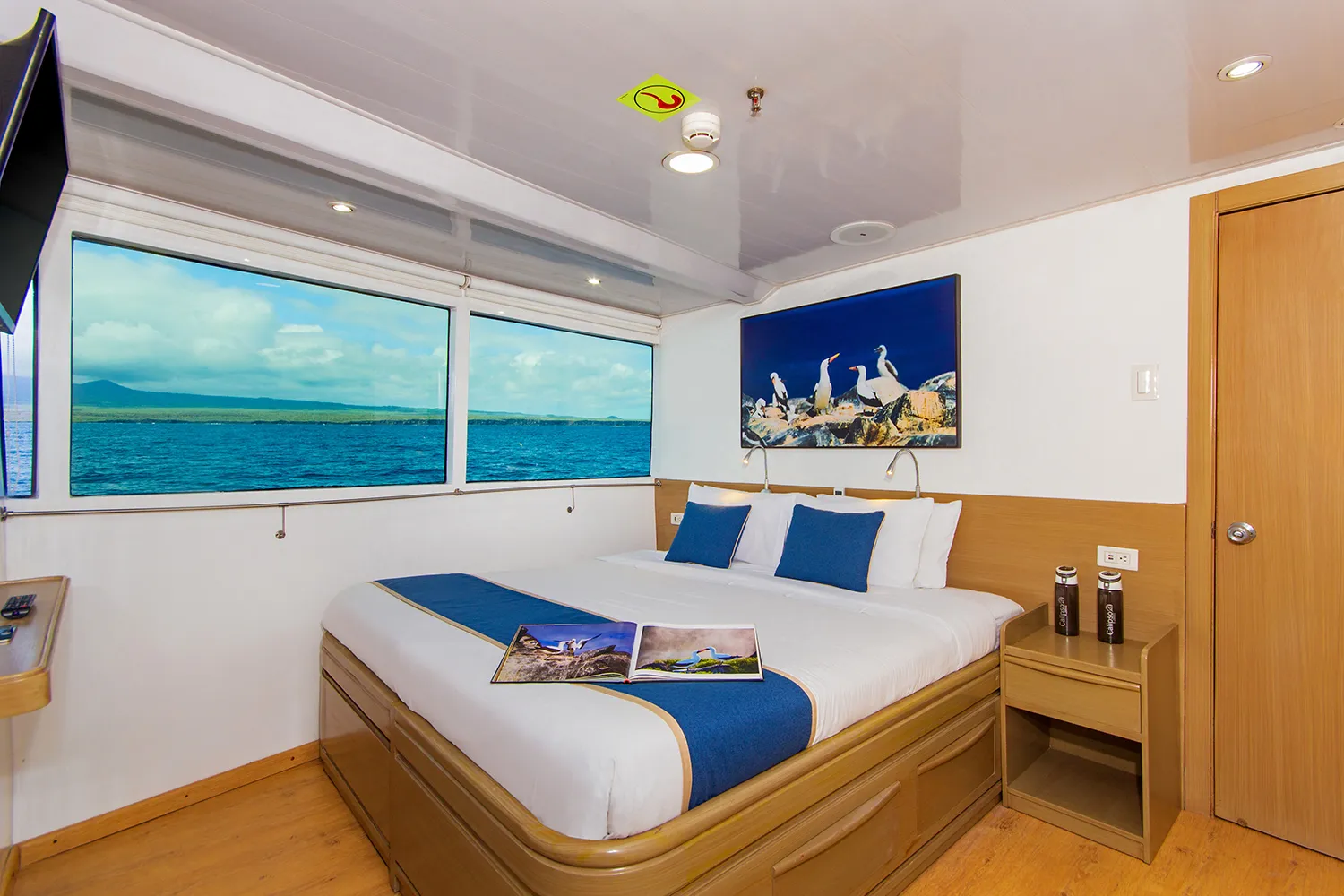
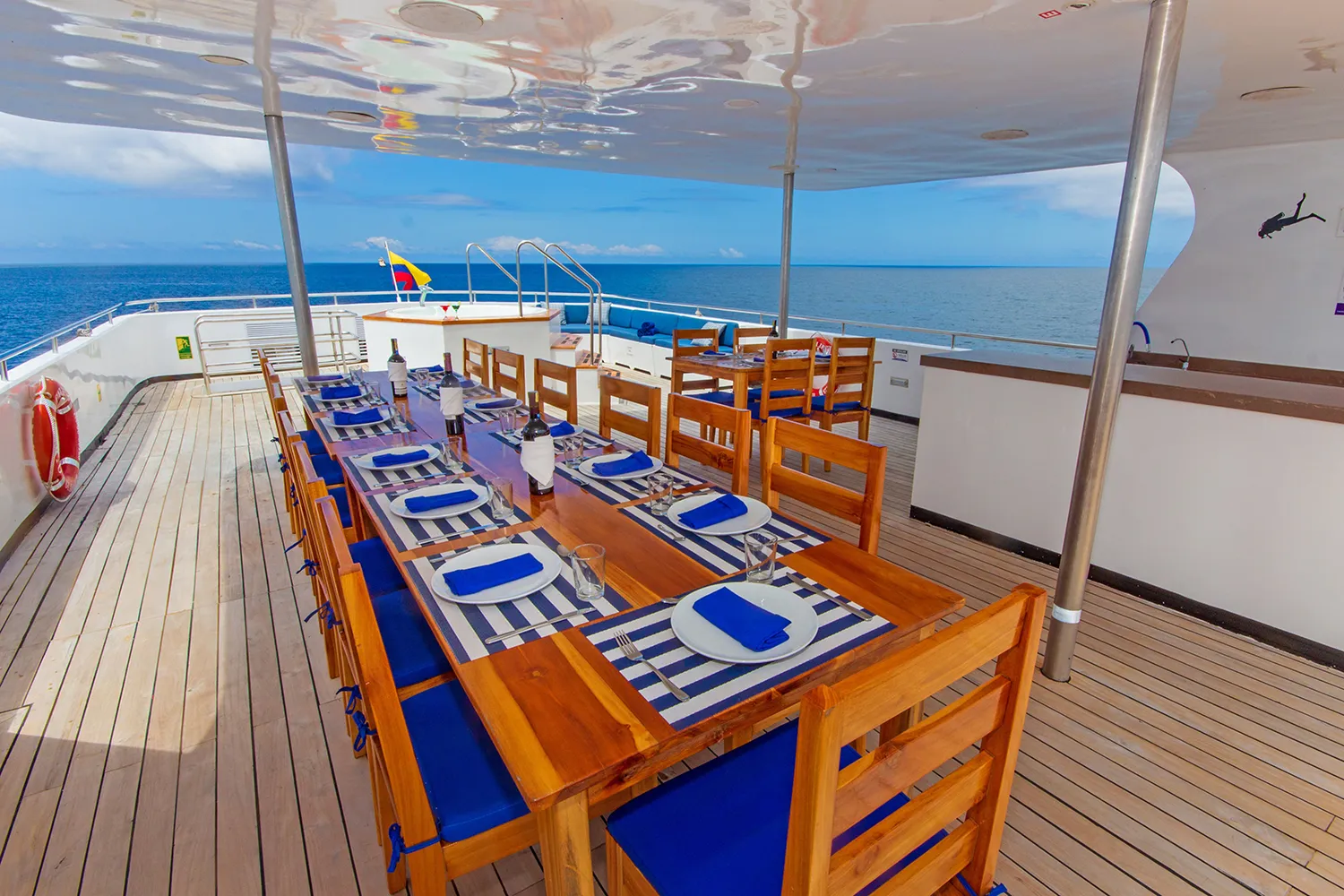
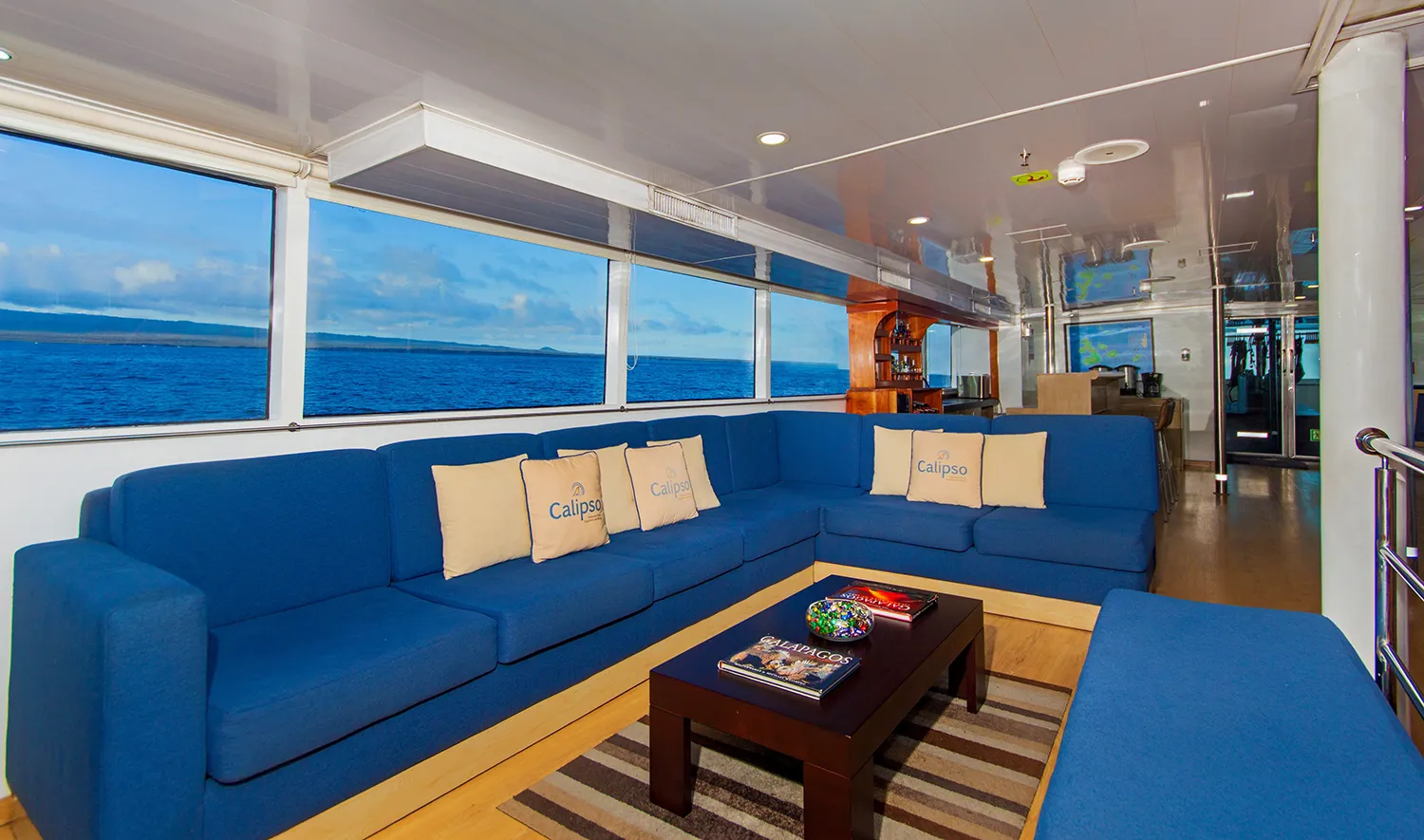
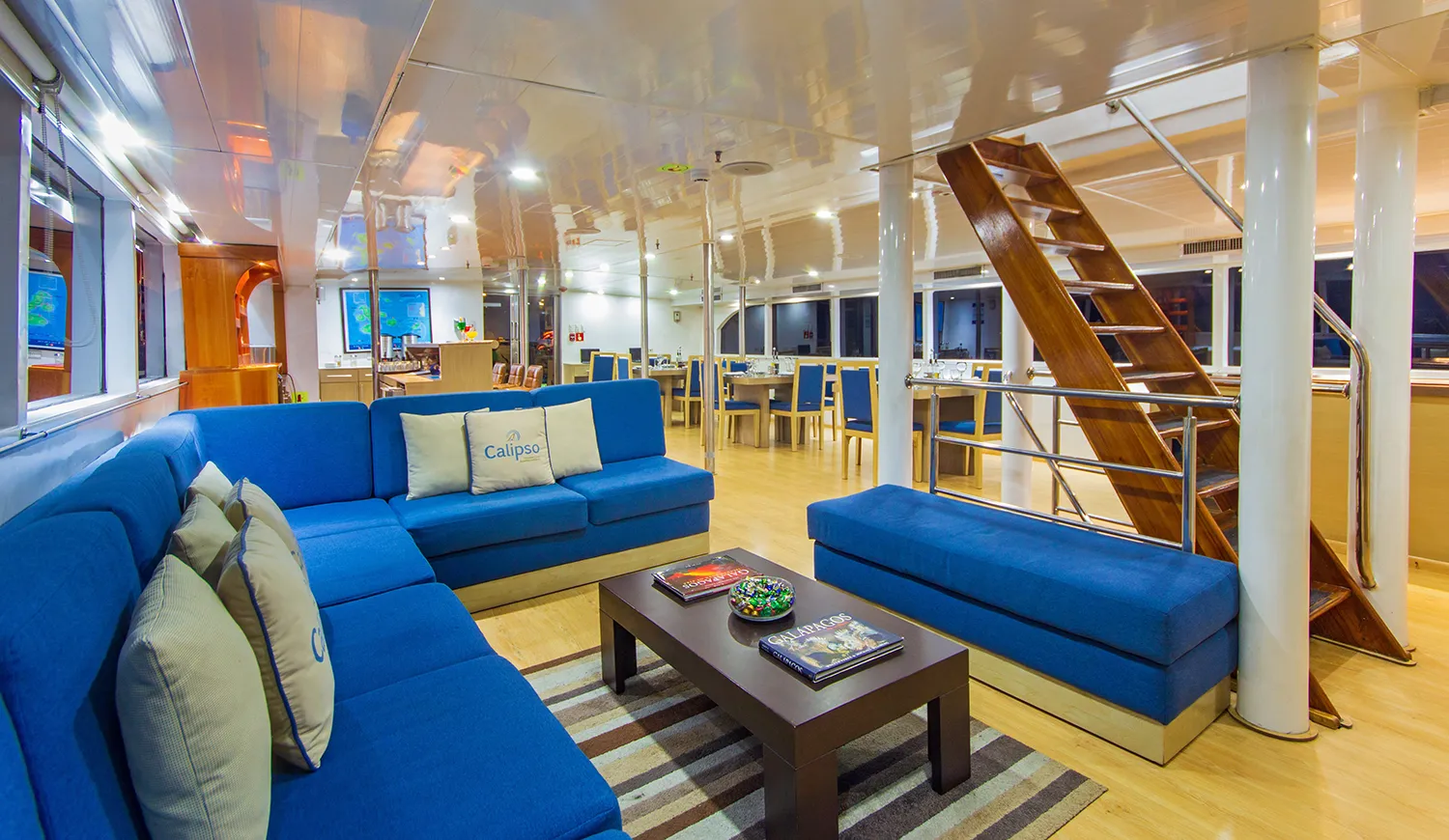
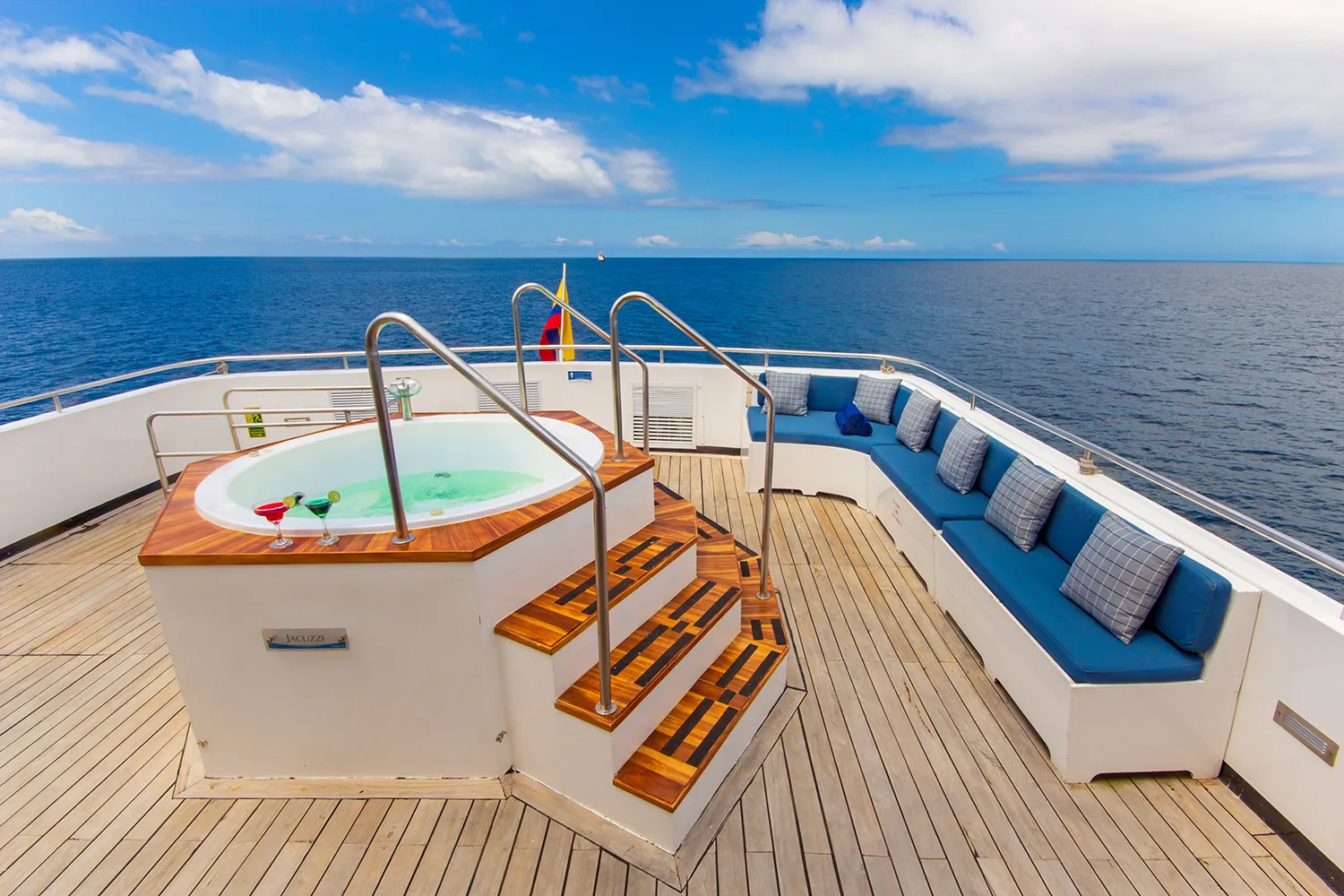
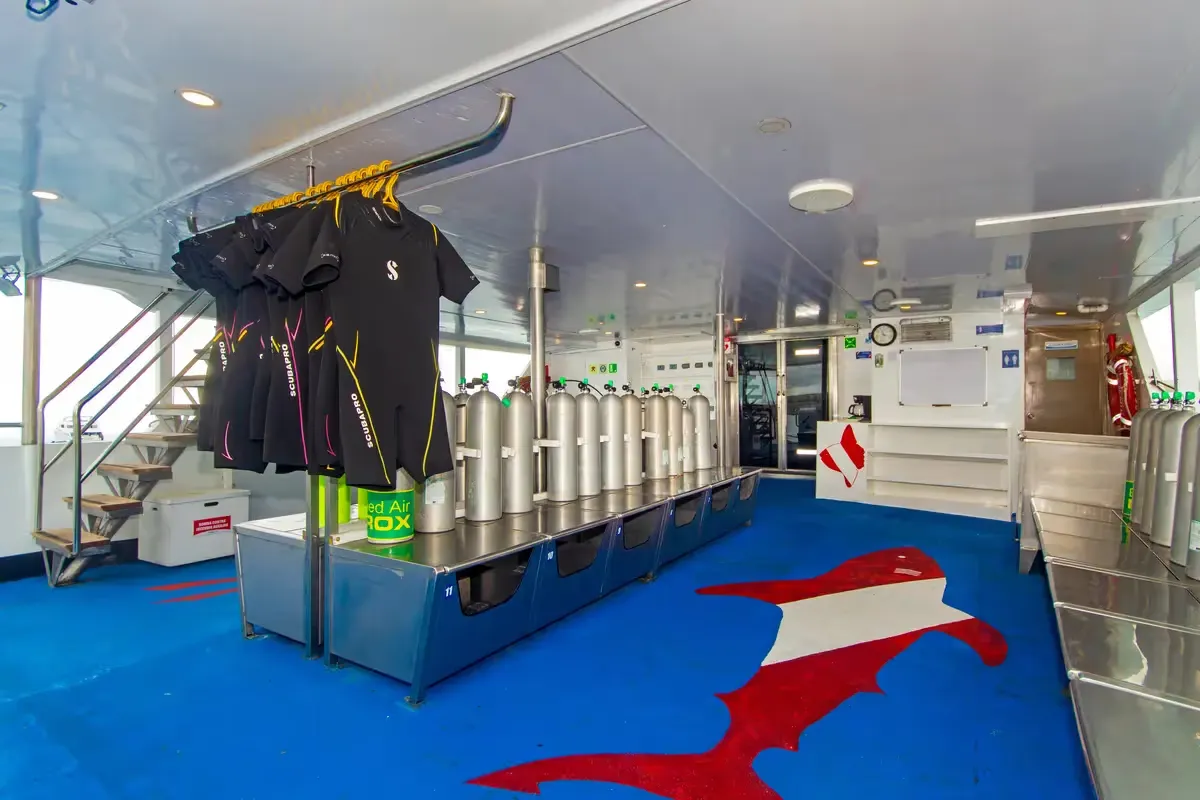
Discover the Best of Both Worlds. Calipso allows you to explore the Galapagos in both Naturalist and Diving itineraries. She boasts a spacious lounge, dining area, fantastic new dive deck, sundeck with a Jacuzzi and 10 comfortable cabins to accommodate up to 16 passengers.
From bow to stern, Calypso is brimming with an fantastic array of social and dining areas, both inside and out, making her the ideal yacht for relaxing and entertaining whilst on charter.
With its luxurious interiors, vast array of onboard facilities and a highly-trained and professional crew, a first-class diving boat vacation onboard Calypso promises to be nothing short of spectacular.
Itinerary
Itinerary 4D/3N Naturalist (Monday to Thursday)
Day 1: Baltra - South Plaza
AM: Baltra
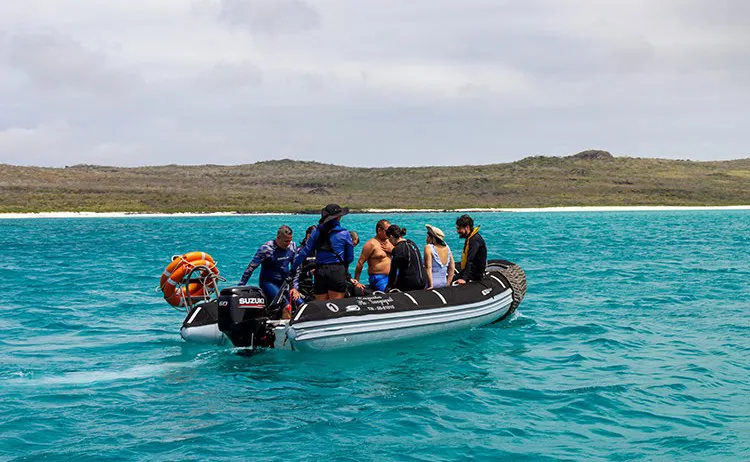
You will arrive at Baltra Island in the morning. After passing through immigration and baggage claim, you will be met by a Calipso staff member and transferred to the yacht. You will be shown to your cabin where you will have some time to settle in before lunch and a welcome briefing.
PM: South Plaza
This small island with steep cliffs was formed by rising lava and is now covered by Opuntia cacti. It is also home to one of the largest sea lion colonies as well as colorful yellow and red land iguanas. The most characteristic plant is the Sesuvium. During the rainy season its color is a greenish to yellowish tone and in the dry season (end of June through January) a bright red
Day 2: Floreana
AM: Post Office Bay – Baroness Viewing Point
You will land on a beach and head to a spot where 18th century whalers placed a wooden barrel used as an unofficial mail box. The custom continues to this day with Galapagos visitors. So, don’t forget your postcards, and don’t be surprised if the post card arrives to its destination before you even get home!
Baroness Viewing Point is a fantastic place to absorb the environment of the Galapagos. Once inhabited by an indulgent baroness and her three lovers, the history of this island is intriguing. The legends about this baroness are associated with a fascinating murder mystery. There are easy trails in this area for exploring the flora and fauna of Floreana.
PM: Cormorant Point
Cormorant Point hosts a large flamingo lagoon where other birds such as common stilts and white-cheeked pintails can also be seen. The beaches on this island are distinct: The Green Beach is named so due to its green color, which comes from a high percentage of olivine crystals in the sand, and the Flour Sand Beach is composed of white coral.
Day 3: Santa Fe - Sta.Cruz
AM: Santa Fe
Santa Fe Island (Barrington) is home to the small picturesque bay and anchorage on the island’s northeast coast. The bay has two visitor trails: one leading to a scenic viewpoint atop a cliff, and the other spanning from a small beach to a tall prickly pear cactus forest.
PM: Sta. Cruz: Fausto Llerena Breeding Center
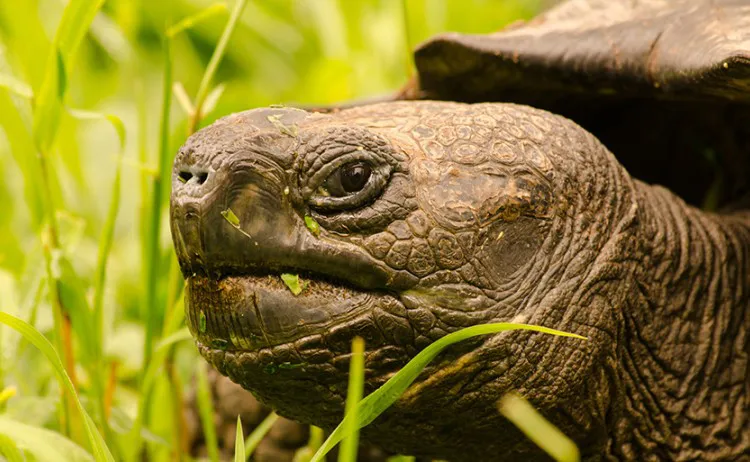
You will visit “Fausto Llerena” Tortoise Breeding Center in Puerto Ayora, where giant tortoises are bred in captivity. This is home to tortoises ranging from 3-inches (new hatchlings) to 4-feet long adults. Subspecies of the giant tortoises interact with one another, and many of the older tortoises are accustomed to humans stretching out their heads for a photo opportunity. The babies are kept until they are about four years-old and strong enough to survive on their own.
Day 4: San Cristobal
AM: Gianni Arismendy Interpretation Center
This site is part of an environment project. The tour of this center will explore the natural history of the islands including human interaction and conservation efforts. The Museum of Natural History explains the volcanic origin of the archipelago, ocean currents, climate, and the arrival of endemic species. The Human History exhibit chronologically describes significant events such as discovery and colonization of the islands.
San Cristobal airport departure
After this final visit, you will be transferred to the San Cristobal airport in time for your flight back to the mainland.
Itinerary 5D/4N Naturalist (Thursday to Monday)
Day 1: San Cristobal
AM: San Cristobal
You will arrive at San Cristobal Island in the morning. After passing through immigration and baggage claim, you will be met by a Calipso staff member and transferred to the yacht. You will be shown to your cabin where you will have some time to settle in before lunch and a welcome briefing.
PM: Witch Hill
Located on the northern coast, this eroded hill and its surroundings present one of the most picturesque beaches in the Galapagos with its white powdery sand and the abundance of animals. Wildlife includes sea turtles, rays, and various types of booby birds. The clear water provides an excellent opportunity for enjoying swimming and snorkeling.
Day 2: Bartolome - Santiago
AM: Bartolome
You will head to Bartholomew Island where the famous Pinnacle Rock is found. Bartholomew consists of an extinct volcano with a variety of red, orange, black and even green volcanic formations. We will take a trail of stairs to the summit of the volcano (about 30 or 40 minutes) where you will enjoy one of the best views of the islands! A beautiful beach surrounded by the only vegetation is perfect for snorkeling where you may even see and swim with Galapagos penguins.
PM: Santiago: Egas Port
Egas Port, also known as James Bay, on Santiago Island is home to the curious Galapagos hawks and quick-footed Galapagos lava lizards. The trail leads to the coastline with gorgeous tide pools and grottos full of fauna. Here the Galapagos furseals bathe in the sun. This is also a great snorkeling site.
Day 3: Fernandina - Isabela
AM: Fernandina – Punta Espinosa
Crossing the Bolivar Channel that divides Isabela and Fernandina Islands, you will land at Espinoza Point, and after walking past a colony of marine iguanas and a group of sea lions, you will reach the island’s highlight: the flightless cormorant nesting site. This area also provides a great opportunity to see the Galapagos hawk.
PM: Isabela – Tagus Cove
You will visit Tagus Cove on Isabela Island which is located across from Fernandina Island, near the Bolivar Channel dividing the two islands. This spot has been frequented by ships since the 1800s, using the area as an anchorage site. Trails winding by Lake Darwin up to a ridge display wonderful views.
Day 4: Isabela
AM: Fernandina – Punta Espinosa
Crossing the Bolivar Channel that divides Isabela and Fernandina Islands, you will land at Espinoza Point, and after walking past a colony of marine iguanas and a group of sea lions, you will reach the island’s highlight: the flightless cormorant nesting site. This area also provides a great opportunity to see the Galapagos hawk.
PM: Isabela – Tagus Cove
You will visit Tagus Cove on Isabela Island which is located across from Fernandina Island, near the Bolivar Channel dividing the two islands. This spot has been frequented by ships since the 1800s, using the area as an anchorage site. Trails winding by Lake Darwin up to a ridge display wonderful views.
Day 5: North Seymour - Baltra
AM: North Seymour
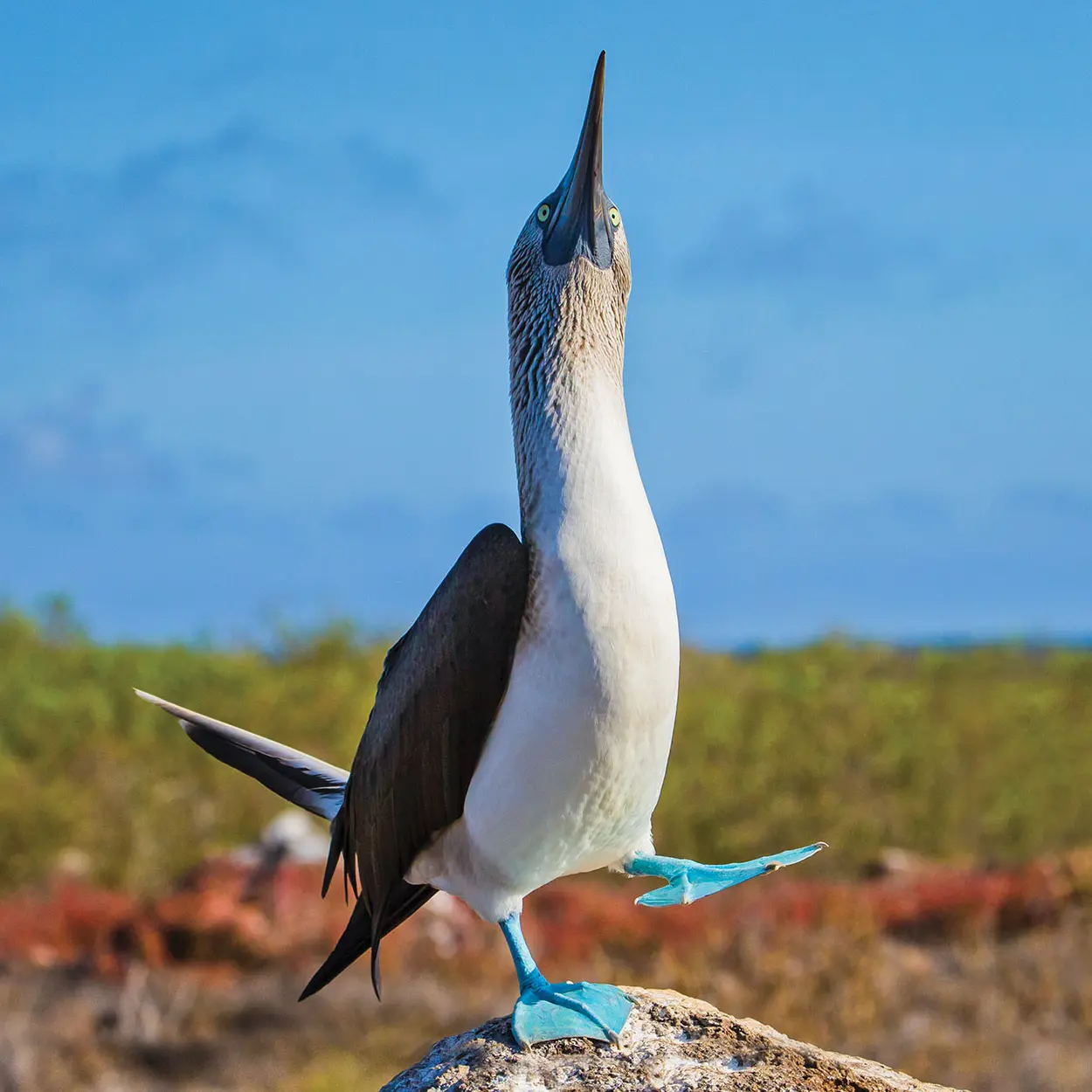
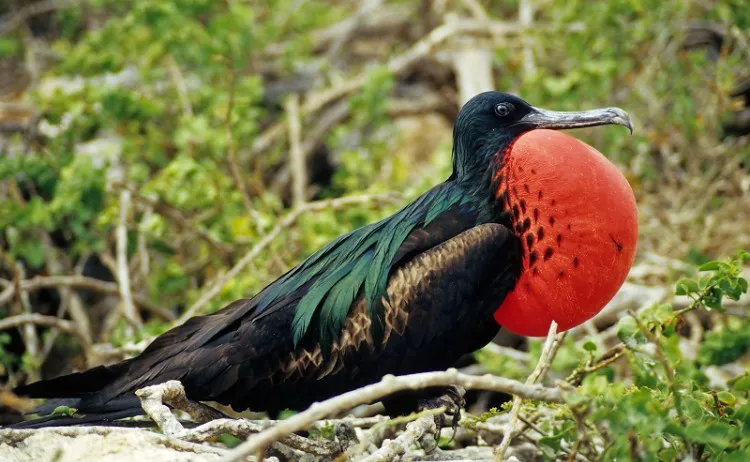
In North Seymour you may see Galapagos sea lions, blue-footed boobies, and magnificent frigate birds which are abundant on this island. North Seymour was formed by a series of submarine lava flows containing layers of sediment that were uplifted by tectonic activity. The island is characterized by its arid vegetation zone.
Baltra Airport Departure
After this final visit, you will be transferred to the Baltra airport in time for your flight back to the mainland.
Itinerary 8D/7N Naturalist (Thursday to Thursday)
Day 1: San Cristobal
AM: San Cristobal
You will arrive at San Cristobal Island in the morning. After passing through immigration and baggage claim, you will be met by a Calipso staff member and transferred to the yacht. You will be shown to your cabin where you will have some time to settle in before lunch and a welcome briefing.
PM: Witch Hill
Located on the northern coast, this eroded hill and its surroundings present one of the most picturesque beaches in the Galapagos with its white powdery sand and the abundance of animals. Wildlife includes sea turtles, rays, and various types of booby birds. The clear water provides an excellent opportunity for enjoying swimming and snorkeling.
Day 2: Bartolome - Santiago
AM: Bartolome: Pinnacle Rock
You will head to Bartholomew Island where the famous Pinnacle Rock is found. Bartholomew consists of an extinct volcano with a variety of red, orange, black and even green volcanic formations. We will take a trail of stairs to the summit of the volcano (about 30 or 40 minutes) where you will enjoy one of the best views of the islands! A beautiful beach surrounded by the only vegetation is perfect for snorkeling where you may even see and swim with Galapagos penguins.
PM: Santiago: Egas Port
Egas Port, also known as James Bay, on Santiago Island is home to the curious Galapagos hawks and quick-footed Galapagos lava lizards. The trail leads to the coastline with gorgeous tide pools and grottos full of fauna. Here the Galapagos furseals bathe in the sun. This is also a great snorkeling site.
Day 3: Fernandina - Isabela
AM: Fernandina – Espinoza Point
Crossing the Bolivar Channel that divides Isabela and Fernandina Islands, you will land at Espinoza Point, and after walking past a colony of marine iguanas and a group of sea lions, you will reach the island’s highlight: the flightless cormorant nesting site. This area also provides a great opportunity to see the Galapagos hawk.
PM: Isabela – Tagus Cove
You will visit Tagus Cove on Isabela Island which is located across from Fernandina Island, near the Bolivar Channel dividing the two islands. This spot has been frequented by ships since the 1800s, using the area as an anchorage site. Trails winding by Lake Darwin up to a ridge display wonderful views.
Day 4: Isabela
AM: Urbina Bay
Urbina Bay is located at the base of Alcedo Volcano on the west coast between Tagus Cove and Elizabeth Bay. This area experienced a major uplift in 1954 causing the land to rise over 16 feet. The coast expanded half a mile out leaving marine life stranded on the new shore. This area is also a great place for snorkeling.
PM: Moreno Point
Moreno Point is located southwest of Elizabeth Bay. Here a dry landing onto what was once flowing lava is possible. The lava has left craters in its wake which formed crystal tide pools. By looking into the pools, you can peer into another world as the marine life drifts by your window. In the brackish pools of this area, you may see pink flamingos, white-cheeked pintails, and common gallinules. If you look carefully into the pools, you may see white-tip reef sharks and some sea turtles.
Day 5: North Seymour - South Plaza
AM: North Seymour
In North Seymour you may see Galapagos sea lions, blue-footed boobies, and magnificent frigate birds which are abundant on this island. North Seymour was formed by a series of submarine lava flows containing layers of sediment that were uplifted by tectonic activity. The island is characterized by its arid vegetation zone.
PM: South Plaza
This small island with steep cliffs was formed by rising lava and is now covered by Opuntia cacti. It is also home to one of the largest sea lion colonies as well as colorful yellow and red land iguanas. The most characteristic plant is the Sesuvium. During the rainy season its color is a greenish to yellowish tone and in the dry season (end of June through January) a bright red.
Day 6: Floreana
AM: Post Office Bay – Baroness Viewing Point
You will land on a beach and head to a spot where 18th century whalers placed a wooden barrel used as an unofficial mail box. The custom continues to this day with Galapagos visitors. So, don’t forget your postcards, and don’t be surprised if the post card arrives to its destination before you even get home!
Baroness Viewing Point is a fantastic place to absorb the environment of the Galapagos. Once inhabited by an indulgent baroness and her three lovers, the history of this island is intriguing. The legends about this baroness are associated with a fascinating murder mystery. There are easy trails in this area for exploring the flora and fauna of Floreana.
PM: Cormorant Point
Cormorant Point hosts a large flamingo lagoon where other birds such as common stilts and white-cheeked pintails can also be seen. The beaches on this island are distinct: The Green Beach is named so due to its green color, which comes from a high percentage of olivine crystals in the sand, and the Flour Sand Beach is composed of white coral.
Day 7: Santa Fe - Sta.Cruz
AM: Santa Fe
Santa Fe Island (Barrington) is home to the small picturesque bay and anchorage on the island’s northeast coast. The bay has two visitor trails: one leading to a scenic viewpoint atop a cliff, and the other spanning from a small beach to a tall prickly pear cactus forest.
PM: Sta. Cruz: Fausto Llerena Breeding Center
You will visit “Fausto Llerena” Tortoise Breeding Center in Puerto Ayora, where giant tortoises are bred in captivity. This is home to tortoises ranging from 3-inches (new hatchlings) to 4-feet long adults. Subspecies of the giant tortoises interact with one another, and many of the older tortoises are accustomed to humans stretching out their heads for a photo opportunity. The babies are kept until they are about four years-old and strong enough to survive on their own.
Day 8: San Cristobal
AM: San Cristobal: Gianni Arismendy Interpretation Center
This site is part of an environment project. The tour of this center will explore the natural history of the islands including human interaction and conservation efforts. The Museum of Natural History explains the volcanic origin of the archipelago, ocean currents, climate, and the arrival of endemic species. The Human History exhibit chronologically describes significant events such as discovery and colonization of the islands.
San Cristobal airport departure
After this final visit, you will be transferred to the San Cristobal airport in time for your flight back to the mainland
Itinerary 8D/7N Diving (Thursday to Thursday)
Day 1: San Cristobal: airport – Lobos Island
AM: San Cristobal: Airport
PM: Lobos Island
Day 2: Sta Cruz: Carrión Point – North East Seymour
AM: San Cristobal: Airport
PM: Lobos Island
Day 3: Wolf Island
AM: La Ventana Islet/La Banana
PM: Shark Bay Point/El Derrumbe
Day 4: Darwin
AM: Darwin´s Arch
PM: El Arenal/Darwin´s Arch
Day 5: Darwin - Wolf Island
AM: Darwin: Darwin´s Arch/El Arenal
PM: Wolf Island: La Banana/Shark Bay Point/Anchor Bay
Day 6: Isabela - Fernandina
AM: Isabela: Coka Port (Jan-May) – Fernandina: Cape Douglas (Jun-Dec)
PM: Isabela: Cape Marshall (Jan-May) / Vicente Roca Point (Jun-Dec)
Day 7: Santiago - Sta.Cruz
AM: Santiago: Cousin Rocks
PM: El Chato/ Tortoise Breeding Center
Day 8: San Cristobal
AM: Transfer to the San Cristobal Airport
Explore the
place you stay
- Category: First class
- Type: Motor yacht
- Capacity: 16 passengers
- Length: 115 ft (35 m)
- Beam: 24 ft (7.3 m)
- Crew: 9 Crew members + 1 Guide
- Speed: 12 knots
- Facilities: 8 Cabins (Twin beds), 2 cabins, dining room, bar, social area. Jacuzzi, al fresco dining and social area. All cabins with private bathrooms, hot water and air-conditioning / All cabins can be converted into matrimonials, except on the ones located in the lower deck.
Dates & Rates
To request a quote or make a reservation let's start with your details...*
What's Included
- Accommodation as confirmed.
- All mentioned meals (full-board); filtered water, tea and coffee.
- All guided excursions and activities as mentioned in the itinerary by a National Park certified naturalist guide.
- Beach towels and snorkelling gear (snorkel, mask, flippers; optional wet-suits for hire).
What's Not Included
- Round-trip flight to the Galapagos.
- Soft and alcoholic drinks.
- Galapagos National Park entrance fee ($200 subject to change) and Transit Control Card ($20 subject to change).
- Personal travel insurance.
- Personal expenses, extras and tipping.
Get in touch with us
Explore more of
First Class Boats, Diving Boats
Galapagos First-Class boat cruises offer a high level of comfort and service, providing spacious cabins, elegant common areas, and gourmet dining. These vessels typically feature attentive staff, expert naturalist guides, and well-designed itineraries that maximize wildlife encounters and exploration. Expect a more intimate and luxurious experience, balancing immersive adventure with exceptional amenities for a truly memorable journey through the archipelago.
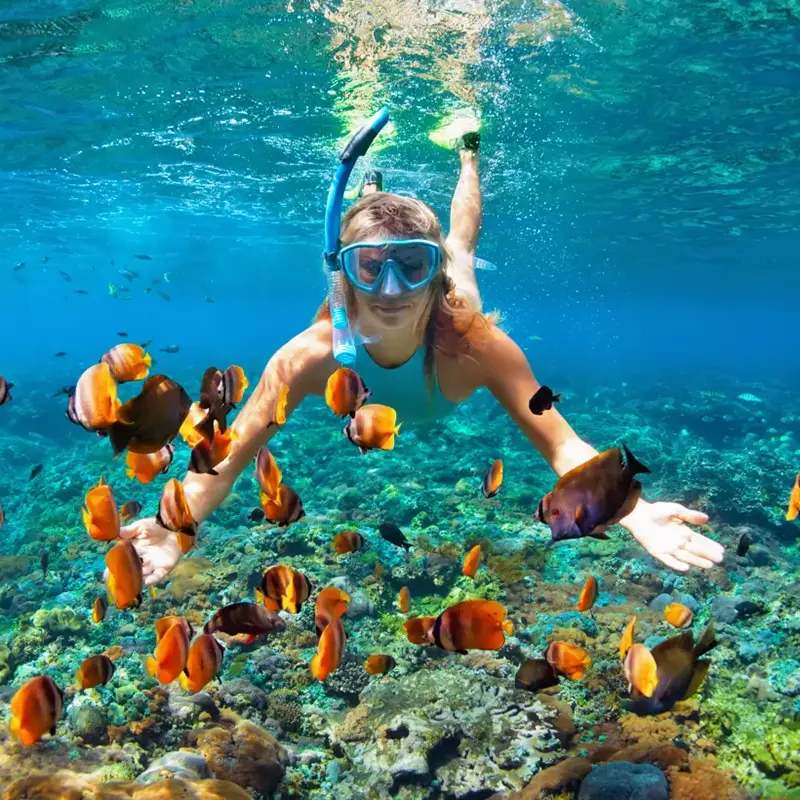
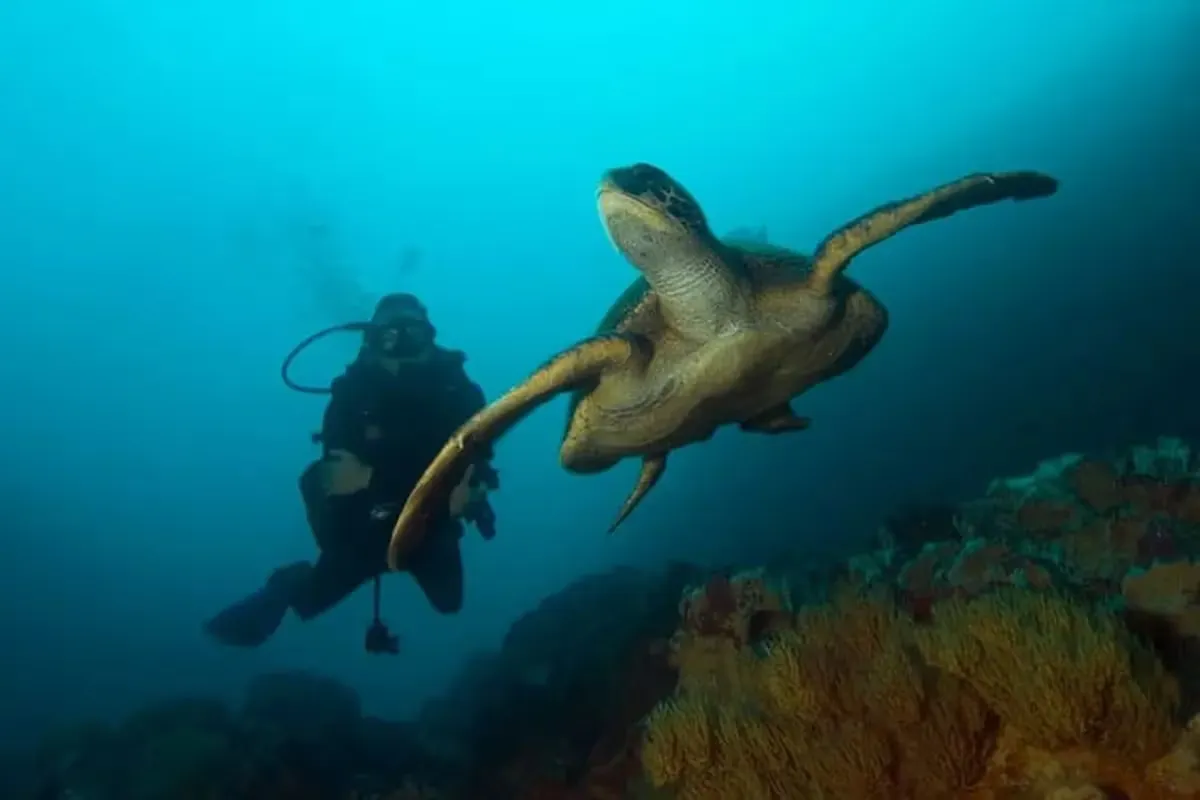
Galapagos diving boats tours will take you to an underwater wonderland in the Galapagos islands! Explore a world teeming with marine life found nowhere else, from playful sea lions and graceful sea turtles to magnificent whale sharks and unique marine iguanas.