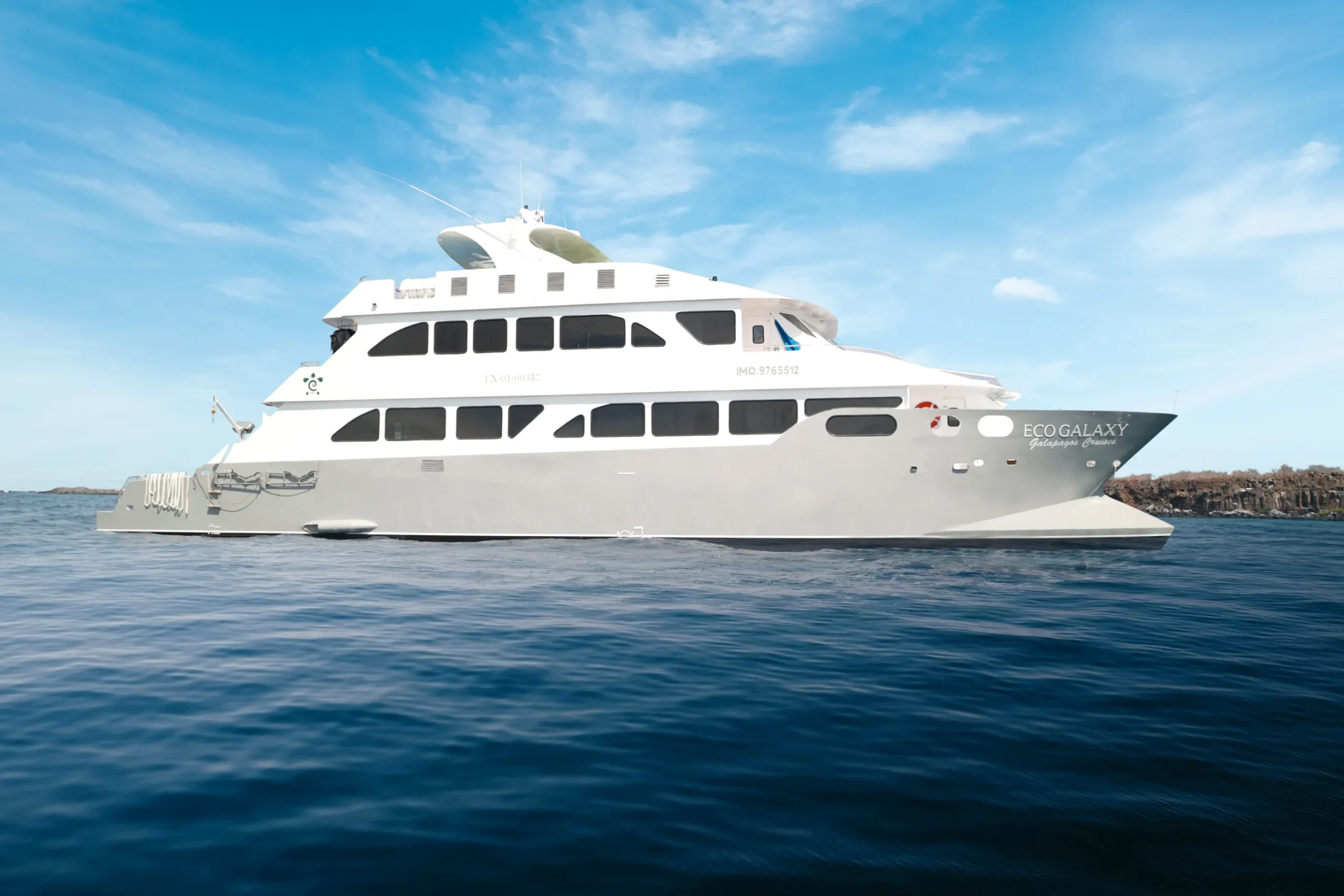
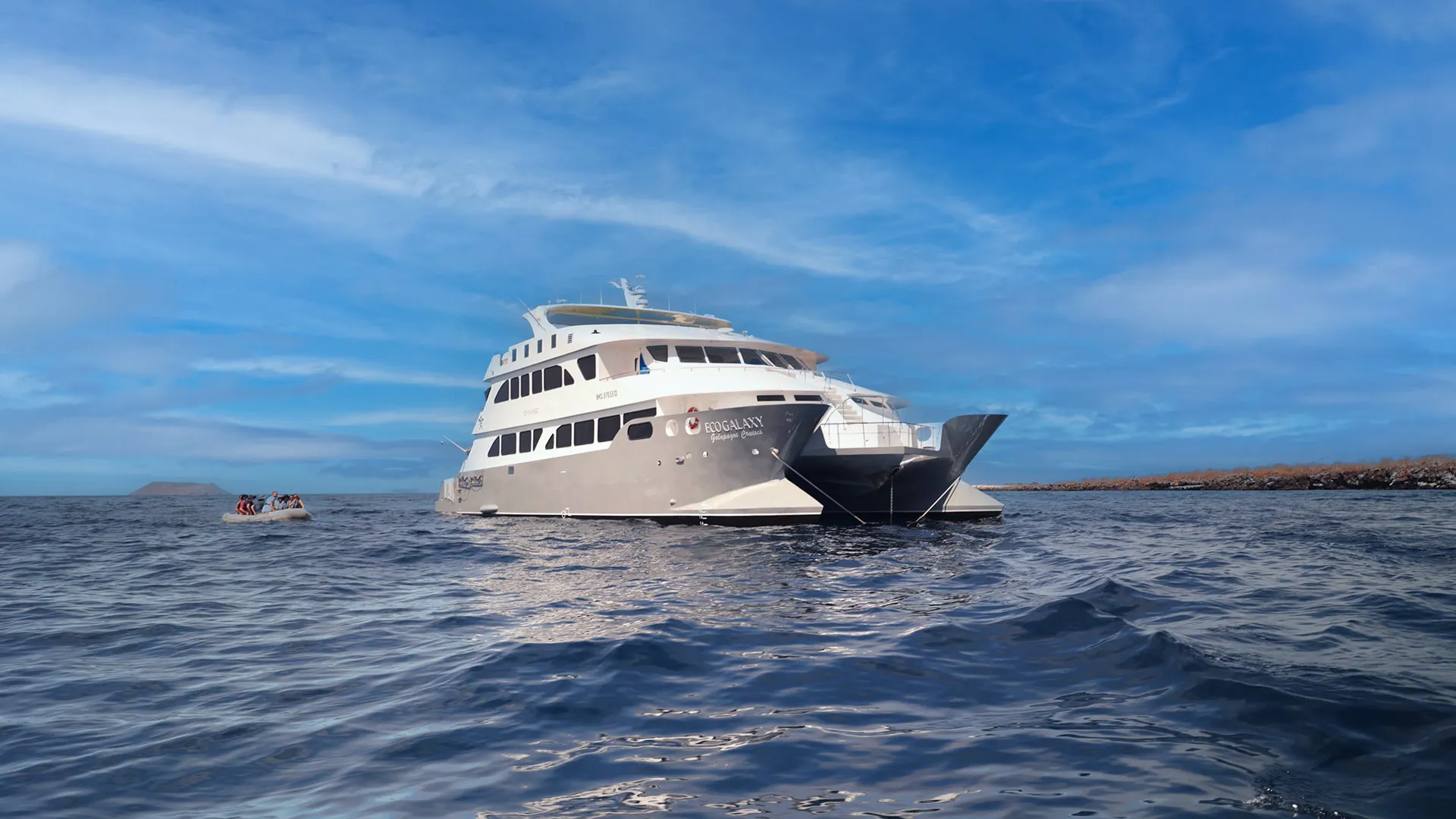
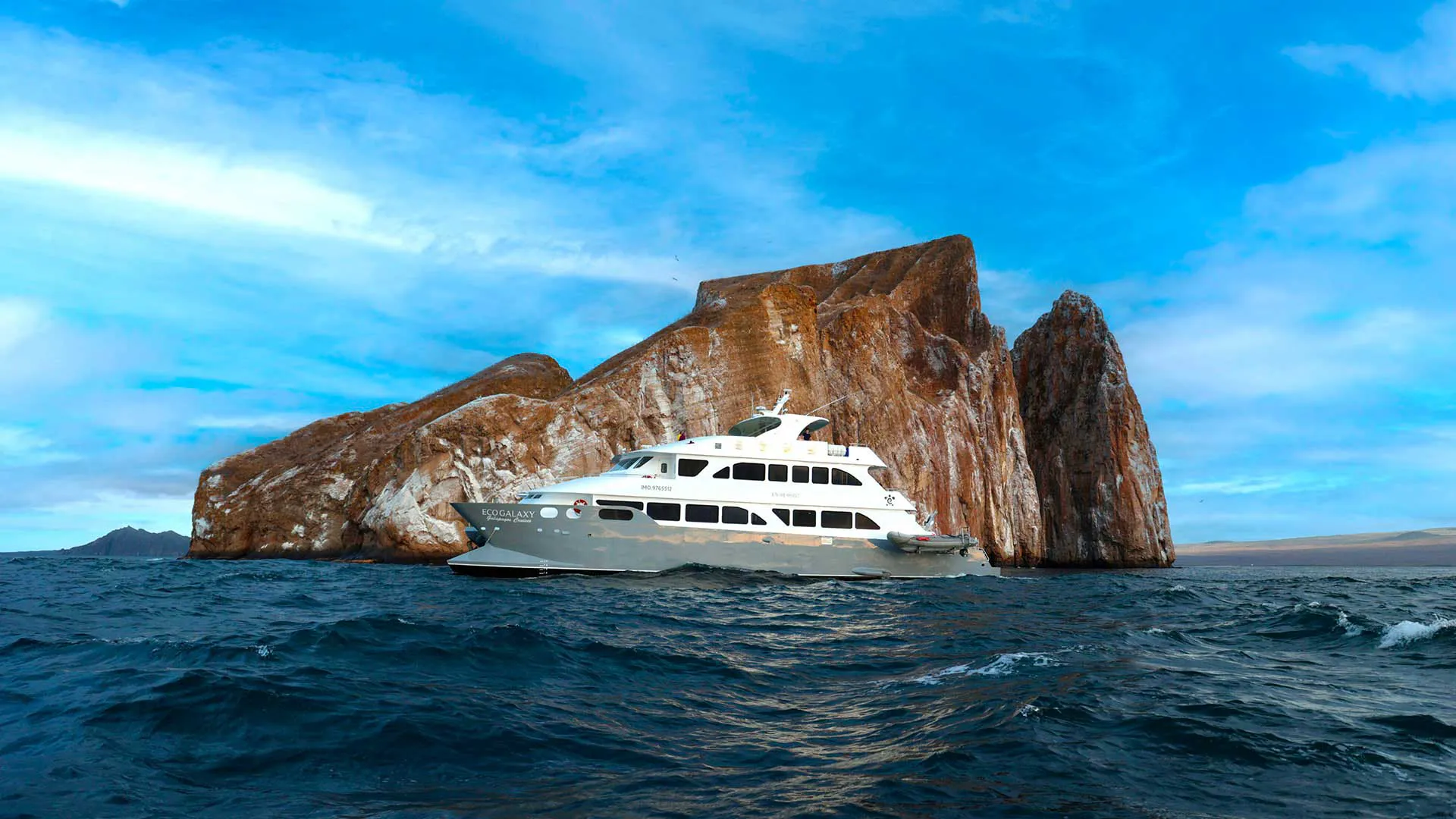
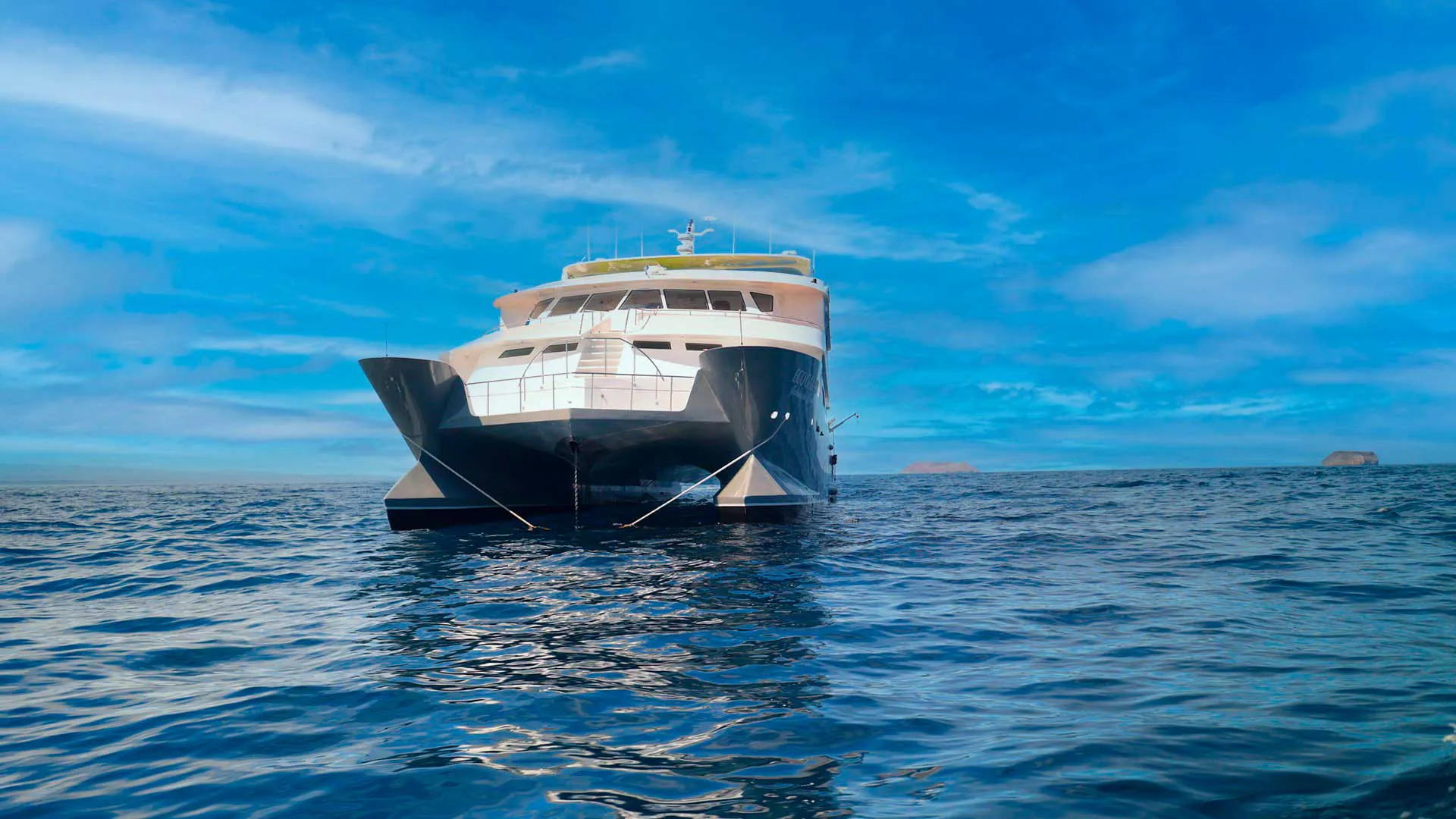
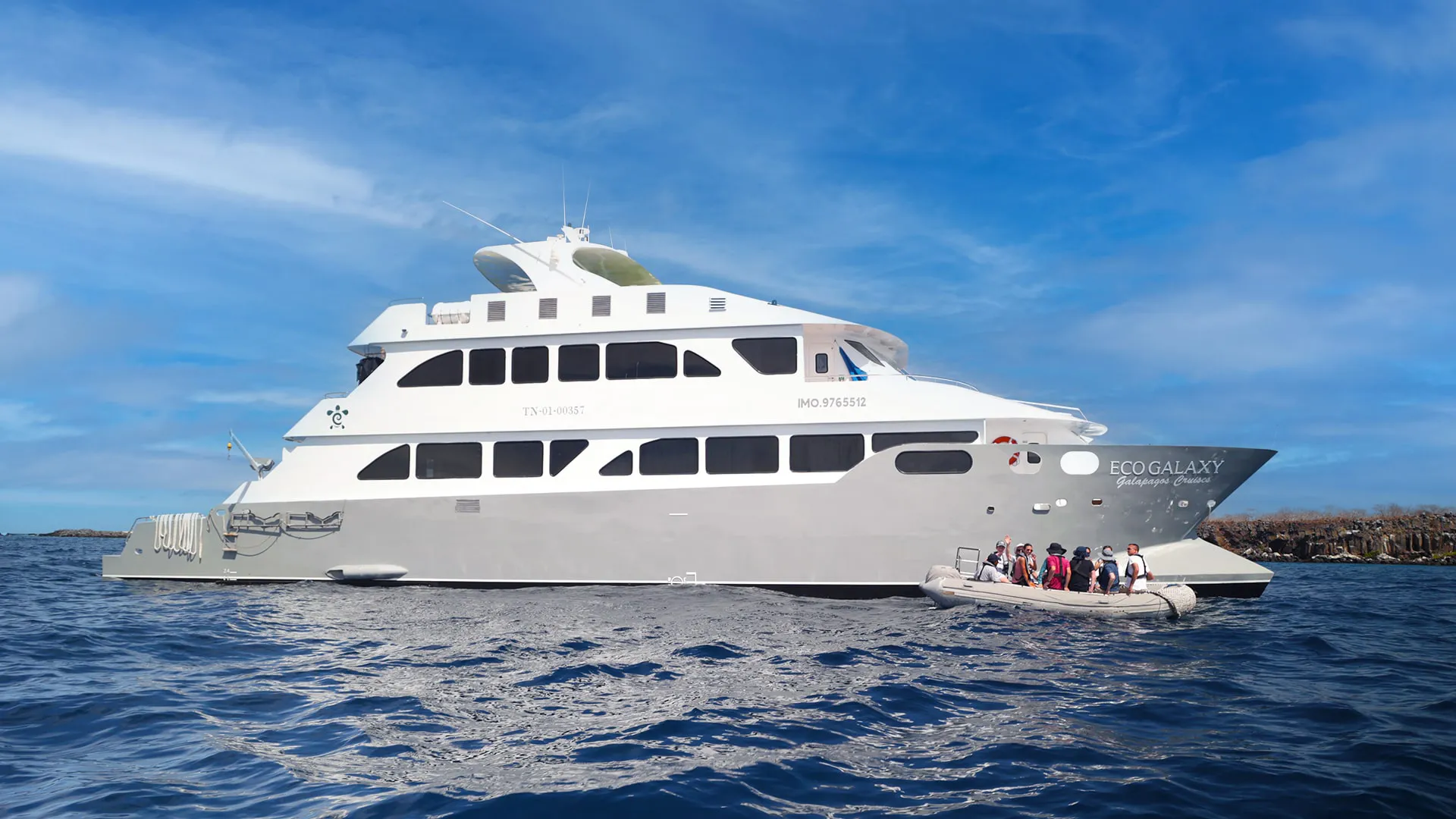
First Class environmentally friendly Catamaran, M/C EcoGalaxy Catamaran
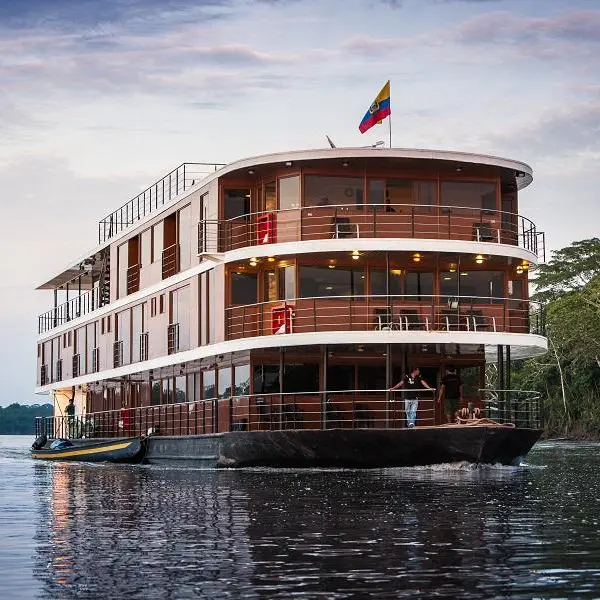
Explore the “Enchanted Islands” on board the M/C EcoGalaxy a First Class environmentally friendly Catamaran
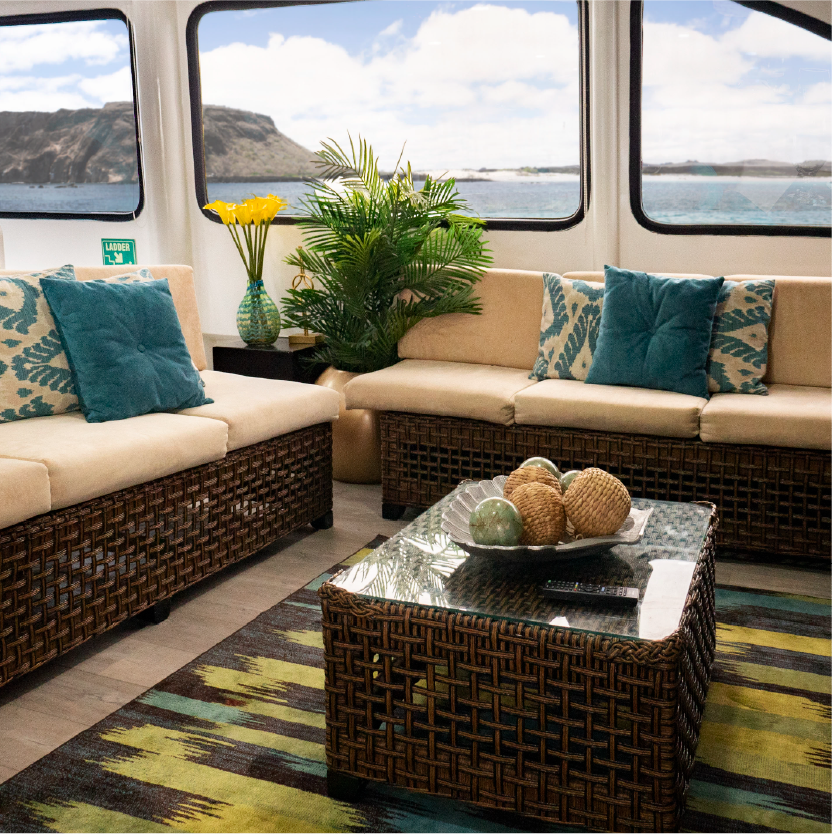
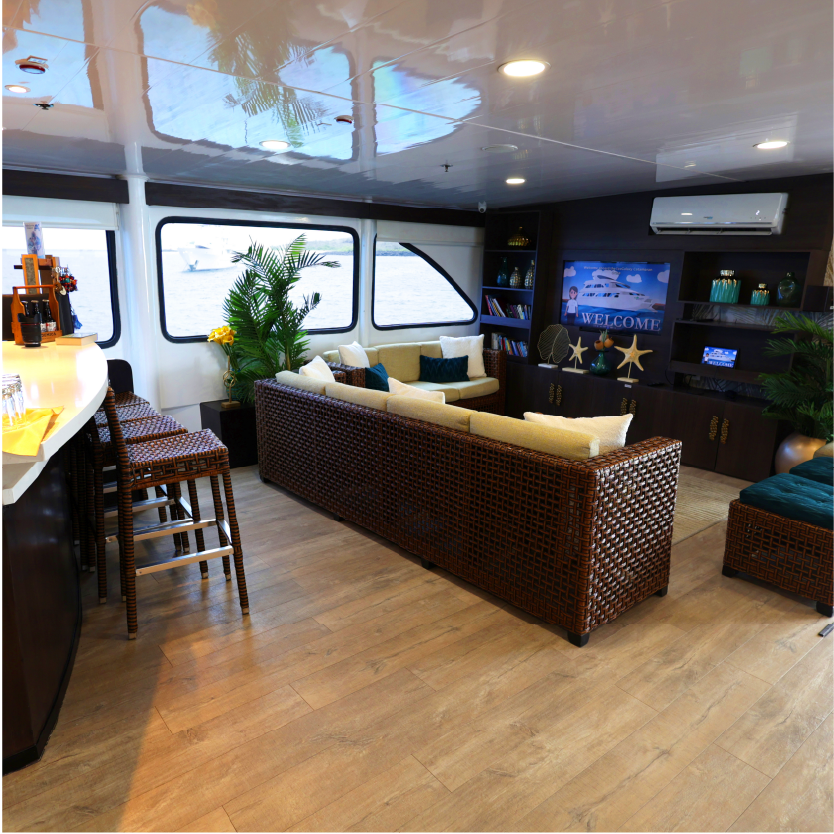
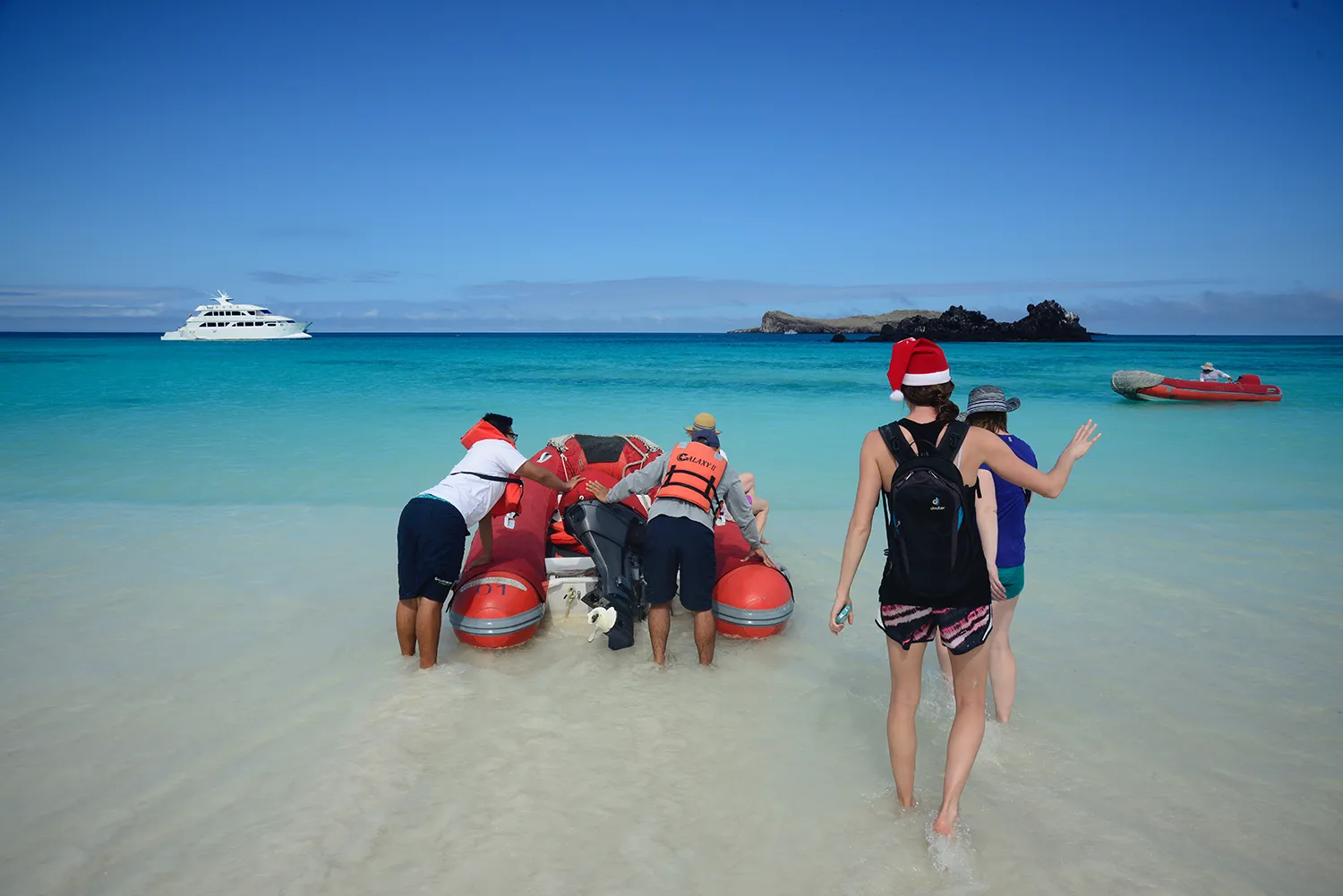
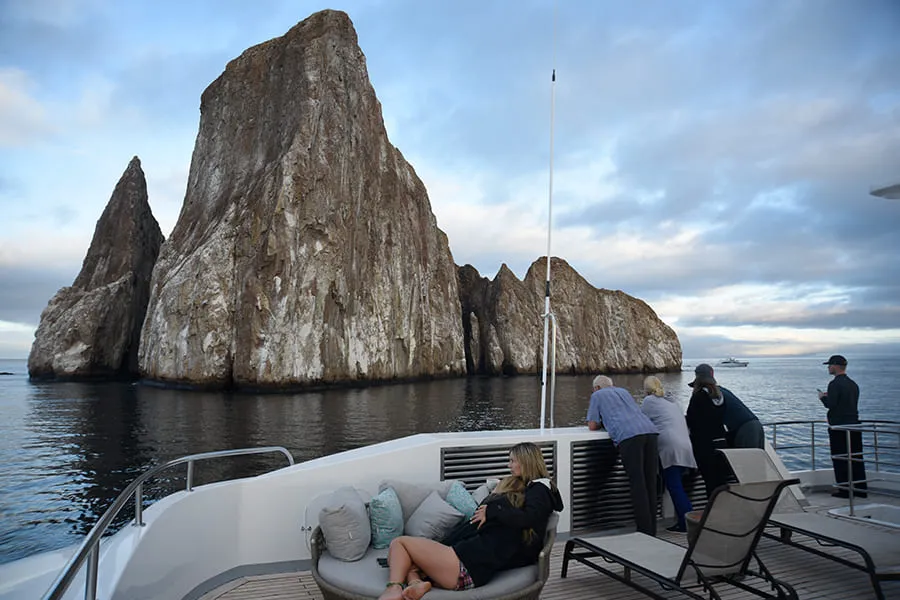
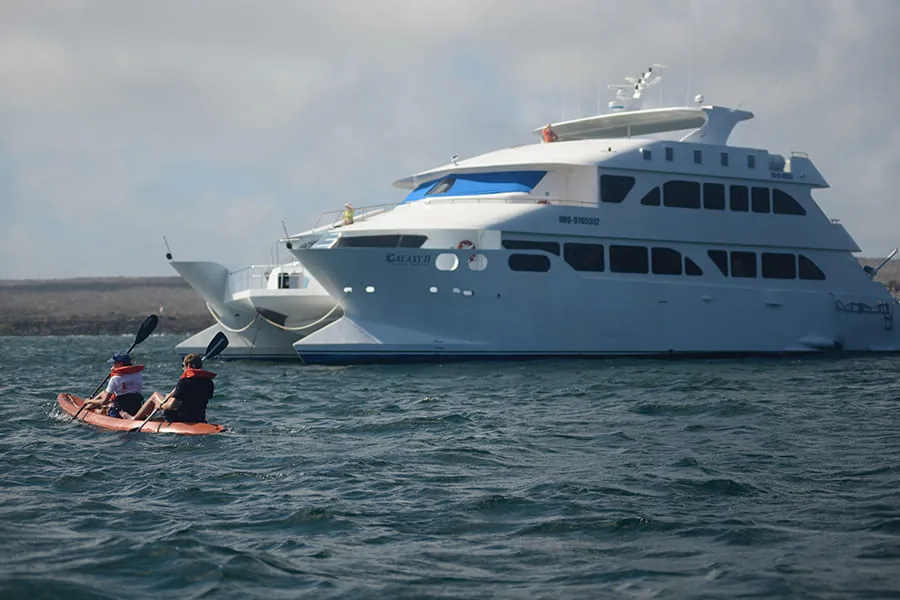
Built for sailing the Galapagos Islands while preserving its fragile ecosystem, and of course its beauty. The social areas of the catamaran are the perfect place to witness the endless wonderful landscapes in a private and intimate atmosphere.
Itinerary
Itinerary A 5D/4N (Tuesday to Saturday)
Day 1: San Cristobal: Airport – Lobos Island
AM: ARRIVAL AT SAN CRISTOBAL AIRPORT
Embark on an unforgettable journey to the Galapagos Islands, where nature thrives in its purest form. Your adventure begins at San Cristobal’s modest yet bustling airport, where a seasoned naturalist guide will greet you. This guardian of the ecosystem will introduce you to a world of breathtaking landscapes and unparalleled biodiversity. Feel the excitement as you step into this living sanctuary, a UNESCO World Heritage site, marking the beginning of an extraordinary exploration.
PM: LOBOS ISLAND
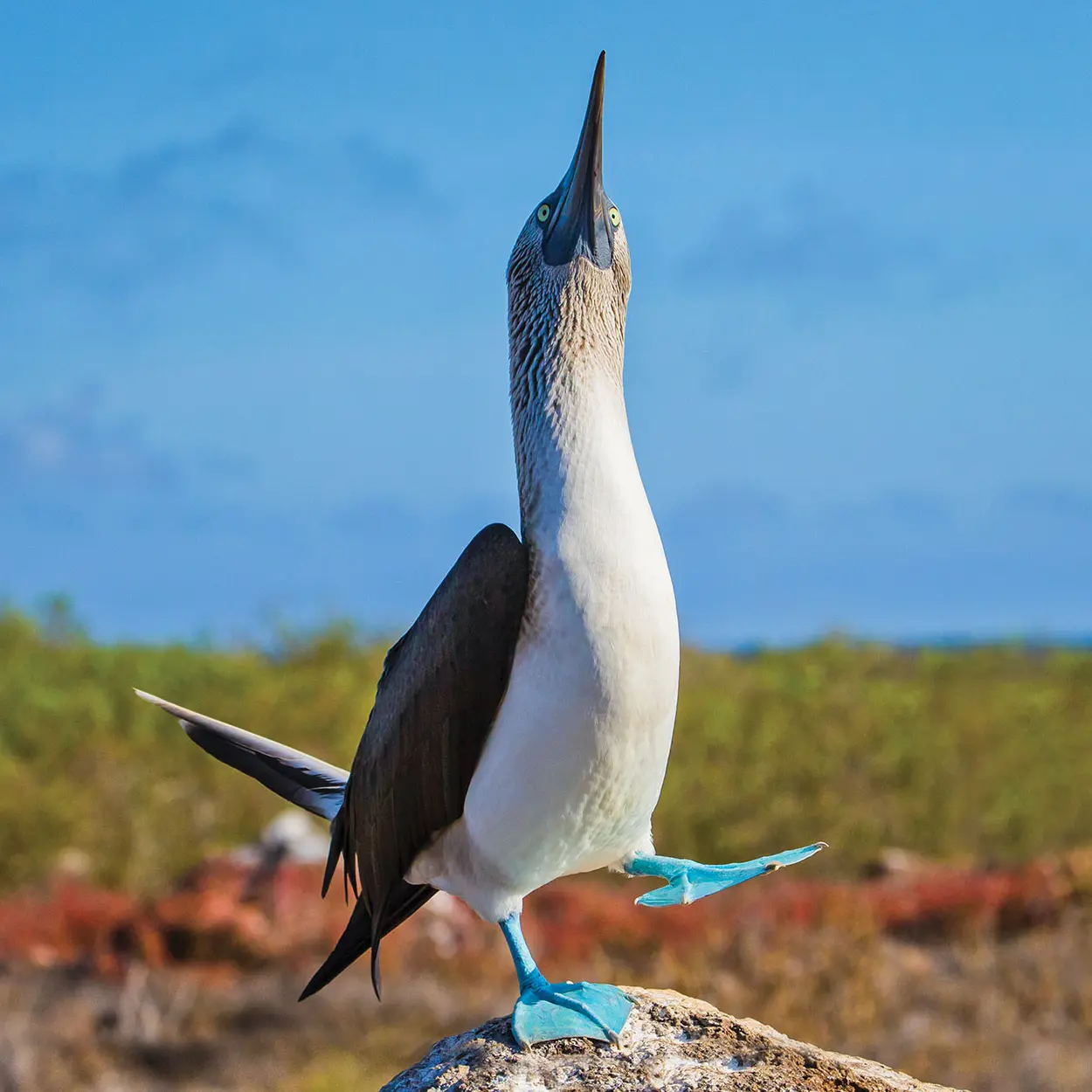
Lobos Island, a small islet near San Cristóbal, offers an unforgettable wildlife experience. Upon landing, groups of sea lions will greet you as they play in tidal pools. Walking inland, you’ll spot frigatebirds perched in bushes, displaying their inflated red pouches, while blue-footed boobies nest along the trail, performing their iconic courtship dance. In the calm waters, snorkeling provides an incredible opportunity to swim with playful sea lions, while sea turtles and rays rest on the sandy bottom.
Day 2: Sta Fe – South Plazas
AM: SANTA FE
Santa Fe Island, nestled in one of the most stunning bays in the Galapagos, boasts towering prickly-pear cacti and ancient lava formations. Its white-sand beach and turquoise waters are home to a large sea lion colony basking under the sun. As you follow the trail, look for the endemic Santa Fe land iguana and, if lucky, a Galapagos hawk perched atop a cactus scanning for prey. Along the way, Darwin’s finches, Galapagos doves, mockingbirds, and lava lizards are commonly seen, making this hike a true wildlife experience.
PM: PLAZAS
Of the two twin islands, only South Plazas is open to visitors, while North Plazas remains a scientific research site. Despite its small size, South Plazas is teeming with wildlife. Upon landing, ll find land iguanas lounging beneath Opuntia cacti, waiting for fallen fruit. A large sea lion colony dominates the shore, where playful pups explore tide pools while massive bulls defend their territory. The trail leads to a dramatic cliffside, offering breathtaking ocean views where frigatebirds, blue-footed boobies, red-billed tropicbirds, and swallow-tailed gulls soar. A blanket of reddish succulents covering the island adds to its striking beauty.
Day 3: North Seymour - Mosquera
AM: SEYMOUR
This island is home for large colonies of both magnificent and great frigatebirds and you can see them displaying their red balloons to attract a female. Blue-footed boobies nest in the ground and perform their famous dance in the open areas, while swallow-tailed gulls perch on the cliff edges. Land iguanas are common inland while their marine cousins bask in the rocks by the sea, close to sea lions, which often like to body surf in the waves.
PM: MOSQUERA
Mosquera is mostly a barren sand bar with some rocky areas and scattered salt-resistant plants. You can walk along the beach and enjoy seeing playful sea lion pups surfing the waves and having a great time in the tide pools. Look for endemic lava gulls which are often seen flying over the beach in the search of food.
Day 4: Genovesa: Darwin Bay – El Barranco
AM: DARWIN BAY
Genovesa is a favorite island for birdwatchers as it is home for very large colonies of seabirds. From the minute you set foot at the beach you will be amazed by the noise of hundreds of boobies, gulls and frigatebirds flying over your heads, perched in the bushes or nesting on the sandy terrain. The trail is an ultimate wildlife experience as there are animals everywhere; sea lions and marine iguanas near the sea; night herons, lava and swallow tailed gulls, Darwin finches, Galapagos doves, mockingbirds and many more species inland.
PM: BARRANCO
El Barranco is located in the southern part of Darwin Bay at Genovesa Island. The cliffs facing the sea are made of very fragile fractured lava, making it the ideal place for storm petrels to build their colonies, which attracts an important population of short-eared owls preying on the nesting birds. Red footed and Nazca boobies are abundant along the trail. At the base of the cliffs you can see Galapagos fur seals resting in shaded areas, as well as several species of seabirds.
Day 5: Sta Cruz: Highlands – Baltra
AM: HIGHLANDS
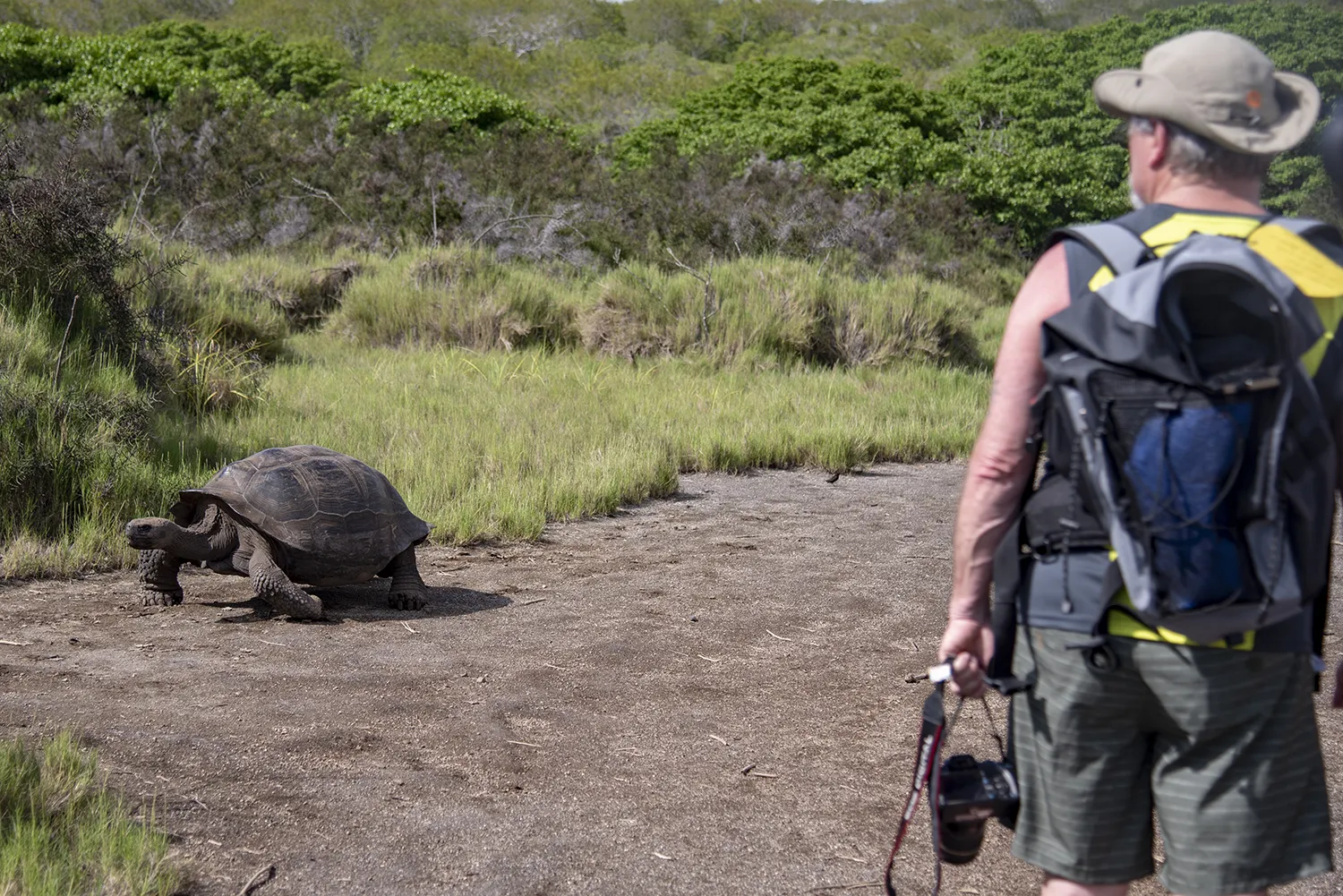
Either if you do this visit starting from Baltra or from Puerto Ayora, a bus will take you to the highlands stopping along the way at one of the reserves to visit the lush highland forests where you will look for Galapagos Giant tortoises in their natural environment. This is the best place in the Galapagos to see these gentle giants (reaching over 300 kg / 600 pounds!) casually grazing and resting in freshwater ponds. This is also home for a great diversity of birds rarely found at the lowlands, including finches (tree, woodpecker and vegetarian finches), flycatchers and several species of water birds. You will visit a lava tunnel (depending on the itinerary) and learn how these extraordinary formations were created by ancient volcanic eruptions.
PM: BALTRA (AIRPORT)
Your Galapagos adventure comes to an end. Today, you will be transferred to Baltra Airport, where your National Park naturalist guide will assist you with final details before your flight back to mainland Ecuador. As you bid farewell to this paradise, take with you the unforgettable memories of one of the world’s most extraordinary destinations.
Itinerary B 6D/5N (Saturday to Thursday)
Day 1: Santa Cruz: Charles Darwin Station
AM: BALTRA AIRPORT
Welcome to Galapagos! Upon arrival at Baltra Airport, your naturalist guide will greet you and assist with the transfer to Itabaca Channel. This initial journey offers your first connection with the archipelago as you take a short ferry ride to Santa Cruz Island. Along the way, observe Baltra’s arid landscape and learn about its history as a former U.S. WWII airbase. This is just the beginning of the many fascinating stories awaiting you on your adventure.
PM: CHARLES DARWIN STATION
The Charles Darwin Station is a nonprofit organization which has been working for decades together with the Galapagos National Park to preserve the biodiversity of these unique islands. During this visit you will learn about the projects that both institutions carry together to protect the native species and eradicate the invasive ones which are threatening the Galapagos environment. One of the most important and emblematic projects has been reproducing giant tortoises in captivity. The visit is mostly outdoors in a beautiful dry native forest with giant cactus and many other interesting native plants. It is also a fantastic place to find several endemic Darwin finches, as well as flycatchers and mockingbirds.
Day 2: Isabela: Moreno Point - Elizabeth Bay
AM: MORENO POINT
Moreno Point is a magical place with extensive lava fields which look lifeless at first sight. Once inland, scattered brackish lagoons form an oasis of life where you can find flamingos, gallinules, ducks and herons. Along the shore we will look for penguins, marine iguanas, flightless cormorants, blue-footed boobies, sea lions, oystercatchers and other shore birds.
PM: ELIZABETH BAY
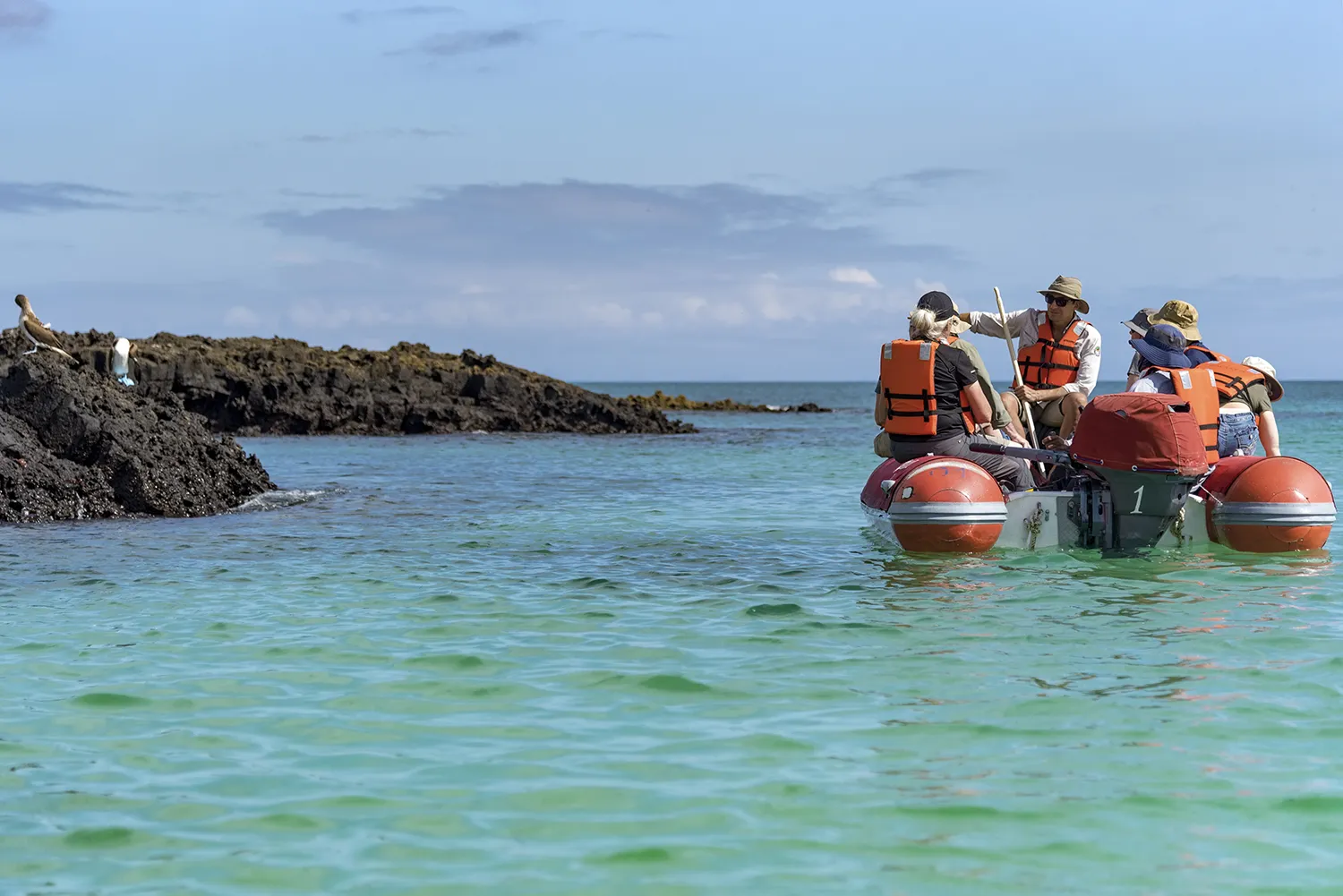
Elizabeth Bay is a beautiful sheltered bay surrounded by large mangroves and barren lava fields. There is no trail here so you will take a dinghy tour to explore many channels, pools and coves teeming with life. This is one of the best locations in the islands to see Galapagos penguins, but don’t expect to see thousands of them, as the entire population of the islands is only about 3.000 of them. Flightless cormorants also nest in the area and blue-footed boobies and pelicans often fish in these shallow and rich waters. Rays and sea turtles are also very abundant.
Day 3: Isabela: Urbina Bay - Tagus Cove
AM: URBINA BAY
This place is known for the dramatic uplifting that happened here during the 1950’s. A large portion of the coast was pushed up, exposing many hectares of previously submerged land. Look carefully along the trail and you will find small shells and corals, a proof that the area was underwater more than sixty years ago. The trail will give the opportunity to see land iguanas and, during certain seasons, giant tortoises. Galapagos hawks nest in the area and are often seen flying or perched on the trees
PM: TAGUS COVE
Tagus Cove is steeped in history, once visited by Charles Darwin during his Galapagos exploration. A scenic trail winds through dry Palo Santo forests, where Darwin’s finches and mockingbirds can be spotted. At the top, breathtaking views of Lake Darwin and Isabela’s towering volcanoes await. A boat tour along the shore provides a chance to observe Galapagos penguins, flightless cormorants, marine iguanas, and the elusive Galapagos martin, one of the rarest and most endangered birds in the archipelago.
Day 4: Fernandina: Espinoza Point - Isabela: Vicente Roca Point
AM: FERNANDINA: ESPINOZA POINT
Located at the base of an imposing volcano (the most active in the Galapagos islands) this site is one of the jewels of the Galapagos National Park. As soon as you disembark you will be surrounded by hundreds of marine iguanas, as this is the largest colony for the species. Sea lions bask in the beaches while their pups play in tide pools. Along the shore you will see flightless cormorants, which are restricted to the western areas of the archipelago. Surrounded by cold plankton-rich waters, Punta Espinosa is home for an array of species, including herons, pelicans, oystercatchers, sea turtles, shorebird and many more. Look up in the mangroves as Galapagos hawks often perch to look for their prey.
PM: ISABLE: VICENTE ROCA POINT
Vicente Roca Point offers a breathtaking natural spectacle, featuring some of the tallest cliffs in Galapagos and intriguing volcanic formations. While there are no trails, a dinghy tour along the shore provides an up-close look at the areaand#039;s rich wildlife. Highlights include flightless cormorants, blue-footed boobies, pelicans, and sea turtles. The site is also home to Galapagos fur seals and marine iguanas basking on the rocks. Moreover, the deep waters surrounding the area make it an excellent spot for dolphin and whale sightings.
Day 5: Santiago: Egas Port - Rabida
AM: EGAS PORT
Puerto Egas is a fascinating destination where history and wildlife intertwine. While there is no actual port, remnants of 1960s colonization attempts still stand. The coastal trail is teeming with marine iguanas basking in the sun and sea lions resting on the rocks. Herons, oystercatchers, and shorebirds complete this thriving ecosystem. Towards the end of the trail, the grottos are home to a small colony of the elusive Galapagos fur seal. Additionally, land iguanas were reintroduced to the island in 2019 after over a century of absence.
PM: RABIDA
Rabida is a small island famous for its reddish lava rocks (rich in iron) which gives it a unique look. The beach is also red and hosts a small colony of sea lions. There is a small salt water lagoon where we will see ducks and stilts and sometimes flamingoes. The trail will take you inland to get beautiful views of the beach and the lagoon. Look for Darwin finches, flycatchers and mockingbirds. In the cliffs along the coast you can find Nazca and blue-footed boobies, brown noddy, herons and the two species of sea lions: Galapagos and fur seals.
Day 6: Santa Cruz: Black Turtle Cove – Baltra
AM: BLACK TURTLE COVE
Black Turtle Cove gets its name from the abundance of green sea turtles, locally known as: “tortugas negras”. There is no landing here so you will be doing a boat tour on the dinghies, exploring shallow channels and small coves surrounded by beautiful mangrove forests. Reef sharks, sea turtles and several species of rays inhabit this beautiful area which is considered an important mating area for turtles and a nursery for several species of sharks. Herons, pelicans and boobies are also common here as they pray in schools of anchovies.
PM: BALTRA (AIRPORT)
Your Galapagos adventure comes to an end. Today, you will be transferred to Baltra Airport, where your National Park naturalist guide will assist you with final details before your flight back to mainland Ecuador. As you bid farewell to this paradise, take with you the unforgettable memories of one of the world’s most extraordinary destinations.
Itinerary C 6D/5N (Thursday to Tuesday)
Day 1: Baltra airport - Santa Cruz: Bachas Beach
AM: BALTRA AIRPORT
Welcome to Galapagos! Upon arrival at Baltra Airport, your naturalist guide will greet you and assist with the transfer to Itabaca Channel. This initial journey offers your first connection with the archipelago as you take a short ferry ride to Santa Cruz Island. Along the way, observe Baltra’s arid landscape and learn about its history as a former U.S. WWII airbase. This is just the beginning of the many fascinating stories awaiting you on your adventure.
PM: BACHAS BEACH
End your Galapagos adventure at Bachas Beach, a key sea turtle nesting site from November to May. At low tide, remnants of WWII barges emerge from the white sand. Explore its saltwater lagoons, home to flamingos, herons, and aquatic birds. After this final stop, transfer to the airport for your flight back to the mainland, concluding an unforgettable journey.
Day 2: Santiago: Sullivan Bay - Bartolome
AM: SULLIVAN BAY
This hike is a journey into understanding the birth of these volcanic islands. You will walk in a very well preserved flow of Pahoehoe lava, which will give you endless opportunities to see the delicate textures of these types of lavas which only appear in a few places throughout the world. At first sight the barren landscape looks completely deprived of life, but look carefully for pioneer plants, lava lizards and small birds. By the shore, you can find penguins, pelicans and oystercatchers.
PM: BARTOLOME
Bartolome is one of the most iconic islands in Galapagos, renowned for its dramatic volcanic landscape and the famous Pinnacle Rock. Nestled beside a peach-colored sand beach, this island is one of the few places where you can spot penguins without traveling to remote Isabela and Fernandina. The hike to the summit offers breathtaking views of a lunar-like terrain dotted with volcanic cones, with stunning panoramas of Sullivan Bay and Pinnacle Rock. From the top, the vast beauty of the archipelago unfolds before you, creating a truly unforgettable experience.
Day 3: Santa Cruz: Highlands – Charles Darwin Station
AM: HIGHLANDS
Either if you do this visit starting from Baltra or from Puerto Ayora, a bus will take you to the highlands stopping along the way at one of the reserves to visit the lush highland forests where you will look for Galapagos Giant tortoises in their natural environment. This is the best place in the Galapagos to see these gentle giants (reaching over 300 kg / 600 pounds!) casually grazing and resting in freshwater ponds. This is also home for a great diversity of birds rarely found at the lowlands, including finches (tree, woodpecker and vegetarian finches), flycatchers and several species of water birds. You will visit a lava tunnel (depending on the itinerary) and learn how these extraordinary formations were created by ancient volcanic eruptions.
PM: CHARLES DARWIN STATION
The Charles Darwin Station is a nonprofit organization which has been working for decades together with the Galapagos National Park to preserve the biodiversity of these unique islands. During this visit you will learn about the projects that both institutions carry together to protect the native species and eradicate the invasive ones which are threatening the Galapagos environment. One of the most important and emblematic projects has been reproducing giant tortoises in captivity. The visit is mostly outdoors in a beautiful dry native forest with giant cactus and many other interesting native plants. It is also a fantastic place to find several endemic Darwin finches, as well as flycatchers and mockingbirds.
Day 4: Floreana: Cormorant Point / Devil’s Crown – Post office Bay
AM: CORMORANT POINT / DEVIL´S CROWN
Punta Cormorant is located in the north of Floreana and it is known for its large coastal lagoon with American flamingos, white-cheeked pintails, black-necked stilts and other shorebirds. There is a beautiful white sand beach which is an important nesting ground for green sea turtles where we can also see rays and reef sharks. In recent years, a small group of blue footed boobies have started to breed right by the trail. This is also a great trail dayto look at endemic plants.
PM: POST OFFICE BAY
Floreana is famous for the tales of German settlers and the baroness during the late 1920’s and 30 ‘s. Assassinations, disappearances and other unsolved mysteries are the ingredients of this fascinating story. Post office bay was often used by whalers to anchor their ships and go up to the highlands to get freshwater and tortoises. Most boats visiting the Galapagos had to came to this place sooner or later, so a system of mail was established more than 200 years ago: a barrel near the beach became the way to leave messages to other ships and also to the outside world. This mail system is still in use and will allow you to send postcards from the Galapagos to the outside world. Aside from a small beautiful beach, the area is great for dinghy tours to look for sea lions, green sea turtles, shorebirds, small sharks and, with some luck, Galapagos penguins.
Day 5: Española: Suarez Point – Gardner Bay / Gardner Islote / Osborn Islote
AM: SUAREZ POINT
This rocky trail is one the most amazing nature walks you can do in the Galapagos islands. From the moment you set foot on the island and all the way along the trail the amount and diversity of fauna is truly amazing. Sea lions and marine iguanas will be the first ones welcoming us, followed by large colonies of sea birds, including Nazca and Blue-footed boobies, gulls and tropicbirds. At the end of the trail we will visit a colony of waved albatross (April to January), the largest bird in the islands and one of the most interesting because of its powerful flight and elaborate courtship. Waved albatross only nest at Española, so this is the only place where you will see them at close range.
PM: GARDNER BAY
Gardner beach is undoubtedly one of the most beautiful and interesting beaches to visit in the Galapagos. Its fine coral sand and turquoise water give it a totally tropical appearance, which contrasts with the presence of sea lions basking in the beach. You will have the opportunity to walk along the beach and learn about the biology of sea lions and other endemic species, such as the Española mockingbird, marine iguanas and Galapagos hawks.
Day 6: San Cristobal: Interpretation Centre - airport
AM: INTERPRETATION CENTER
Located in the outskirts of Puerto Baquerizo, this center is dedicated to the history of human presence in the Galapagos. Since the times of the early Spanish explorers to the present times, including illustrious visitors such as Charles Darwin, this permanent exhibition will take you through the dangers and struggles of the first settlers trying to survive the harsh Galapagos environment.
PM: AIRPORT (SAN CRISTOBAL)
After exploring the breathtaking biodiversity and unique landscapes of the Galapagos, it’s time to return to mainland Ecuador. You’ll be transferred to the airport, bringing this unforgettable journey to a close. Every encounter with giant tortoises, blue-footed boobies, and volcanic landscapes will remain etched in your memory. Galapagos is not just a destination—it’s a transformative experience that will stay with you forever. Wishing you a wonderful journey back!
Explore the
place you stay
- Category: First Class
- Capacity: 16 guests
- Length: 31m/101,7 ft.
- Beam: 10.50m/34,44 ft.
- Capacity: 16 passengers
- Crew: 8 members + 1 bilingual guide
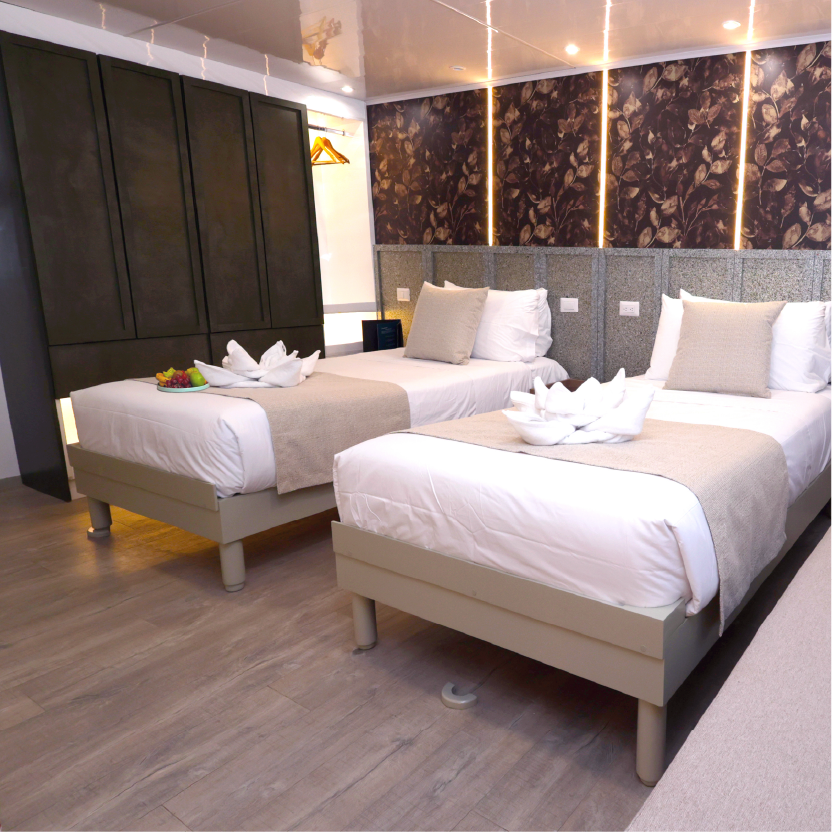
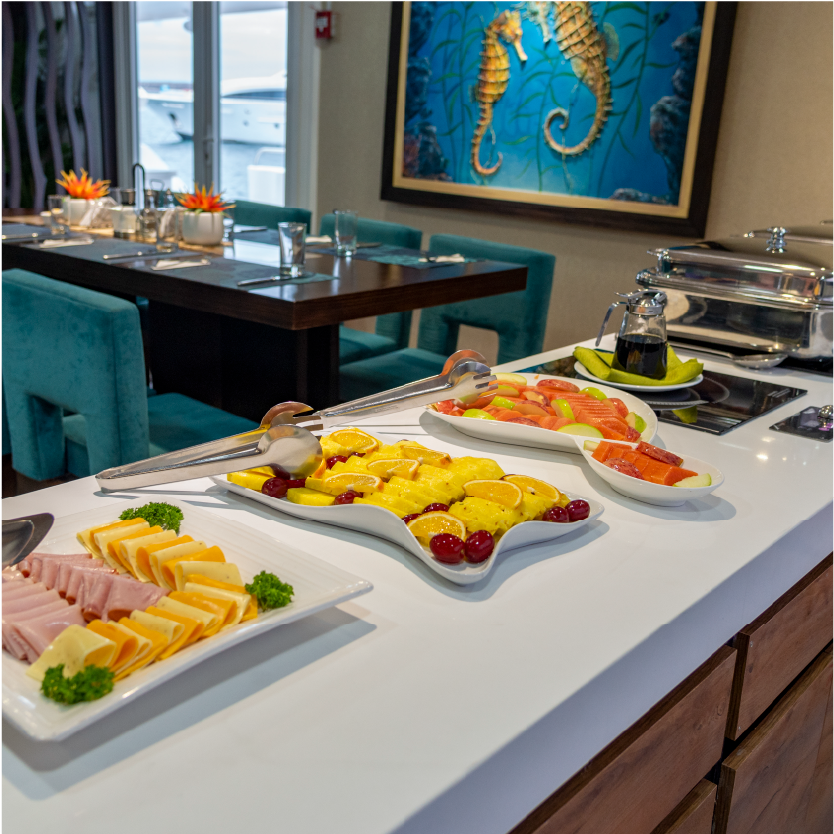
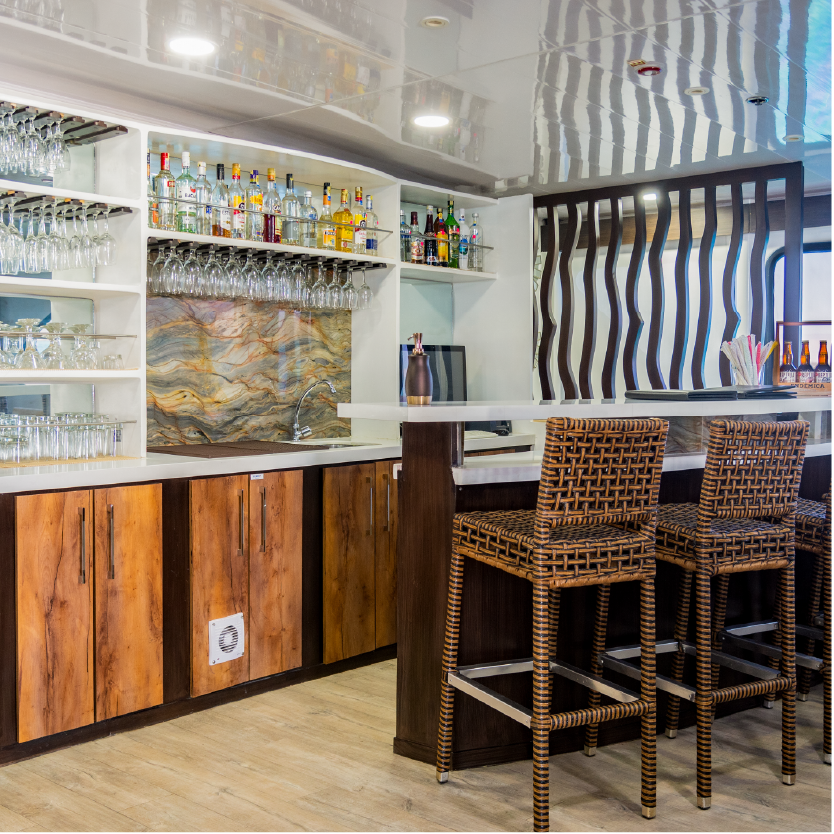
- Facilities: This wonderful catamaran offers 8 double cabins, private bathrooms, cold/hot water; air conditioned, hair dryer, telephone for internal communication on board, safe box, and high speaker.
Dates & Rates
To request a quote or make a reservation let's start with your details...*
What's Included
- Accommodation as confirmed.
- All mentioned meals (full-board); filtered water, tea and coffee.
- All guided excursions and activities as mentioned in the itinerary by a National Park certified naturalist guide.
- Beach towels and snorkelling gear (snorkel, mask, flippers; optional wet-suits for hire).
What's Not Included
- Round-trip flight to the Galapagos.
- Soft and alcoholic drinks.
- Galapagos National Park entrance fee and Transit Control Card (currently $220, subject to change).
- Personal travel insurance.
- Personal expenses, extras and tipping.
Get in touch with us
Explore more of
First Class Boats
Galapagos First-Class boat cruises offer a high level of comfort and service, providing spacious cabins, elegant common areas, and gourmet dining. These vessels typically feature attentive staff, expert naturalist guides, and well-designed itineraries that maximize wildlife encounters and exploration. Expect a more intimate and luxurious experience, balancing immersive adventure with exceptional amenities for a truly memorable journey through the archipelago.