Galapagos Tourist Class Diving yacht, M/Y Danubio Azul
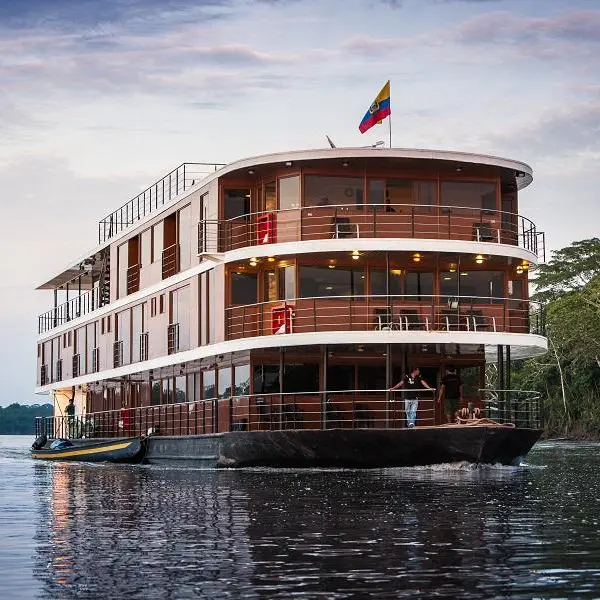
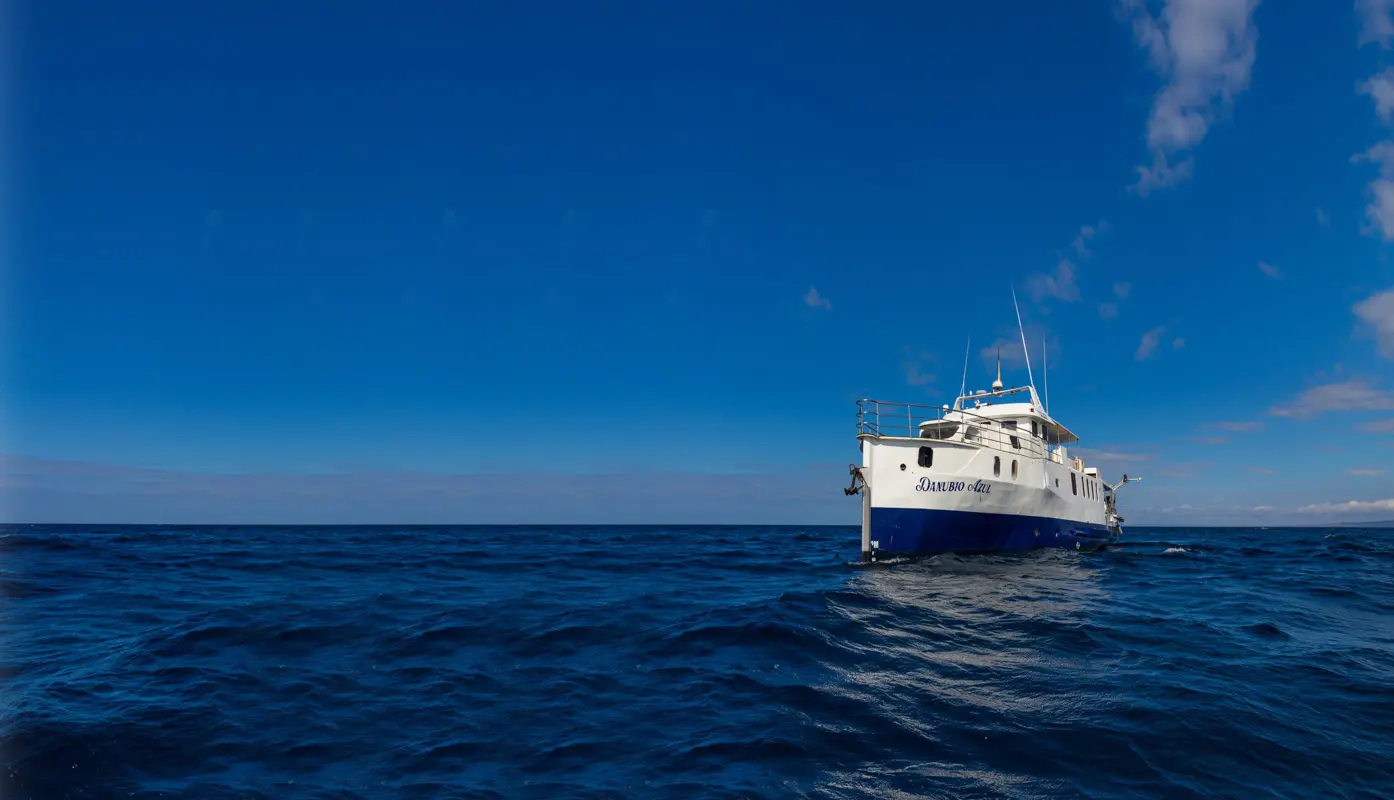
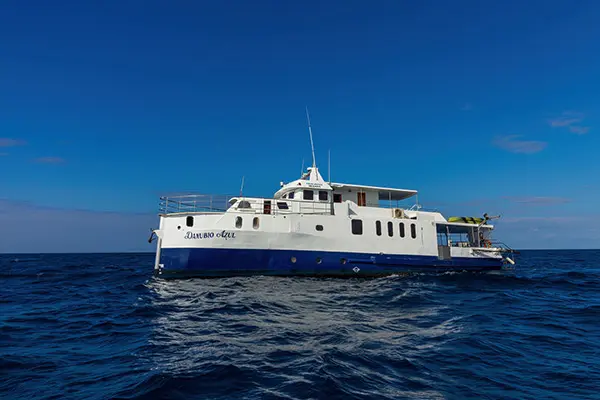
The Danubio Azul, Galapagos Tourist Class Diving yacht, is your your gateway to Galapagos adventure. The Galapagos National Park has given a boat permission to conduct diving and naturalist cruises. This voyage ensures a remarkable, secure, and exclusive experience in one of the most breathtaking locations on earth.
Embark on a Journey of Discovery Aboard the Danubio Azul – Your Passport to Galapagos Adventure. This exceptional vessel, authorized by the Galapagos National Park, guarantees a thrilling and secure voyage. Explore one of the world’s most wondrous destinations and create unforgettable memories.
Itinerary
Itinerary Naturalist 8D/7N (Tuesday – Tuesday)
Day 1: Baltra airport- Santa Cruz: Black Turtle Cove
AM: Arrive To Baltra Airport
PM: Black Turtle Cove
Departure from Quito or Guayaquil to Baltra Island (2 ½ hour flight). Arriving in the Galapagos, passengers are picked up at the airport by our naturalist guides to take advantage of the time in the archipelago.
In this vast tidal lagoon system that extends nearly a mile inland, we encounter four distinct species of mangroves. As we navigate through the maze-like channels in our panga, we’ll come across numerous turtles, various types of herons, along with sharks and rays. The experience feels almost unearthly, as if we’re journeying back to the dawn of time.
Day 2: Santa Fe: South Plaza - Santa Fe: Barrington Bay
AM: South Plaza Island
PM: Santa Fe Island
Santa Fe Island features white sandy beaches bordered by sea lion colonies. As we follow the island’s trail, we pass through a unique cactus forest that provides a habitat for the Santa Fe land iguanas, the largest iguanas in the islands. This island is home to numerous species, including the Galapagos hawk, Galapagos snakes, rice rats (one of the few rodent species native to the Galapagos), various fish species, and one of the archipelago’s four mockingbird species.
The Plaza Islets, two small islands located east of Santa Cruz, consist of North and South Plaza. On North Plaza, visitors can begin their journey through an impressive cactus forest that’s home to about 300 vibrant yellow and red land iguanas. During the dry season, these iguanas rely on the fruits and flowers of the opuntia cacti for survival. South Plaza offers a unique sighting of hybrid iguanas—a mix of marine and land species. At the island’s highest point, tropicbirds are visible. From June to January, the typically green and yellow vegetation transforms into a brilliant red landscape due to the blooming of the Sesuvium edmonstonei plant.
Day 3: San Cristobal: CC David Rodriguez - San Cristobal: Hill Witch
AM: Interpretation Center
PM: Cerro Brujo
The Interpretation Center is packed with fascinating information, providing an excellent overview of the Galapagos’ formation, its global importance, as well as the threats it faces and ongoing conservation efforts. Afterward, we’ll hike to Frigatebird Hill (Cerro Tijeretas), where we’ll have excellent views of both species of frigatebirds, along with a stunning panorama of the bay below.
As we approach the shore from our pangas, we’re immediately awed by the grandeur of the towering cliffs of ‘Cerro Brujo’ We can spend time relaxing on the beach alongside sea lions, snorkel from the shore, or take a stroll to a secluded lagoon where we may encounter black-necked stilts, ruddy turnstones, whimbrels, and white-cheeked pintails.
Day 4: Floreana: Post Office Bay – Floreana: Cormorant Point
AM: Post Office Bay
PM: Champion Islet / Devil’s Crown
A brief walk from the beach takes us to the iconic Post Office Barrel, which is said to have been established in 1793 by Captain James Colnett. It remains the oldest active ‘post office’ in the Pacific. Whalers and fur sealers used to leave addressed letters in the barrel for others heading home to deliver. In keeping with this tradition, modern visitors often take letters to personally deliver them in their own countries.
Upon arrival to Punta Cormorant, a keen observer will notice that olivine, a volcanic crystal, has given the dark beach a delicate green tint. Our walk leads us past island-endemic Scalesia plants to a large, shallow lagoon that is often home to a striking group of pink greater flamingos. We then continue through a palo santo tree forest, eventually reaching a powdery white beach that serves as a nesting site for green turtles. As we wade barefoot in the shallow waters, we may spot diamond stingrays and white-tipped reef sharks.
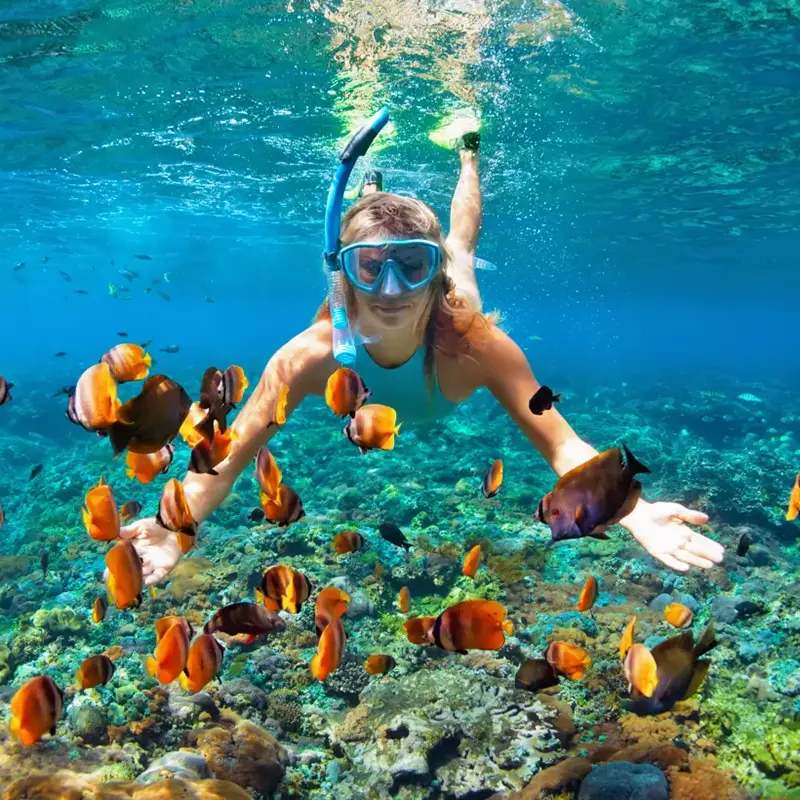
One of the most popular snorkeling spots in the islands, Devil’s Crown is an eroded volcanic cone teeming with a rich variety of fish and marine life. We’ll swim alongside large schools of yellow-tailed surgeonfish, salemas, and creolefish, and with some luck, we may even encounter turtles, spotted eagle rays, parrotfish,
and hammerhead sharks! The rugged ‘crown’ serves as a roosting site for boobies, noddies, tropicbirds, and frigatebirds.
Day 5: Santiago: Sullivan Bay - Barlolome
AM: Elizabeth Bay
PM: Urbina Bay
Elizabeth Bay is situated on the east coast of Isabela Island and features several islets that can be explored by dinghy. These rocky islets are home to penguins and blue-footed boobies. With its clear waters and rich marine life, the area is an ideal spot for snorkeling, offering views of vibrant fish schools, sea lions, and possibly even sharks.
Urbina Bay is situated at the base of Alcedo Volcano on the west coast, nestled between Tagus Cove and Elizabeth Bay. In 1954, a significant uplift occurred here, causing the land to rise more than 16 feet. This geological shift extended the coastline by half a mile, leaving marine life stranded on the newly formed shore. The bay is also an excellent spot for snorkeling.
Day 6: Rabida - Santiago: Chinese Hat
AM: Tagus Cove
PM: Espinosa Point
We begin with a dry landing on Galapagos’ largest island, where we’ll explore the history of its five volcanic eruptions. The trail leads us to Darwin’s saltwater crater lake, offering stunning views of lava fields and volcanic formations. After retracing our steps, we’ll take a dinghy ride along a shoreline teeming with marine life, where we can observe a variety of seabirds, including Blue-footed Boobies, Brown Noddies, terns, Flightless Cormorants, and, depending on the season, a large colony of Galapagos Penguins, which are only 35 cm tall—the only penguin species in the world to live in the tropics.The population of these penguins is around 2,000, most of which inhabit the western part of Isabela, with some further south. We’ll also have the chance to snorkel in deeper waters.
Lastly, we’ll spot graffiti thought to be left by 19th-century pirates, offering a fascinating glimpse into the island’s history.
From Espinosa Point, visitors can enjoy expansive views of Isabela Island across the Bolivar Channel, a region renowned for having some of the richest diversity of endemic marine life in the Galapagos. This area is home to the largest, most primitive-looking marine iguanas, which can be seen alongside sea lions and Sally Lightfoot crabs. Fernandina offers an excellent chance to observe flightless cormorants at their nesting sites, as well as Galapagos penguins and the island’s apex predator, the Galapagos hawk. The island’s landscape is primarily covered by Pa-hoe-hoe and AA lava formations, and inland vegetation is sparse, with only a few brachycereus cacti. Along the shore, mangroves can be found.
Day 7: Santa Cruz: Eden - Whale Bay- Santa Cruz: Fausto Llerena
AM: Egas Port
PM: Bartolome
Wet landing. Egas Port features a black volcanic sand beach, which was visited by Darwin in 1835. The trail begins with volcanic ash (eroded tuff) and continues over rough terrain made up of basaltic volcanic rock. The striking, layered landscape along Santiago’s shore is home to a variety of wildlife, including the unusual yellow-crowned night heron, as well as marine creatures like lobsters, starfish, and marine iguanas grazing on algae beds alongside Sally Lightfoot crabs. It’s easy to spot colonies of endemic fur seals swimming in the cool, volcanic rock pools.
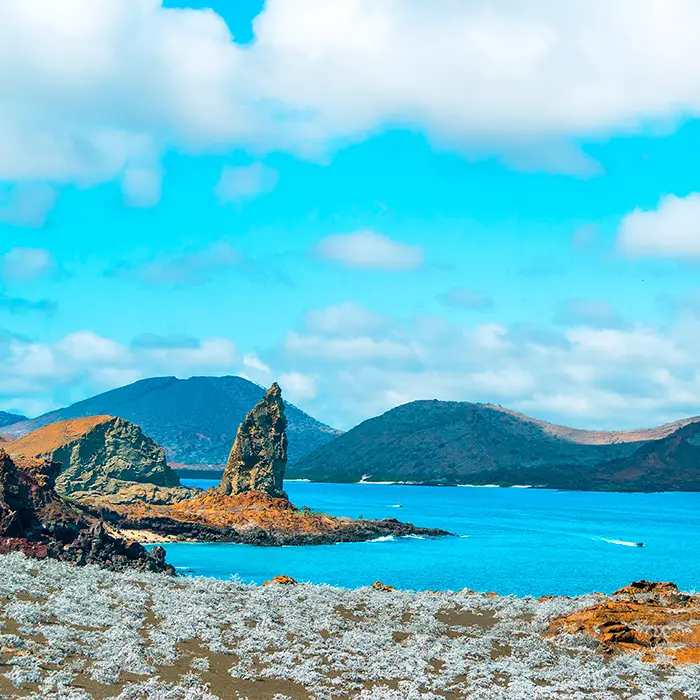
Bartholomew, home to the iconic Pinnacle Rock, is an extinct volcano featuring a stunning array of volcanic formations in shades of red, orange, black, and even green. A staircase trail leads to the summit, offering one of the best panoramic views of the islands. The beach is an excellent spot for snorkeling, with a chance to see the Galapagos penguin.
Day 8: Santa Cruz: Las Bachas Beach - Baltra Airport
AM: Santa Cruz, Las Bachas Beach
PM: Baltra – Flight Back To Quito Or Guayaquil
Located on the northern shore of Santa Cruz, Las Bachas is a popular swimming beach. One of the few remaining traces of the U.S. World War II presence in the Galapagos, a floating pier, can be spotted here. The area is home to flamingos, Sally Lightfoot crabs, hermit crabs, black-necked stilts, and whimbrels. Sea turtles also nest along the beach.
Itinerary Diving 8D/7N (Tuesday – Tuesday)
Day 1: Baltra airport - Santa Cruz: Carrion Point
AM: Arrive To Baltra Airport
PM: Carrion Point
Once you arrive to the airport our transportation will be ready to transfer you to our great diving vessel Danubio Azul.
This exotic place has one of the most pacific currents. The majority of species found here are the old chameleon and the gringo, old rainbow, chancho and pretty Galapagos gobio. This place is excellent for snorkeling and panga ride.
Day 2: Barlolome: Bartholomew - Cousins Rock
AM: Cape Marshall
PM: Cape Marshall
It is a bottom of basaltic rock of very variable sizes and descends in a relatively steep slope towards greater depths. It is surprising that this background originated, through ground lava flows that went into the sea. Being in a megafauna pass area, this dive site is ideal for spotting stingrays, devil rays, green turtles, sea lions, different shark species and more open water species.
Cape Marshall is situated on the northeastern coast of Isabela Island, slightly south of the equator and near the base of the active Wolf Volcano. This area is known for its drift diving opportunities and features a nearly vertical wall of volcanic rock that plunges to the ocean floor. It’s an excellent spot to encounter hammerhead sharks, white-tipped reef sharks, and Galapagos sharks.
Day 3: Wolf Island: Punta Shark Bay - Wolf Island: El Derrumbe
AM: El Arenal
PM: Darwin’s Arch
Darwin’s Arch is a hotspot where sharks, turtles, and mackerels gather at cleaning stations, benefiting from a symbiotic relationship with butterflyfish, barber fish, and angelfish. The sandy slope in front of the arch, called “El Arenal,” is the busiest area, perfect for spotting hammerhead sharks, Pacific green turtles, and the occasional hawksbill turtle, along with garden eels and starfish. Beyond, sloping terraces lead to a deep
ravine with curved reef contours, offering excellent spots to watch hammerheads. Just 100 meters from Darwin’s Theatre, this area also provides opportunities to swim with whale sharks and enjoy the marine life carried by the current.
Darwin’s Arch is one of the most iconic landmarks in the Galapagos, but only a few travelers have the chance to see it in person. However, the true marvel lies beneath the waves, where the reef platform hosts a world-class diving experience. This underwater paradise is a hotspot for schools of scalloped hammerhead sharks and, most notably, whale sharks—the largest fish in the world, reaching the size of a bus. Divers can get remarkably close to these gentle giants, particularly between June and November. During this period, pregnant whale sharks often stop here on their mysterious migration, accompanied only by remora fish.
Day 4: Darwin Island: El Arenal – Darwin Island: Darwin´s Arch
AM: El Arenal
PM: Punta Shark Bay/18H00 – 22H00 Darwin’s Arch
Darwin’s Arch is a hotspot where sharks, turtles, and mackerels gather at cleaning stations, benefiting from a symbiotic relationship with butterflyfish, barber fish, and angelfish. The sandy slope in front of the arch, called “El Arenal,” is the busiest area, perfect for spotting hammerhead sharks, Pacific green turtles, and the occasional hawksbill turtle, along with garden eels and starfish. Beyond, sloping terraces lead to a deep ravine with curved reef contours, offering excellent spots to watch hammerheads. Just 100 meters from Darwin’s Theatre, this area also provides opportunities to swim with whale sharks and enjoy the marine life carried by the current.
Shark Bay, located on the coast of Wolf Island, is a shallower dive site compared to its surroundings but often considered the most remarkable. It’s teeming with sharks and features vibrant cleaning stations that highlight fascinating symbiotic interactions. Hawksbill turtles and critically endangered Pacific green turtles frequently visit these stations, where royal angelfish also tend to painted rays and hammerhead sharks. In the shallow waters, male hammerhead sharks are more likely to approach stationary divers, unlike females in open water. Their calm demeanor contrasts with the playful Galapagos fur seals, which eagerly seek interaction with divers.
Day 5: Darwin Island: El Arenal – Darwin Island: Darwin´s Arch
AM: Punta Shark Bay
PM: El Derrumbe
PM: 14H00 – 18H00 Darwin’s Arch
Shark Bay, located on the coast of Wolf Island, is a shallower dive site compared to its surroundings but often considered the most remarkable. It’s teeming with sharks and features vibrant cleaning stations that highlight fascinating symbiotic interactions. Hawksbill turtles and critically endangered Pacific green turtles frequently visit these stations, where royal angelfish also tend to painted rays and hammerhead sharks. In the shallow waters, male hammerhead sharks are more likely to approach stationary divers, unlike females in open water. Their calm demeanor contrasts with the playful Galapagos fur seals, which eagerly seek interaction with divers.
The descent down a rocky slope leads to natural viewing spots on the edge of a cliff, around 20 meters deep. From these points, you can enjoy a breathtaking panorama into the blue, where one of the most spectacular shark displays in the Galapagos unfolds. While gripping the rocks, you’ll be surrounded by hammerhead sharks, along with Galapagos sharks, silky reef sharks, blacktip sharks, spotted stingrays, and schools of pelican barracudas. During the colder months (June to November), there’s a chance to encounter large whales, including orcas and humpback whales.
Day 6: Wolf Island: La Ventana Islet – Wolf Island: La Banana
AM: Vicente Roca Point
PM: Cape Douglas
Vicente Roca Point is situated at the mouth of the seahorse-shaped formation of Isabela Island, visible from space. As you enter a dark cave beneath a magnificent arch, the sounds of crashing waves reverberate through the air. Around the corner, the collapsed amphitheater of the Ecuador Volcano offers another stunning vista. The sheltered waters of the caves, protected from the ocean’s swell, are perfect for snorkeling with a variety of sharks, penguins, pufferfish, and even seahorses. It’s also common to spot sunfish here, and keep in mind that the waters tend to be colder, which is why penguins thrive in this area!
Douglas Cape offers exceptional chances to witness a diverse array of marine life, both above and below the water’s surface. As you gear up for your dive, you might spot Galapagos penguins, cormorants, and marine iguanas, all unique to the islands. Additionally, we will seek out the fascinating marine iguanas swimming and feeding on the rocks beneath the water. Other marine creatures you could encounter include red-lipped batfish, horned dogfish, sunfish, and even the possibility of spotting whales!
Day 7: Isabela: Marchall Cape – Santiago: Egas Point
AM: Cousin’s Rock
PM: Fausto Llerena Breeding Center
Cousin Rock, a symmetrical volcanic pyramid, emerges from the coastal waters of Santiago, about 5 km offshore. This rocky outcrop is a resting spot for wildlife like blue-footed boobies, brown pelicans, Galapagos sea lions, and penguins, often visible during boat trips. Beneath the surface lies a vast underwater cone, home to a vibrant marine ecosystem accessible only to divers and snorkelers. The site offers two main dive spots: a thrilling wall dive in the northeast and a ridge surrounded by terraced walls on the opposite side. Dive depths range from 12-30 meters, with currents varying from medium to strong. Water temperatures span 20-26°C from January to May and 16-20°C from June to December. Visibility ranges from 12-30 meters, and the plankton-rich waters often attract diverse marine life, including larger animals.
The Charles Darwin Research Station is home to tortoises ranging in size from 7.5 centimeters (hatchlings) to 1.2 meters in length. Different subspecies of tortoises interact with one another, and older individuals are accustomed to human presence, sometimes extending their necks to be gently touched. Hatchlings are kept at the station until they are four years old and strong enough to survive independently in their natural habitat.
Day 8: North Seymour – Baltra Airport
AM: North Seymour Island
PM: Baltra – Flight Back To Quito Or Guayaquil:
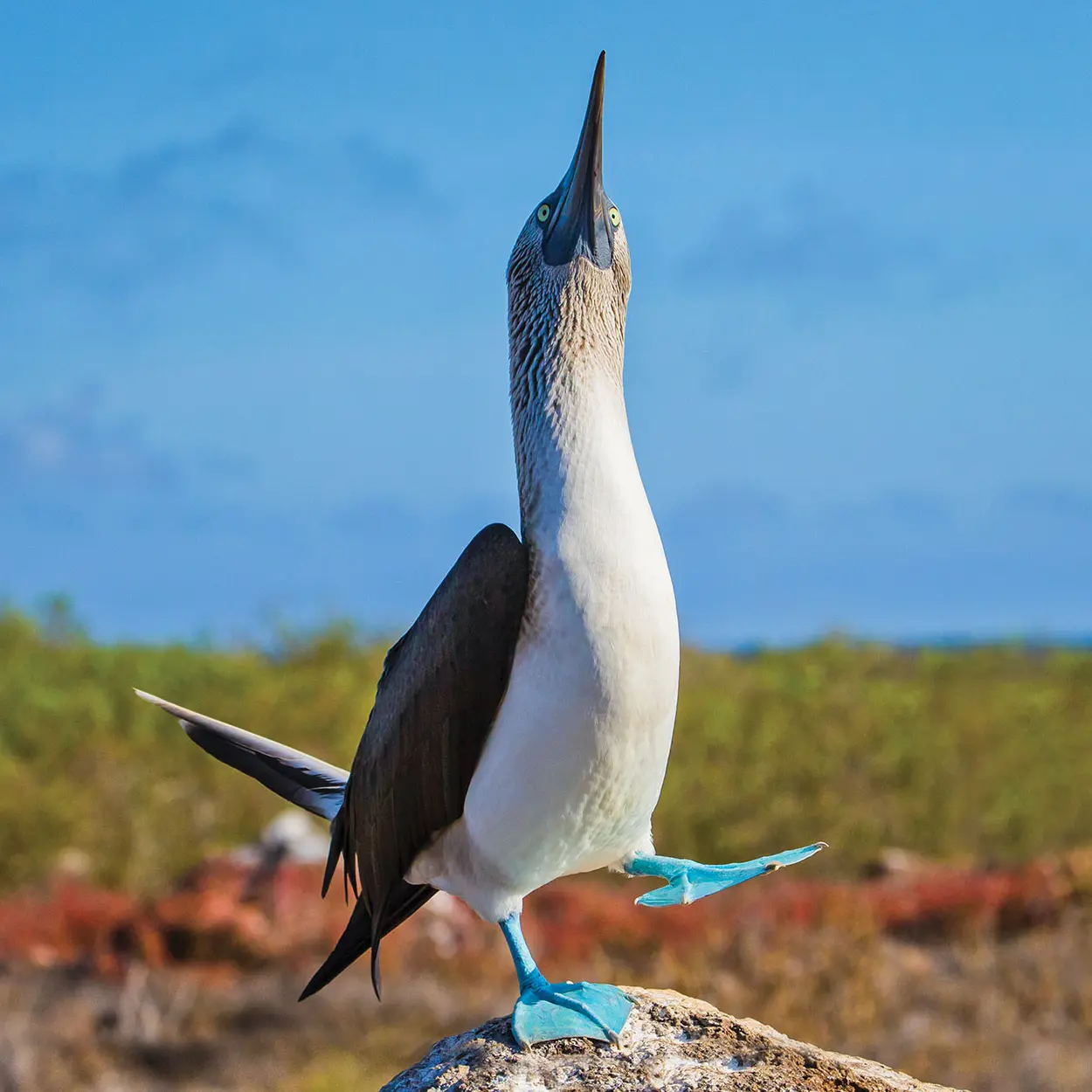
The visit to North Seymour is the best way of saying goodbye to the Galapagos. Following a dry landing at sunrise we will walk amongst the largest blue-footed booby colony of the Islands. It is likely that you will enjoy their dancing and singing to find a
mate. Not far from the dancers we have great and magnificent frigate birds nesting. The males inflate their pouches to attract the ladies that fly above them. Swallow tailed gulls and tropicbirds decorate the large basaltic walls of the island.
We will be back on board for breakfast at 8:00 and we have to be ready to check out at 9:00. It is always a good idea to do most of your packing the previous night so you can have a pleasant last early morning visit and a relaxed breakfast.
Explore the
place you stay
- Category: Diving Boat
- Length: 24.84 mts.
- Beam: 5.47 mts.
- Capacity: 14 passengers
- Speed: 11 knots
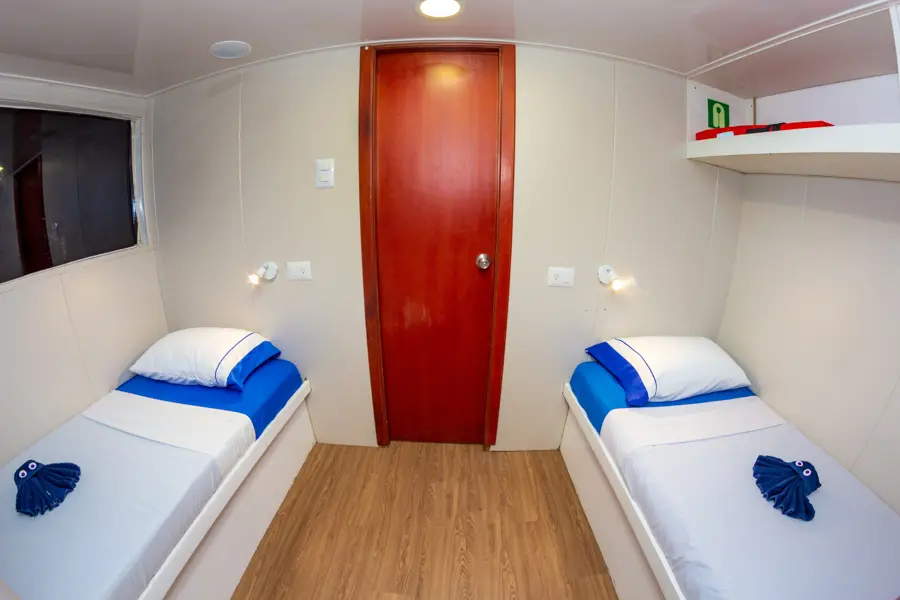
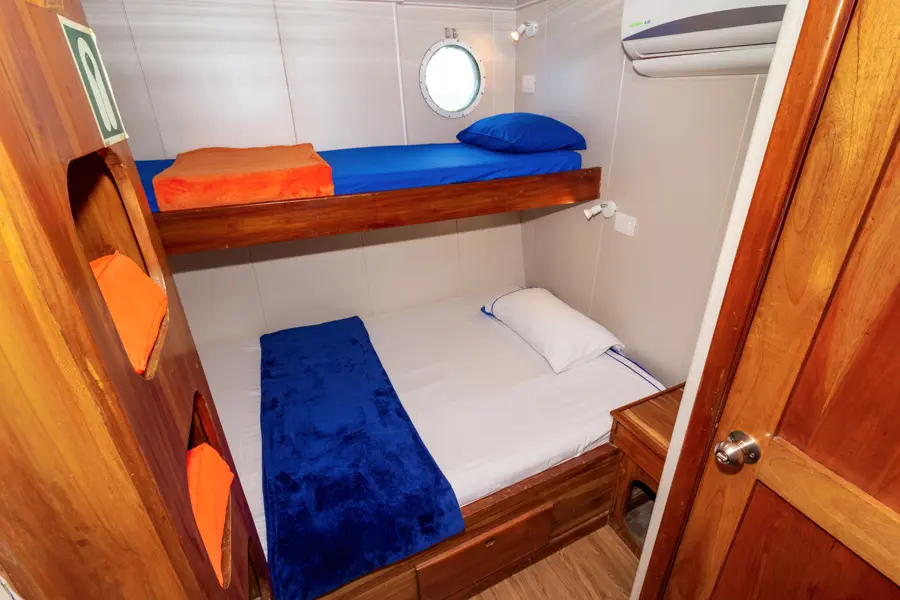
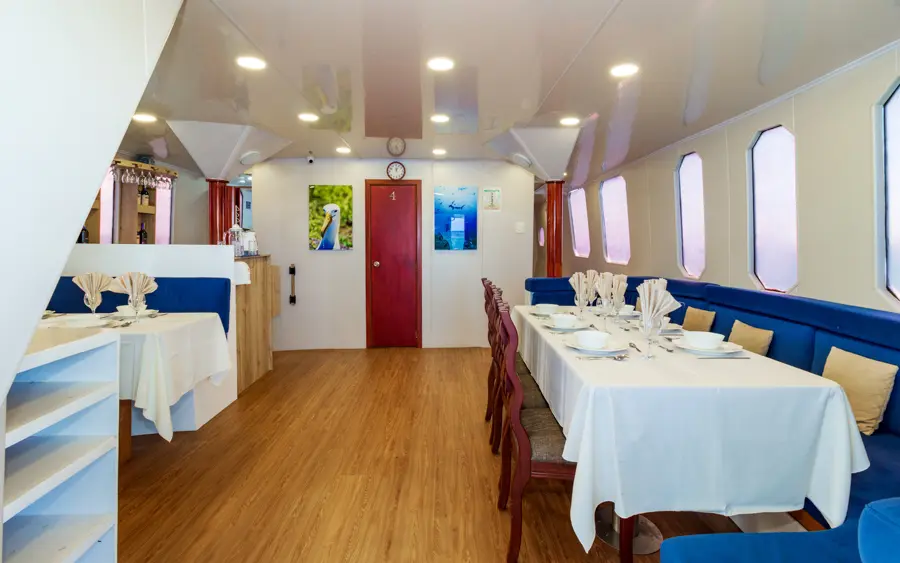
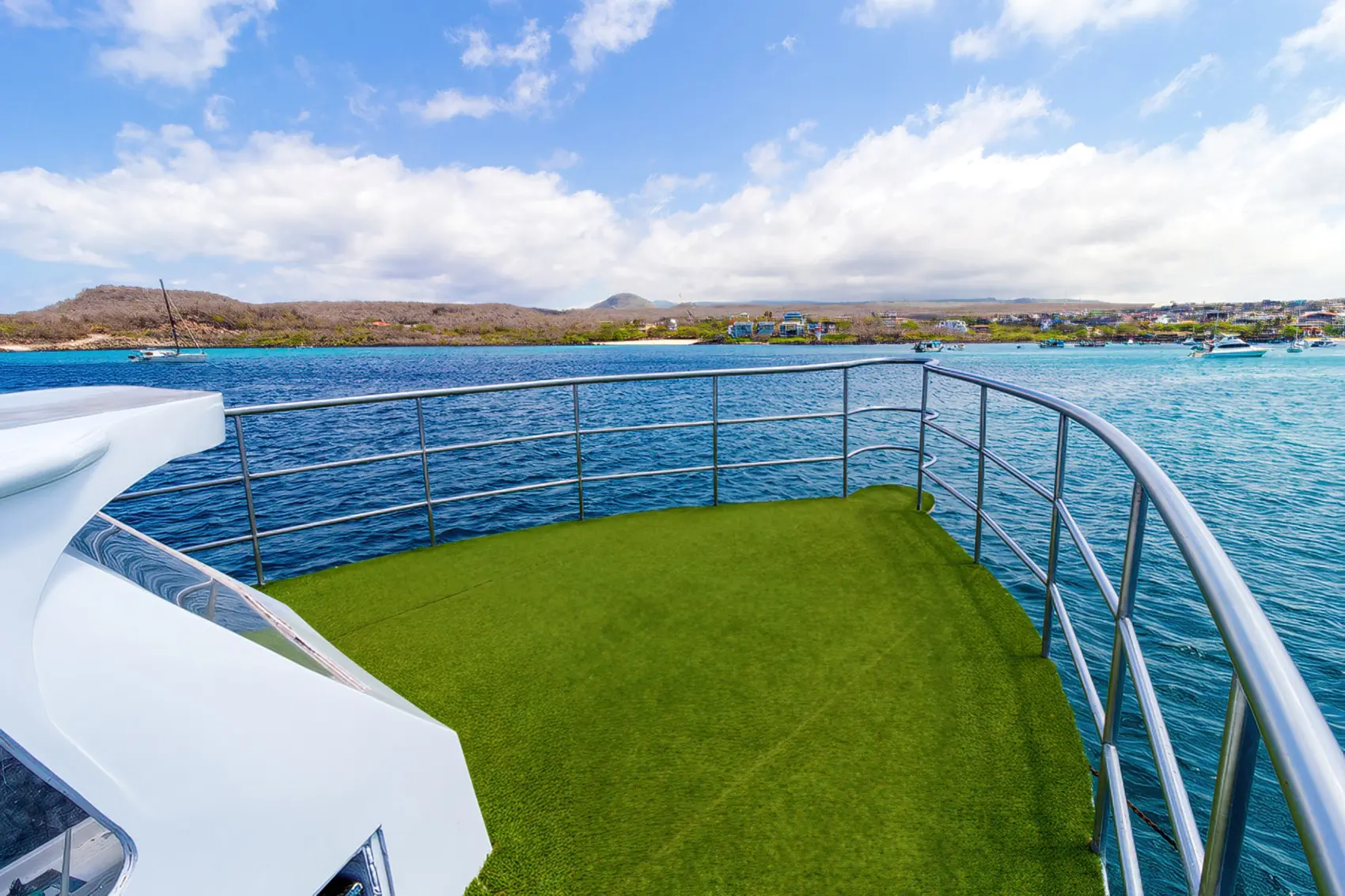
- Facilities: 8 cabins with Private bathroom, Air conditioning and Hot and cold/water showers.
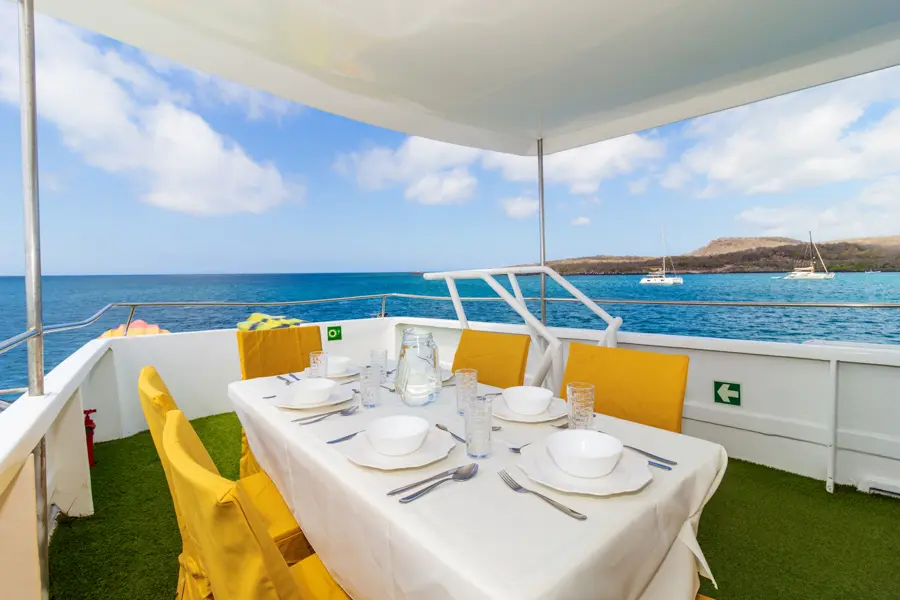
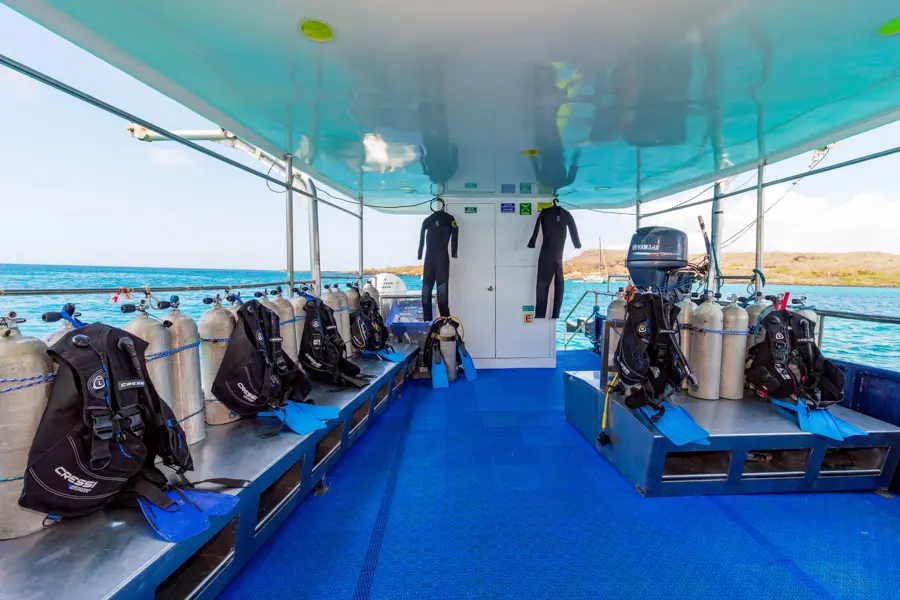
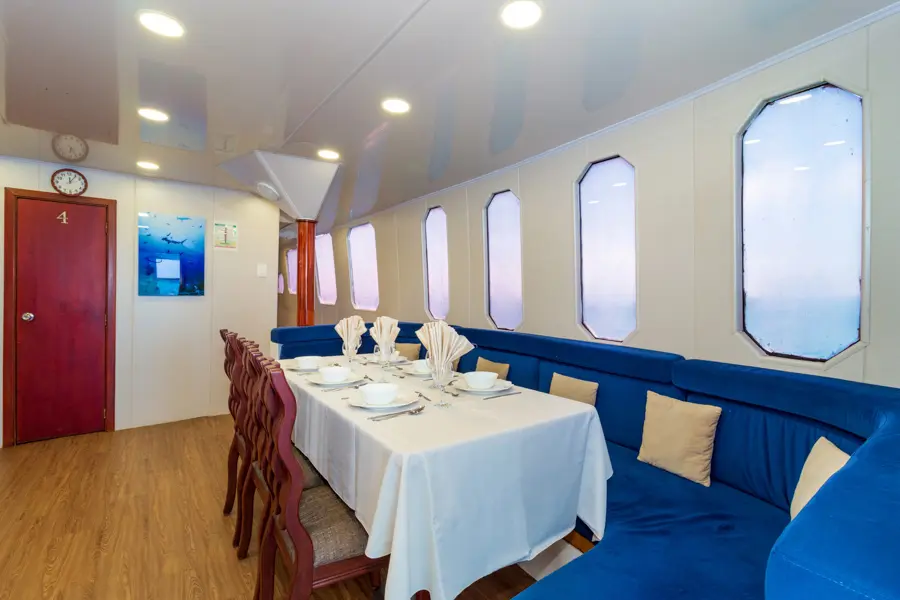
- UPPER DECK:1 Double cabin with Matrimonial bed and windows with ocean view, 2 Singles cabins with windows, Social Areas: Al Fresco Dining, Sundeck. MAIN DECK: Twin Cabins, Shaded Diving Area, Dive Deck, Dining Room & Bar, Small Library, Kitchen.
LOWER DECK: Cabins with Bunk beds, one double lower & one Single upper berth with portholes
Dates & Rates
To request a quote or make a reservation let's start with your details...*
What's Included
- Diving Naturalist Guide
- Diving Tanks
- Dumbbells
- Lead Belt
- Oxygen Emergency Equipment
- First aid kit
What's Not Included
- Full kit Rental $350 (Regulator, BCD, Mask, Fins, Hood, Gloves, 7mm 2 Piece Wetsuit)
- Nitrox ($150)
- Nitrox Use Course
- 100cf / 15lt cylinders
- Specialty cylinder rental
- Diving Flashlight
- Regulator Income
- Chamber Fee ($35)
Get in touch with us
Explore more of
Diving Boats
Galapagos diving boats tours will take you to an underwater wonderland in the Galapagos islands! Explore a world teeming with marine life found nowhere else, from playful sea lions and graceful sea turtles to magnificent whale sharks and unique marine iguanas.